Join WhatsApp Channel

As we entered the Santa Giulia Ice Hockey Arena, groups of schoolchildren from across Italy and neighboring countries filled the venue with excitement as they prepared to watch their sporting heroes compete in the playoff games.
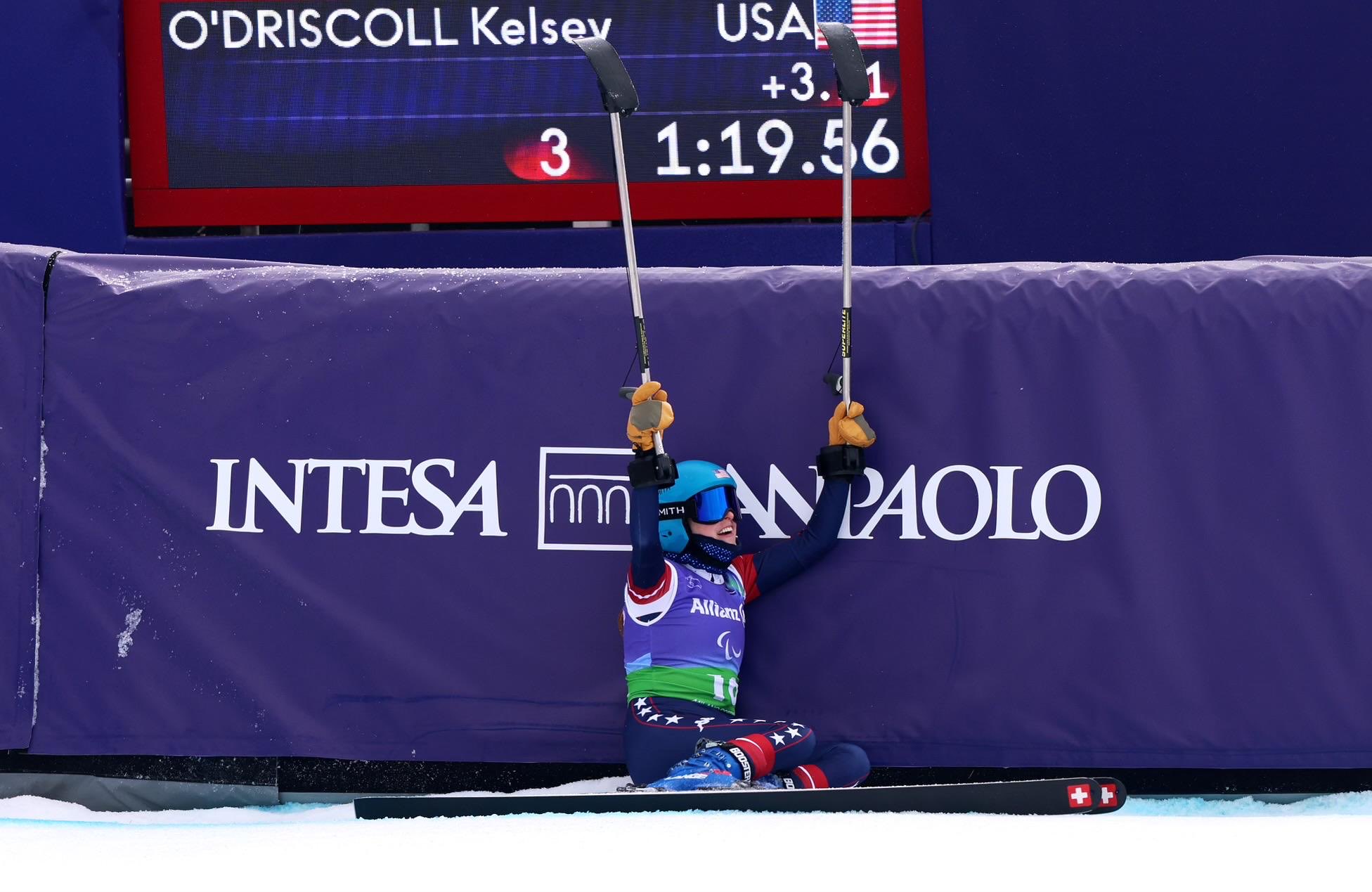
Their enthusiasm brought to mind the story of para-alpine racer Kelsey O’Driscoll.
A pediatric nurse turned para-alpine racer for the United States, O’Driscoll often draws inspiration from the young patients she treats. She marked the fifth anniversary of a life-altering accident on the opening day of the Milano Cortina 2026 Paralympic Winter Games, where she made her Paralympic debut.
For many sports enthusiasts around the world, Paralympic athletes serve as role models. O’Driscoll, however, finds inspiration in a different place. Rather than looking up, she looks to the children she cares for in her work as a pediatric nurse.
Working with young patients who face severe medical challenges has shaped her understanding of resilience.
“I have watched kids go through so much and be on the brink and come back,” O’Driscoll told the media. “Kids are so resilient, and kids are so moldable. A kid can lose a leg and learn how to walk again. A kid can go through hell and back and just go back to being a kid.
“I worked in patient nursing for three and a half, four years, and I learned a lot, and I watched a lot of kids make a lot of big strides, and so I just try to remember that when I get a little beaten down.”
O’Driscoll herself has endured significant setbacks. Five years ago, she lay in the snow after breaking her back in a snow-tubing accident, uncertain whether she would ever walk or ski again.
She not only relearned to walk but also returned to skiing, eventually earning a place on Team USA. Her Paralympic debut at Milano Cortina coincided with the fifth anniversary of the accident that once threatened to end her athletic ambitions.
“Five years ago, I lay face down in the snow, thinking I’d never ski again, let alone ski at the highest level of sport. So it is just awesome to be here,” O’Driscoll said. “I’m really proud of the hard work I have put in.”
O’Driscoll’s journey is one of many powerful stories emerging from the Paralympic venues across Cortina and Milano. Many athletes competing at the Games have overcome life-changing injuries and profound personal challenges to reach the highest level of sport.
The Milano Cortina Games also serve as a reminder of the origins of the Paralympic movement, which traces its roots to medical innovation and a vision for rehabilitation through sport.
One of the central figures behind this movement was Dr. Ludwig Guttmann, a neurologist and neurosurgeon who fled Nazi Germany in 1939 and settled in the United Kingdom. Continuing his work in Oxford, he focused on improving treatment for people with spinal cord injuries and other severe disabilities. Beyond physical rehabilitation, Guttmann believed in restoring confidence and enabling patients to lead full and independent lives.
In 1943, he was appointed to head Stoke Mandeville Hospital. At the time, many patients with spinal cord injuries were considered “hopeless cases” and confined to their beds. Guttmann challenged this approach by encouraging patients to become physically active. When he observed wheelchair users improvising a ball game, he recognized the transformative role sport could play in both rehabilitation and public perception of disability.
His efforts culminated on July 28, 1948, the opening day of the London Olympics, when he organized an archery competition for 16 athletes with disabilities at Stoke Mandeville Hospital. The event evolved into the Stoke Mandeville Games, which later gained international recognition. In 1960, the Games were held alongside the Olympic Games in Rome, marking the first official Paralympic Games.
The spirit of rehabilitation through sport has inspired initiatives in many countries. In India, for instance, Dr. R. S. Yadav, a kidney transplant surgeon at the Postgraduate Institute of Medical Education and Research, organized a pioneering event in the late 1980s for kidney donors and recipients.
The initiative quickly gained attention but eventually faded amid political divisions.
India has nevertheless performed strongly in recent Paralympic competitions, achieving an impressive medal tally at the most recent Summer Paralympics. However, the country did not field athletes at the Winter Paralympics this year, even though two Indian athletes had represented the nation at the Winter Olympics held in the region last month.
Related posts:
 Milano Cortina 2026 Winter Paralympics Open in Verona with ‘Life in Motion’ Ceremony Amid Global Tensions
 Milano Cortina Paralympics Open with Ukraine on Top and Strong Start for Canada
 Milano Cortina 2026 Paralympic Games Showcase Culture, Art, and Accessibility Initiatives
 Paralympic Opening Ceremony Overshadowed by Boycott as Russia and Belarus Return to Athletes Parade