Join WhatsApp Channel

A fast-escalating war in West Asia—now involving direct military confrontation between the United States, Israel and Iran—has emerged as the most serious geopolitical shock to the global economy since the Ukraine conflict. While India and most South Asian economies have limited direct trade exposure to Iran, the conflict has sharply amplified risks through energy markets, shipping lanes, trade logistics, currencies and inflation, underscoring the region’s deep vulnerability to disruptions in the Gulf.
Markets have moved swiftly to price in this uncertainty. Indian equity indices fell sharply at the open on Monday, the rupee weakened against the dollar, and crude oil prices surged. “As expected, the markets have been spooked. Stock indices are down, oil is up and the rupee is down,” said Madan Sabnavis, Chief Economist at Bank of Baroda. “This is how sentiment was bound to play on Day One after the Iran war. Whether things get worse or stabilize will depend entirely on how long and how intense this conflict becomes.”
A decisive escalation with global consequences
The current phase of the conflict marks a decisive break from years of proxy warfare. Coordinated U.S. and Israeli strikes deep inside Iran—including attacks that reportedly killed Iran’s Supreme Leader, Ayatollah Ali Khamenei—have triggered widespread Iranian retaliation across Israel and several Gulf countries. For global markets, the red line was crossed when the fighting directly hit energy infrastructure and shipping.
Iran, despite years of sanctions, remains a pivotal player in global oil markets. According to Reuters, Iran is the third-largest producer in OPEC, accounting for roughly 4.5% of global oil supply. It produces about 3.3 million barrels per day (bpd) of crude and another 1.3 million bpd of condensate and other liquids. Nearly 90% of these exports move via Kharg Island and transit the Strait of Hormuz—one of the world’s most critical maritime chokepoints.
Sanctions have forced Iran to rely on ship-to-ship transfers and opaque logistics, with Chinese independent refiners emerging as the main buyers. But any disruption—whether from attacks on refineries, pipelines or shipping—has repercussions far beyond Iran itself.
Energy infrastructure under fire
One of the most consequential developments has been the reported Iranian drone strike on Saudi Arabia’s Ras Tanura refinery, among the largest oil processing and export hubs in the world. The attack forced a temporary shutdown, immediately tightening supply expectations and fueling fears of cascading outages across the Gulf. Even short-lived disruptions at Ras Tanura have global implications, given its role in stabilizing seaborne crude supplies.
Beyond refineries, broader disruptions to oil and gas facilities have been reported amid sustained missile and drone activity across the region. While confirmed pipeline attacks have been fewer, analysts warn that pipelines, pumping stations and storage terminals in eastern Saudi Arabia, Iraq and southern Iran remain highly vulnerable. Sustained damage to these networks would constrain flows even if headline production capacity appears intact.
Strait of Hormuz: a chokepoint under siege
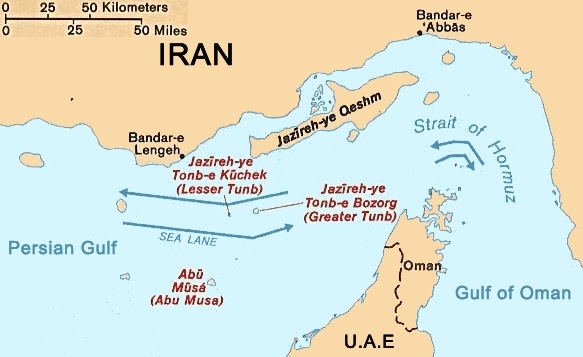
The most systemic risk lies at the Strait of Hormuz. Roughly 20–25% of global seaborne oil trade and about 20% of LNG shipments pass through this narrow waterway. Although Iran has not issued a single formal declaration of closure, the practical outcome has been a near-standstill.
Iranian Revolutionary Guard Corps communications have warned commercial vessels against transiting the strait. At least three tankers have reportedly been attacked, insurers have withdrawn coverage, and shipowners and oil majors have suspended movements. Hundreds of vessels are anchored, delayed or diverted, with traffic slowing to a trickle.
According to Capital Economics, if disruptions intensify, as much as 10–20% of global oil supply could be effectively trapped. Exports from Iraq, Kuwait and Iran cannot be easily rerouted. Saudi Arabia and the UAE have limited pipeline alternatives to Red Sea ports, but spare capacity is insufficient to offset a prolonged disruption. LNG flows—particularly from Qatar—have virtually no alternative routes.
In effect, Hormuz may not be “closed” on paper, but it is functionally paralyzed.
Oil and gas prices: from risk premium to supply shock
Markets have responded with one of the sharpest energy price moves in years. Brent crude, which traded around $67–69 per barrel before the escalation, surged past $75 within days and is now trading in the $78–82 range. WTI crude has climbed to around $71–73 per barrel. European natural gas prices have jumped by as much as 25%, reflecting fears that Qatari LNG shipments could be stranded.
For India, the arithmetic is stark. With daily crude imports of roughly 4.7–4.9 million bpd, every $1 increase in oil prices adds about $5 million to the import bill each day—nearly $1.8 billion annually. India’s oil import bill stood at about $143 billion in FY25.
If prices remain $10 per barrel higher for a full year—a worst-case scenario—the import bill could rise by around $18 billion. Even then, this would amount to about 5–6% of India’s FY25 trade deficit of $282 billion, or roughly 0.5% of GDP. “In macro terms, this is absorbable,” Sabnavis noted, “especially with the current account deficit running below 1%. The bigger risk is prolonged uncertainty.”
Analysts warn that a sustained Hormuz disruption could push crude toward $90–100 per barrel. Base-case scenarios from institutions such as Citi see Brent holding in the $80–90 range in the near term, with some easing possible if shipping lanes reopen or spare capacity is deployed. But OPEC+’s ability to stabilize prices is constrained, as spare capacity is concentrated largely in Saudi Arabia and the UAE.
India–Iran trade: limited, but vulnerable at the margins
India’s direct dependence on Iranian oil is negligible, but indirect exposure is substantial. Nearly 46% of India’s crude imports come from Saudi Arabia, Iraq, the UAE and Kuwait—suppliers whose exports also transit conflict-prone routes. Qatar and Oman add smaller shares but are equally exposed.
Trade with Iran itself has shrunk sharply under sanctions. Imports have fallen from $13.5 billion in FY19 to under $0.5 billion in FY25, while exports have declined from $3.5 billion to about $1.2 billion. Agricultural commodities dominate exports, with rice alone accounting for nearly $0.8 billion. While manageable in isolation, exporters now face mounting logistical bottlenecks.
Trade, logistics and exporters under strain
Beyond energy, the conflict is disrupting trade flows across South Asia. Shipping companies have imposed emergency conflict surcharges of $2,000–$4,000 per container on cargo moving to and from Gulf and West Asian ports, making many shipments commercially unviable. Agricultural and allied exports have been temporarily suspended, according to industry sources.
The Apparel Export Promotion Council has sought waivers on demurrage charges as air cargo faces flight diversions, airspace closures and stranded consignments. Engineering exporters warn of eroding competitiveness due to rising freight and insurance costs, particularly as Saudi Arabia and the UAE act as gateways to the wider West Asia–North Africa region.
Currency, inflation and fiscal implications
The rupee is expected to remain under pressure in the near term, driven more by sentiment than fundamentals. Dollar strength, speculative positioning, hedging behavior by importers and exporters, and volatile portfolio flows could amplify swings. Remittances from the Gulf—an important buffer for India and several South Asian economies—also face risks if oil-related activity slows.
Inflationary effects are expected to be moderate initially. Oil-related products carry nearly a 10% weight in India’s Wholesale Price Index, while the Consumer Price Index impact will depend on how retail fuel prices are managed. With headline inflation currently benign and fuel subsidies low, fiscal stress is limited unless crude prices surge well beyond $100 per barrel, forcing tax or duty adjustments.
Corporate India and energy security
According to Crisil Intelligence, India’s more than 85% dependence on imported crude and over 50% reliance on imported LNG expose corporate India to three major risks: sustained high prices, physical supply disruptions via Hormuz, and limited global spare capacity. While OPEC+ plans a modest output increase from April 2026, its effectiveness depends on uninterrupted Gulf exports.
Policy response and the South Asian outlook
The Ministry of Commerce has convened a high-level stakeholder consultation led by the Director General of Foreign Trade, involving customs authorities, logistics operators, oil and gas ministries, the Reserve Bank of India and export bodies. The focus is on maintaining EXIM continuity, easing procedural bottlenecks, protecting MSME exporters and ensuring essential imports are not disrupted.
For South Asia as a whole, the conflict highlights a shared structural vulnerability: heavy reliance on imported energy routed through a narrow maritime corridor. Strategic reserves and diversified sourcing provide short-term buffers, but sustained instability in West Asia would translate into higher inflation, weaker currencies and slower growth across the region.
As Sabnavis summed up, “More volatility amid uncertainty will typify the environment in the short run.” Whether that volatility hardens into a lasting macroeconomic shock will depend on how quickly the conflict de-escalates—and whether the world’s most critical energy artery remains open.