Join WhatsApp Channel

The International Monetary Fund (IMF) has reached a staff-level agreement with Nepal following two weeks of discussions in Kathmandu, signaling continued engagement under the country’s Extended Credit Facility (ECF) program amid slowing growth and rising financial sector vulnerabilities.
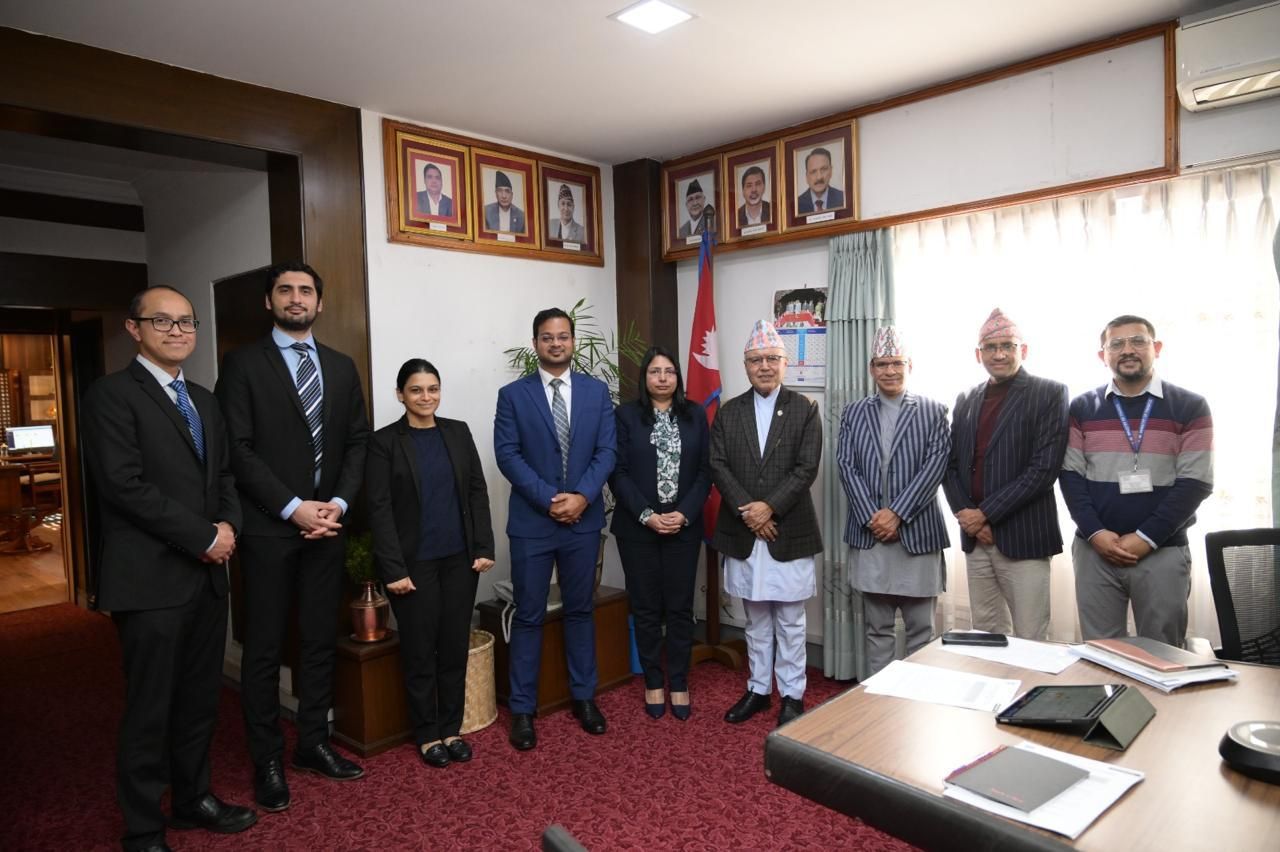
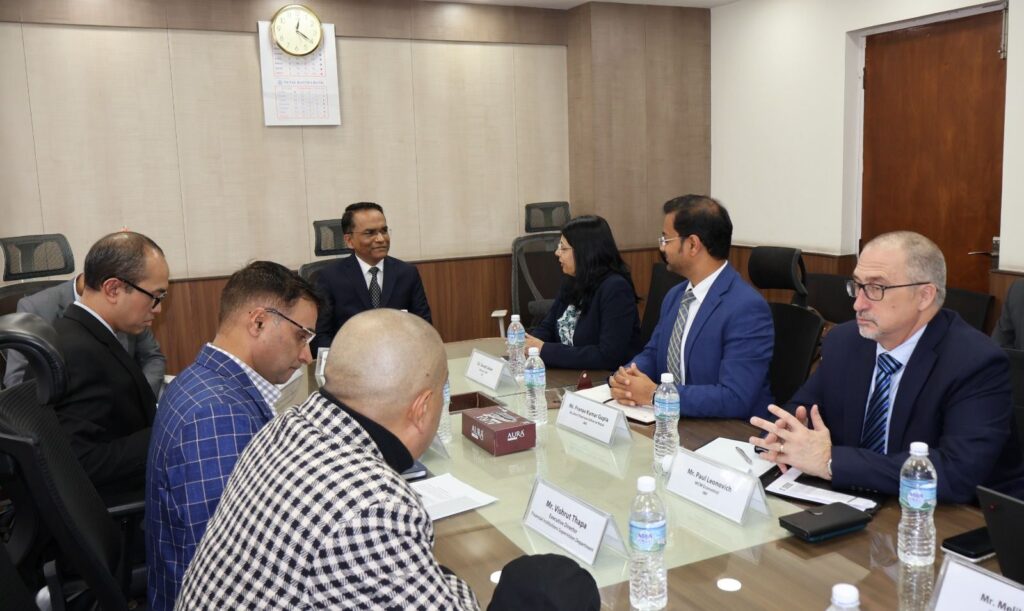
An IMF team led by Senior Economist in the Fund’s Asia and Pacific Department, Sarwat Jahan, visited Nepal from February 6-20, 2026, to conduct the 2026 Article IV consultation and review progress under the ECF-supported reform program.
The IMF team held meetings with the Finance Minister Rameshore Prasad Khanal, the National Planning Commission Vice-Chairman Prakash Kumar Shrestha, the Nepal Rastra Bank Governor Biswo Nath Poudel, and other senior government and central bank officials. The team also met with representatives from the private sector, think tank, and development partners.
At the conclusion of the mission, Jahan stated that “the Nepali authorities and IMF staff conducted discussions for the 2026 Article IV consultation and reached staff-level agreement on the policies and reforms needed to complete the seventh review under the ECF.” She added that the agreement remains “subject to approval by the IMF’s Executive Board.”
Upon completion of the Executive Board review, Nepal would gain access to SDR 31.32 million, approximately US$43.2 million. This would bring total IMF financial support disbursed under the ECF arrangement to SDR 282.42 million, or about US$384.4 million.
Despite what the IMF described as a “challenging domestic environment,” Nepal has continued to make progress in implementing the reform program. “Program performance has been satisfactory,” Jahan noted, adding that “all quantitative performance targets for mid-July 2025 were met except for the indicative target on child welfare grants, which was missed marginally,” she said.
Economic growth for FY2025/26 is projected at 3 to 3.5 percent, which the statement described as “well below potential.” Inflation remained subdued, at 2.4 percent year-on-year in January 2026, reflecting “in part due to subdued demand.”
Jahan also cautioned that “financial sector vulnerabilities have intensified further,” with non-performing loans rising to 5.4 percent in January 2026 and likely to be revised higher following the recently completed Loan Portfolio Review.
Looking ahead, the she stated that “a peaceful political transition is expected to restore business confidence, support pick-up in investment and consumption, and accelerate the recovery in domestic demand,” while warning that the outlook remains subject to “important downside risks, including political uncertainty, under-execution of capital projects, an increase in financial sector vulnerabilities and remittance slowdown.”
She further emphasized that “reform momentum should continue to preserve macroeconomic stability and strengthen Nepal’s policymaking framework,” underscoring the importance of governance reforms, financial sector resilience, and progress in anti-money laundering efforts as Nepal works toward exiting the Financial Action Task Force grey list.
“Good governance and strong institutions are central to boost private investment, improve productivity, create quality jobs, reduce inequality, and foster inclusive and durable growth,” she added. “The authorities’ plan to formulate a blueprint on improving governance and delivery of service is welcome, as is their commitment to the IMF’s TA on Governance and Corruption Diagnostics.”
The IMF team extended its gratitude to the Nepali authorities for their “hospitality” and for open and “constructive discussions.”
Related posts:
 IMF Reaches Staff-Level Agreement with Sri Lanka on EFF Reviews, Unlocking Potential $700 Million Disbursement
 IMF Forecasts Mixed Outlook for South Asia: India Leads, Bangladesh and Sri Lanka Stabilize
 Nepal’s Election as a Geopolitical Test
 Nepal’s Gen-Z Takes Politics From the Streets to the Ballot Box