 Join WhatsApp Channel

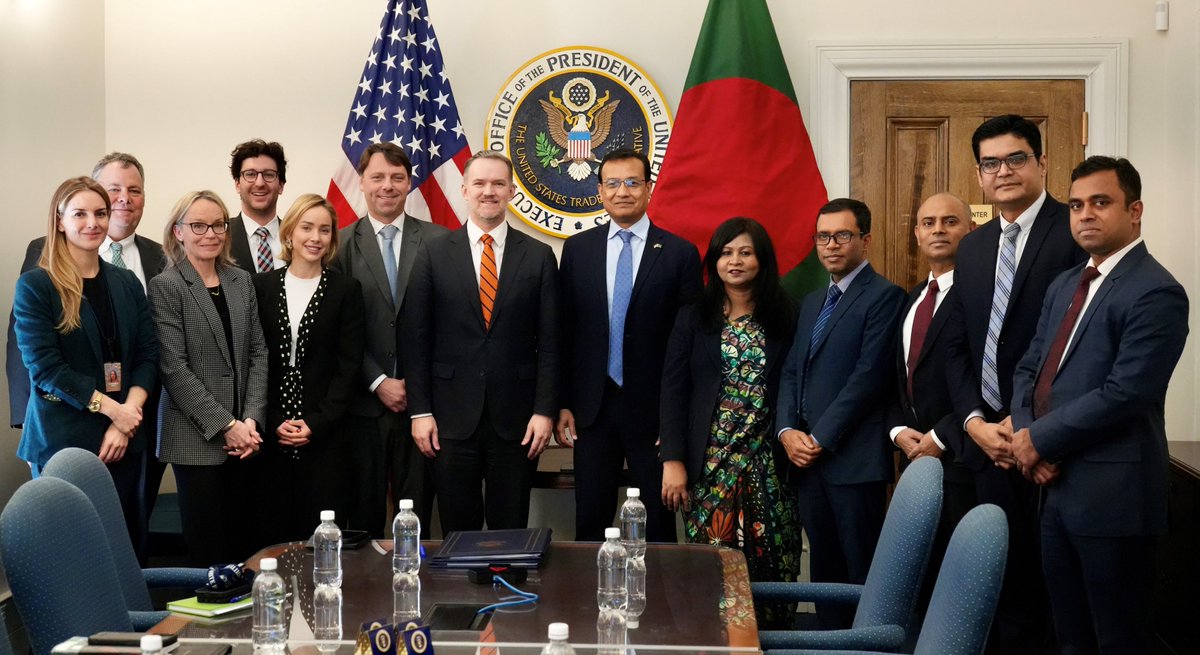
The United States and Bangladesh on February 9 signed an Agreement on Reciprocal Trade that promises modest tariff relief for Bangladeshi garments entering the U.S. market, but the deal has triggered sharp debate over whether the textile-dependent South Asian economy will see meaningful benefits—or end up conceding far more than it gains.
The agreement, concluded after nine months of negotiations and days before Bangladesh’s general elections on February 12, cuts Washington’s reciprocal tariff on Bangladeshi goods to 19% and introduces a zero-duty window for certain garments made using U.S.-origin cotton and man-made fibers. In return, Dhaka has agreed to lower duties and provide wide-ranging market access for U.S. industrial, agricultural and energy exports, alongside extensive commitments on labor, environmental and digital trade standards.
Textiles and apparel sit at the heart of the pact. Garments account for about 80% of Bangladesh’s exports, employ millions of workers and underpin the country’s external balances. Supporters of the deal argue it helps cushion the sector against looming shocks as Bangladesh prepares to graduate from Least Developed Country (LDC) status in November 2026, which will eventually erode its preferential access to major markets.
Yet economists and trade analysts caution that the headline textile concessions may be far less transformative than they appear.
Under the new framework, a Bangladeshi garment exported to the U.S. would still face a combined duty of around 31%—a 12% most-favored-nation (MFN) tariff plus the 19% reciprocal levy—unless it qualifies for the zero-duty provision by using U.S. fibers. Comparable Indian garments face roughly 30% after Washington’s recent deal with New Delhi. Only apparel that meets the U.S.-input would avoid the reciprocal tariff and pay the MFN rate alone.
That condition, critics say, collides with the structure of Bangladesh’s garment industry.
In 2024, Bangladesh exported about $50.9 billion worth of garments globally, but only $7.4 billion went to the United States. Nearly two-thirds—around $32.3 billion—was shipped to the European Union, which already offers duty-free access without sourcing conditions. As a result, Bangladesh’s supply chains are built overwhelmingly for Europe, not for compliance with U.S.-linked input rules.
Bangladesh imported $16.1 billion in textile inputs last year, with China supplying roughly $9 billion and India $3.1 billion. The United States accounted for just $274 million, almost entirely raw cotton. India dominates cotton yarn supplies, while China leads in fabrics—the critical inputs for garment manufacturing. Less than one-third of Bangladeshi garments are made starting from fiber; most rely on imported yarn and fabric rather than raw cotton.
“To use the zero-tariff window at scale, Bangladesh would need to overhaul long-established sourcing patterns and invest heavily in spinning and fabric capacity that it currently lacks,” said Ajay Srivastava of the Global Trade Research Initiative (GTRI), which described the agreement as a “lopsided bargain”.
Analysts note that the U.S. concession is therefore more likely to boost American cotton exports than to significantly expand Bangladesh’s apparel shipments to the U.S. market. With the EU already absorbing the bulk of exports under zero duty, the commercial incentive to restructure supply chains primarily for the U.S. remains weak.
Bangladeshi officials, however, have defended the agreement as strategically necessary. Chief Adviser Muhammad Yunus called it a “historic turning point” that integrates Bangladesh into evolving U.S. trade policy and provides exporters with enhanced market access at a critical juncture. Former World Bank economist Zahid Hussain estimated the deal could redirect up to $2 billion in export orders toward Bangladesh as buyers seek tariff advantages amid global supply chain shifts.
The pact has also stirred regional anxieties. In India, opposition politicians warned that the arrangement could divert orders away from textile hubs such as Tirupur, Surat and Panipat, squeezing yarn spinners and cotton farmers. Some Indian critics argue that Bangladesh’s conditional zero-duty access, even if limited, erodes India’s competitiveness in the U.S. apparel market.
Within Bangladesh, concerns focus on timing, transparency and long-term costs. Economist Anu Muhammad has criticized the agreement as rushed ahead of elections and warned that sweeping market-opening commitments—along with pledges to purchase $3.5 billion in U.S. agricultural goods and $15 billion in U.S. energy products over 15 years—could deepen import dependence and external vulnerabilities.
Beyond textiles, the deal binds Bangladesh to extensive compliance obligations on labor standards, forced-labor bans, customs digitization, intellectual property enforcement and cross-border data flows, giving Washington significant oversight leverage over the country’s export sectors.
For now, the government is betting that even limited tariff relief will help stabilize its flagship industry as global trade preferences shift. But critics argue that for a garment sector structurally dependent on Asian yarns and fabrics, the zero-duty carrot may prove difficult to use—raising the risk that the balance of benefits tilts decisively toward Washington, not Dhaka.
Related posts:
 U.S. Seals Reciprocal Trade Agreement with Bangladesh, Slashes Tariffs to 19 Percent
 India’s Cotton Duty Waiver Risks Price Crash, Hands U.S. Exporters a Market Opening
 Between Opportunity and Entrapment: Bangladesh Must Tread Carefully on the EU Partnership Deal
 US, India Agree on Framework for Interim Trade Agreement, Set Path Toward Broader Bilateral Deal
