Join WhatsApp Channel

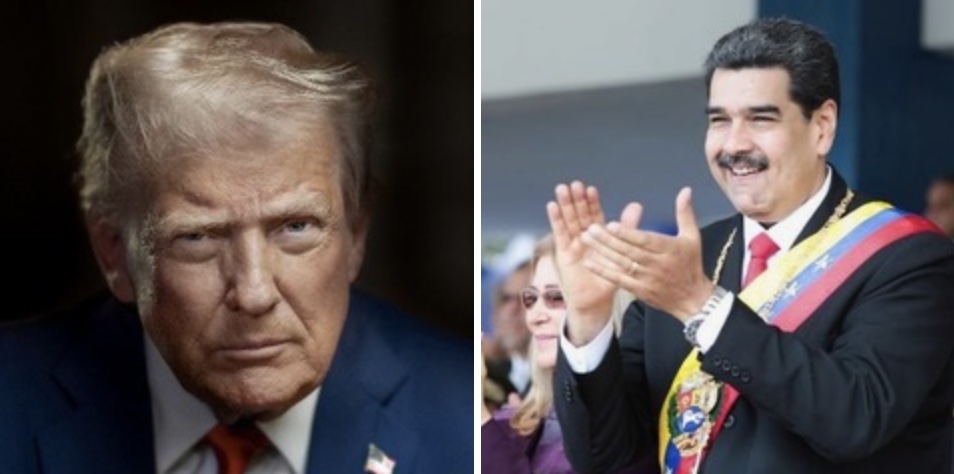
Sixty-odd decades ago, it was Cuba, a missile crisis, and a potential nuclear showdown with the then Soviet Union. The United States, under the John Kennedy administration, would have no truck with Soviet missiles in its backyard, some one hundred miles from the coast of Florida. Mercifully, that thirteen-day standoff in October 1962 ended without any major incident. But in 2025, it is a different story of an administration in the United States flexing its muscles over Venezuela, which has a Cuban connection, but of a different nature.
This time, there is a perception that what happens in Caracas will have a direct impact on Havana; and that has to do with the kind of close relationship the two Latin American nations have – economic, political, and diplomatic. The surmise in some quarters is that after Caracas, the Trump administration will set its eyes on Havana. Officially at least, Cuba is not the main reason why the Trump administration has built a large flotilla off the coast of Venezuela and is targeting sanctioned, huge ghost tankers carrying crude oil, the economic lifeline of Nicolas Maduro.
Today, the debate is not on how, over the years, Venezuela squandered away its rich oil status thanks to corruption and mismanagement; but how to hit the Maduro regime where it hurts most. And all with the intent of forcing President Maduro out of office – a place he did not belong to, to start with, the Trump administration would argue.
President Donald Trump has in place a two-pronged strategy for regime change in Caracas: hitting boats in the eastern Pacific supposedly carrying narcotics meant for use in the United States. There have been some 25 hits, resulting in the deaths of some 105 people, including a “double tap” that hit a boat, which killed two persons hanging on to the debris. The White House Chief of Staff, Susie Wiles, has said in a recent published interview that President Trump “wants to keep on blowing boats up until Maduro cries Uncle. And people way smarter than me on that say that (Maduro) will.”
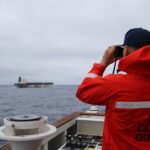
The other escalatory move is in seizing very large crude-carrying sanctioned ships, or what has come to be known as “ghost tankers,” that generally ply the high seas using fake names, flags, and dubious call signs on locations that do not match satellite tracking maps. The U.S. Coast Guard recently boarded the tanker Skipper, and word is that a second ship has also met the same fate. Aside from making noise about piracy and asking the United Nations to intervene, President Maduro has also taken steps to make sure that his navy is able to pilot non-sanctioned tankers out of Venezuelan waters. Also, this could be a strategy of seeing if President Trump challenges tankers that are on the clean list.
What is also to be noted, with an element of concern, is that the Trump administration has not just stopped at naming Venezuela as a Foreign Terrorist Organization and placing new punitive measures on the relatives of President Maduro. The new sloganeering is that Venezuela must return all the oil, land, and other assets that were previously “stolen” from America – a frame of reference aggressively pushed by the White House Deputy Chief of Staff Stephen Miller, reminding of a socialist revolution, the rule of Hugo Chávez, and the experiences of Exxon and Conoco in the 2000s.
“American sweat, ingenuity, and toil created the oil industry in Venezuela. Its tyrannical expropriation was the largest recorded theft of American wealth and property. These pillaged assets were then used to fund terrorism and flood our streets with killers, mercenaries, and drugs,” Miller said in a post. But in all the hoopla, what is reminded is that President Trump is yet to apply his “maximum pressure” on Venezuela by leaving Chevron out of any sanctions, and hence the right to operate legally – which means that President Maduro still has access to zillions of barrels of oil daily.
President Maduro cannot be expected to simply hand over the oil fields and reserves, and international law is quite clear on national sovereignty and permanent natural resources. That leaves the question of whether President Trump will opt for a land invasion for the twofold objective of throwing President Maduro out and seizing oil reserves. Hitting narco boats and seizing large sanctioned tankers in the Caribbean and eastern Pacific is one thing; starting a land war in the Western Hemisphere is a totally different matter. It may not be confined to Washington and Caracas, but also draw the attention of more than Havana and allies of President Maduro in his neighborhood, to involve Moscow, Beijing, and Tehran.
Even before getting carried away with any land invasion of Venezuela, the White House is being reminded of President Trump’s call for putting an end to “forever wars,” his aversion to starting new ones, or any fancy interventions in the name of nation building. In the present context, lawmaker Gregory Meeks, Ranking Member of the House Foreign Affairs Committee, has said, “Congress would need to pass an Authorization for the Use of Military Force if Trump wanted to put boots on the ground or conduct military strikes on Venezuela.
And for that, Republicans in Congress would need to cast their vote on whether to commit U.S. armed forces to an open-ended conflict their constituents certainly do not want.” And there are those who keep reminding of the lessons of Vietnam, Iraq, and Afghanistan.
Disclaimer: The opinions and views expressed in this article/column are those of the author(s) and do not necessarily reflect the views or positions of South Asian Herald.