Join WhatsApp Channel

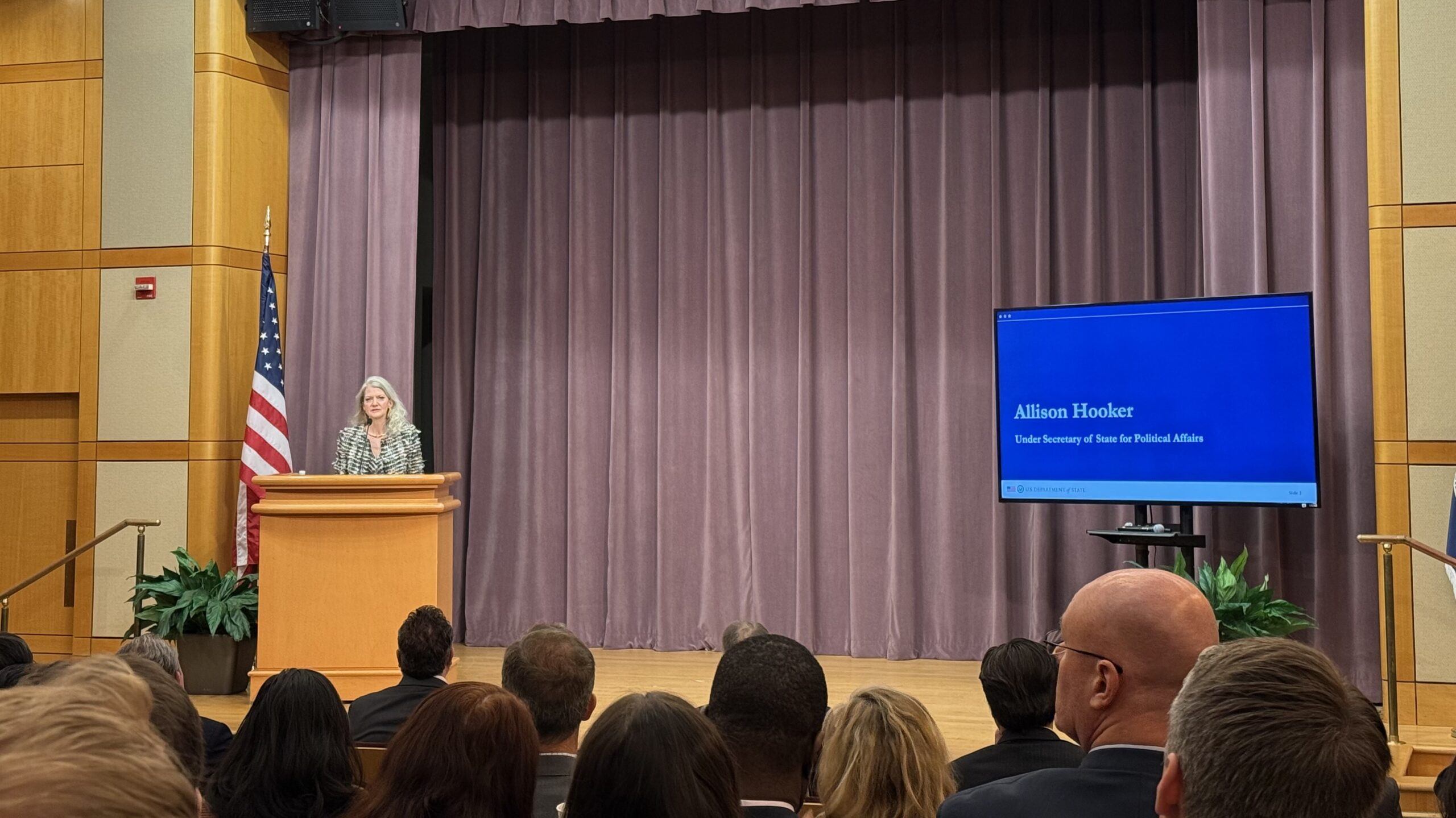
Senior officials at the US State Department underscored the ongoing strategic and humanitarian priorities in South Asia during the Indo-Pacific Foreign Assistance Conference held on December 15, 2025, at the State Department in Washington DC.
Under Secretary for Political Affairs Allison M. Hooker, who recently returned from visits to India and Sri Lanka, noted that her trip to India earlier this week provided a “unique opportunity” to demonstrate how United States engagement with the region remains a central pillar of the country’s foreign policy.
She highlighted the State Department’s ability to “efficiently and quickly” transfer humanitarian aid to Sri Lanka in the aftermath of Cyclone Ditwah, adding that the United States provided lifesaving assistance to people in need.
“It’s this type of targeted efficiency that will guide our foreign assistance moving forward. Our foreign assistance needs to be a force multiplier as we safeguard our national security with the greatest military in the world, along with our allies and like-minded partners,” she said. “We seek not just to temporarily help countries, but to provide tools that strengthen the region’s peace and security in the long term.”
Underscoring US commitment to maritime security, freedom of navigation, and collective defense in the South China Sea and beyond, she stated that “we are deepening commercial engagement across the Indo Pacific by promoting private sector investment, advancing reciprocal trade and creating new opportunities for both us and regional firms.”
In Nepal, Fiji, and Tonga, Under Secretary Hooker said the United States is implementing and expanding Millennium Challenge Corporation partnerships to enhance development cooperation and strengthen investment in critical infrastructure projects.
While US programs are implemented in countries far from American shores, she emphasized that the core objective remains focused on “strengthening the homeland” to counter the spread of transnational crime and synthetic drugs that threaten US interests and communities.
“We are committed to ensuring that every US dollar given abroad contributes to measurable outcomes, and opportunities like this conference are essential to facilitating dialog to accomplish that goal,” she said, adding, “Such exchanges allow us to understand what works, what can be improved, and how foreign assistance can be more effectively tailored.”
She emphasized that the United States is a Pacific power and that the future of the Indo-Pacific is directly tied to America’s core national interests. “The National Security Strategy has made clear that to thrive at home, we must compete abroad. And our commitment to the region is unwavering,” she added.
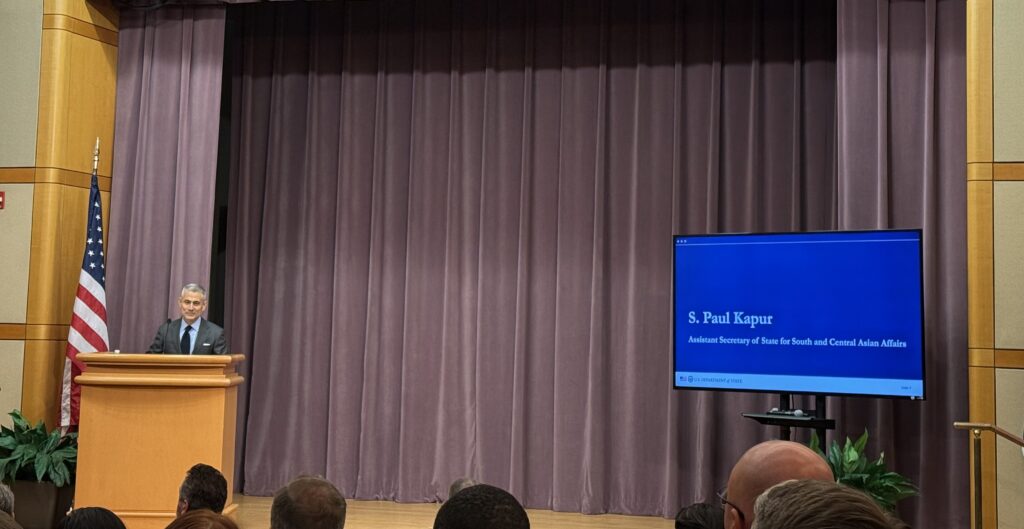
In his remarks, Assistant Secretary for South and Central Asian Affairs S. Paul Kapur commended President Trump’s leadership in the region. He said, “Our approach to this issue is clear. We’re expanding fair and reciprocal trade and investment, building resilient supply chains and supporting innovation to drive growth and create opportunities for the American people and for our partners.”
In South Asia, he noted that one of the most urgent needs among US regional partners is strategic infrastructure such as ports, subsea cables, telecommunications networks, airfields, and energy corridors. This type of infrastructure, he said, underpins a country’s economic viability, security, and sovereignty.
However, Kapur cautioned that developing such infrastructure can leave a state vulnerable if it depends on another country for financing, materials, and construction. While such arrangements may initially appear attractive or inexpensive, he said they often come with conditions that can expose recipient states to coercion and limit their independence.
“Our goal is to provide our partners with high quality, transparent and non-coercive options in this space,” he said, adding that the United States employs a tripartite approach that leverages seed financing from institutions such as the Development Finance Corporation and the US Trade and Development Agency, technical assistance from relevant US government agencies, and investment from US private industry.
He said, US companies offer cutting-edge solutions to regional infrastructure challenges that are not available elsewhere, while creating American jobs and advancing shared prosperity. As an example, he noted that the United States is providing seed funding to support port development, reconstruction, and modernization across South Asia.
According to Kapur, the National Oceanic and Atmospheric Administration and the Naval Meteorology and Oceanography Command are sharing technology to support Sri Lanka’s development of ocean mapping capabilities, strengthening maritime sovereignty and improving the safety of shipping lanes. In the Maldives, Google is building trusted telecommunications infrastructure to securely connect the region with the global economy.
Referring to Cyclone Ditwah in Sri Lanka, Kapur said the United States provided millions of dollars in emergency assistance, using Department of Defense airlift assets to deliver aid and support recovery and reconstruction efforts.
In Bangladesh, he said the United States recently announced $60 million in lifesaving humanitarian assistance for Rohingya refugees, in addition to the many millions of dollars already provided since the crisis began.
He rejected the narrative that the Trump administration is withdrawing the United States from the foreign aid space, stating that “nothing could be further from the truth.”
“We are, in fact, reorienting foreign aid so that it better addresses both ongoing challenges and is ready to meet new, and emerging opportunities,” he said. “We are also ensuring that our security relationships are stronger than ever, helping our partners to become not just consumers of security, but also regional security providers.”
Kapur added that the United States is not pursuing foreign assistance as a “charitable” exercise, but to “advancing” its national interests, promoting strategic priorities, and improving outcomes for regional partners.
Looking ahead, he said the United States will continue to lead in the foreign assistance space by working collaboratively, leveraging financial resources, technology, and the private sector. “We can do this while helping our partners, even as we advance our own strategic goals and keep the Indo Pacific free, open and prosperous,” he added.
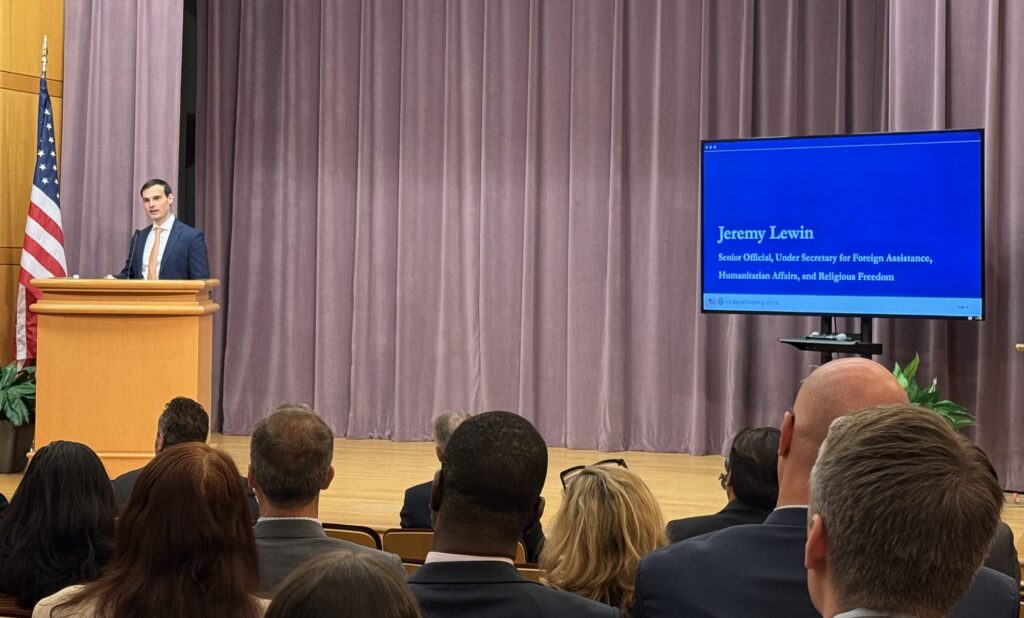
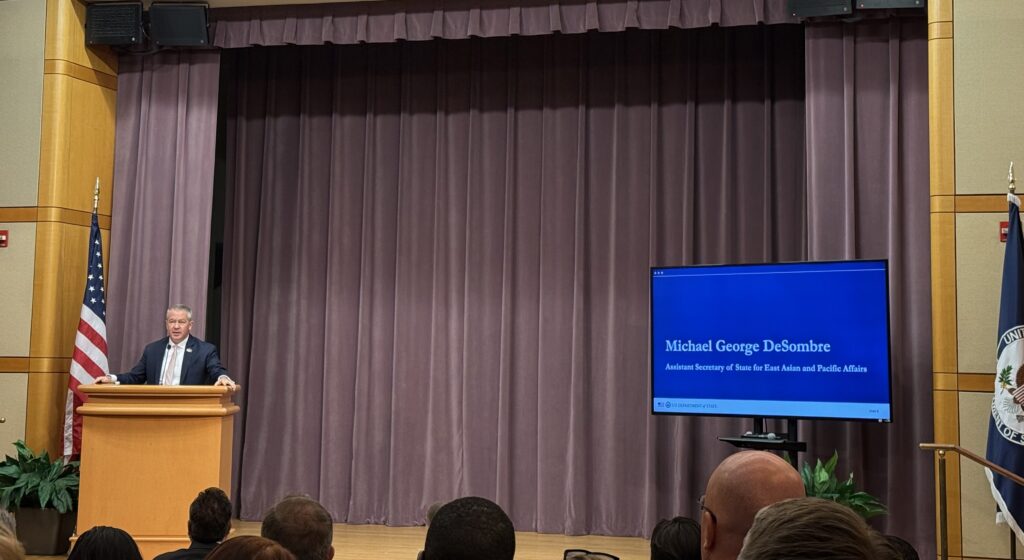
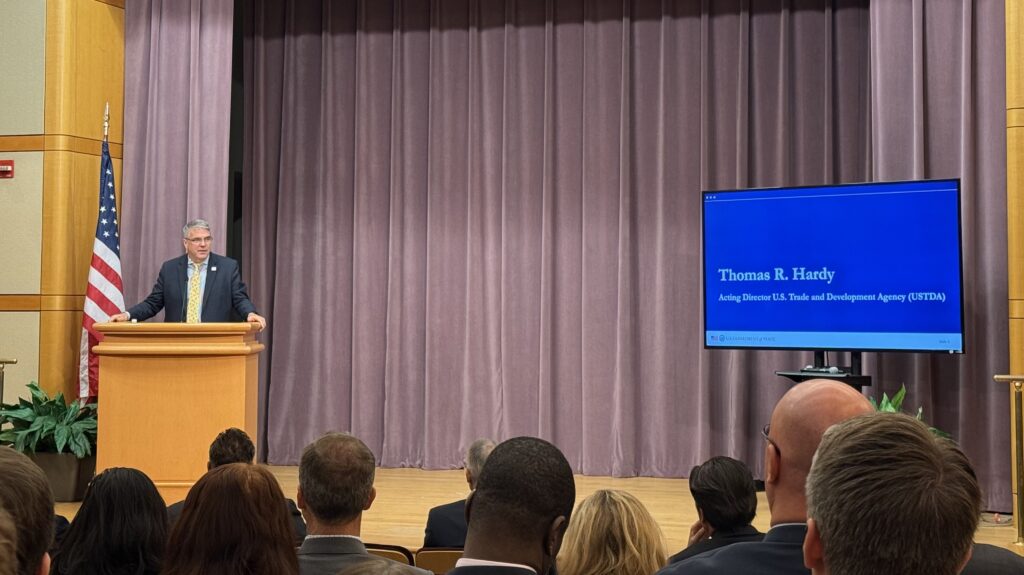
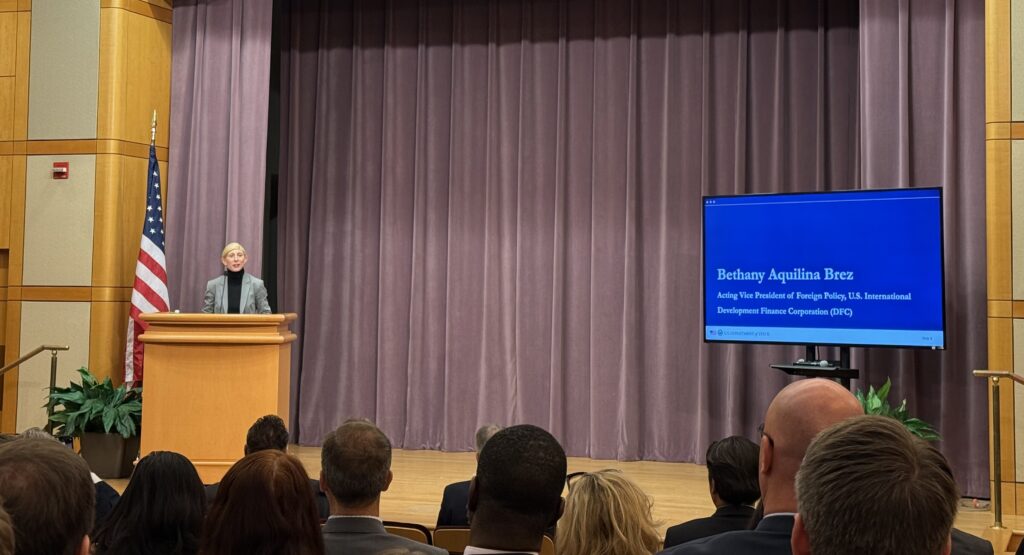
Senior Official for Foreign Assistance, Humanitarian Affairs, and Religious Freedom Jeremy P. Lewin; Assistant Secretary for East Asian and Pacific Affairs Michael George DeSombre; USTDA Acting Director Thomas R. Hardy; and Acting Vice President of Foreign Policy at the US International Development Finance Corporation Bethany Aquilina Brez also delivered remarks at the conference.
Related posts:
 Japan’s Consul-General in Perth Reaffirms Quad Vision: Friendship, Prosperity, and a Free Indo-Pacific
 Foreign Minister Jaishankar Highlights Quad Progress, US-India Ties, and Political Unity
 India’s Maritime Vision: From SAGAR to Indo-Pacific to MAHASAGAR
 MEA Report Reinforces India’s Diplomatic Push in Indo-Pacific Ahead of Hosting Quad Leaders’ Summit