 Join WhatsApp Channel

Type 2 diabetes mellitus (T2DM) is a growing health concern in South Asian communities like Indian, Pakistani, Bangladeshi, Nepali, and Sri Lankan. Research shows that South Asians are more likely to develop T2DM than many other groups at younger ages, at lower body weights, and remain undiagnosed (46% of Asians with diabetes are unaware of it). T2DM happens when the body has trouble using insulin, a natural chemical that moves sugar from the blood into the body’s cells for energy. As a result, too much sugar stays in the blood.
Diabetes often runs in South Asian families. If your parents, siblings, or close relatives have diabetes, your risk is higher. South Asians can develop diabetes even if they look thin or have a normal weight because South Asians tend to store more fat around their internal organs. This fat makes it harder for the body to use insulin and can lead to diabetes over time. Before developing T2DM, people almost always have prediabetes. This means blood sugar levels are higher than normal, but not yet high enough to be diagnosed with diabetes. Most people with prediabetes have no symptoms. The good news? If prediabetes is found and treated early through lifestyle changes or medication, you can prevent developing T2DM completely.
Many traditional South Asian meals include nutritious ingredients such as vegetables and legumes like lentils. However, eating large portions of white rice, naan, paratha, fried foods, sweets, and sugary drinks raises blood sugar levels. Small changes can help. Try adding more vegetables to meals without overcooking them, choosing whole grains, and cutting back on sugary drinks and desserts. Whole grains such as brown rice, whole wheat for chapati/roti, broken wheat (dalia), quinoa, barley (jau), and millets (bajra or ragi) offer more fiber and help keep blood sugar levels steady.
Diabetes often develops slowly. Early symptoms may include:
- Feeling very thirsty or hungry
- Urinating often
- Feeling tired or having low energy
- Blurred vision
- Slow-healing cuts or wounds
- Unexplained weight loss
- Heavy sweating when eating, even with mild foods
If left untreated, diabetes can cause nerve damage (tingling or numb feet), vision loss, kidney disease, heart disease, and stroke. Finding diabetes early and managing it well prevents these health problems.
Adults age 35 and older should ask their doctor about diabetes screening, especially if they have a family history of diabetes, high blood pressure, high cholesterol, or a history of diabetes during pregnancy. Diabetes can be found through simple blood tests like an A1C test or a fasting blood sugar test.
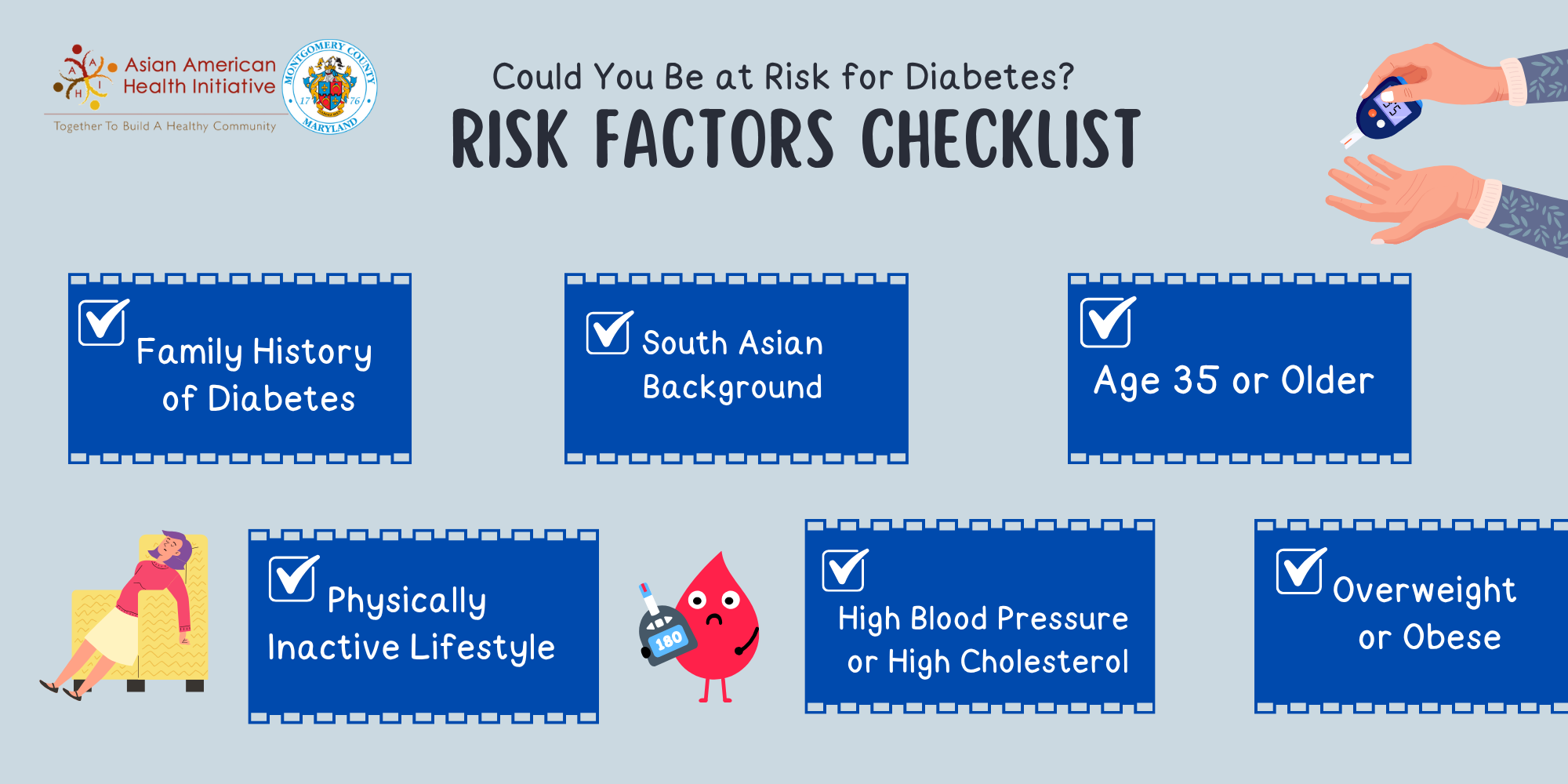
Diabetes Risk Checklist
- South Asian
- Family history
- Age 35+
- High blood pressure or cholesterol
- Physically inactive
- Overweight or obesity
- Diabetes during pregnancy
The Asian American Health Initiative (AAHI) at Montgomery County DHHS encourages community members to get screened and make healthy lifestyle choices. Residents can learn about local diabetes prevention and management programs through DHHS, Holy Cross Health, Johns Hopkins Medicine, and MedStar Montgomery. Talk with your healthcare provider about screening and available community resources.
Disclaimer: The opinions and views expressed in this article/column are those of the author(s) and do not necessarily reflect the views or positions of South Asian Herald.
Related posts:
 Indiaspora Health Series Examines Diabetes Risks and Prevention in South Asian Communities
 The Silent Epidemic: Why South Asians Face a Higher Risk of Heart Disease
 Three Indian Americans to be Honored with 2025 Pravasi Bharatiya Samman Awards
 Trump Administration Releases 2025–2030 Dietary Guidelines, Calls for Shift to Whole, Nutrient-Dense Foods
