Join WhatsApp Channel

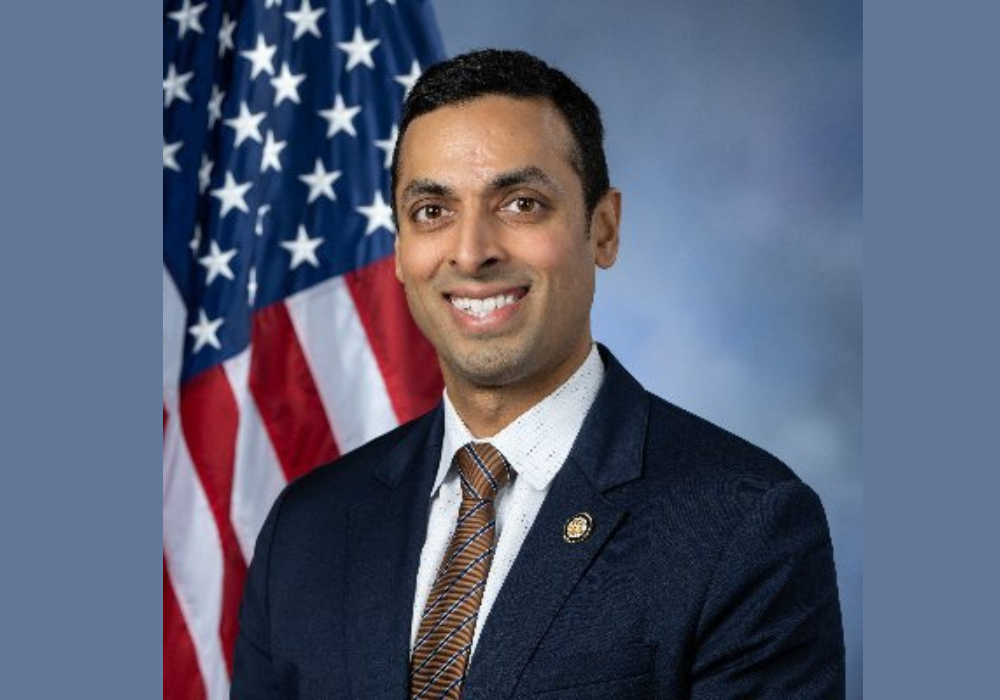
Congressman Suhas Subramanyam (D-VA-10) has reintroduced the “No Funds for Forced Labor Act” (H.R. 7516), a bipartisan, bicameral measure aimed at preventing international financial institutions from “providing support to any projects that risk using forced labor.”
According to a statement from Subramanyam’s office issued February 12, the legislation would encourage opposition to loans by international financial institutions that pose a significant risk of involving forced labor or that are connected to projects in the Xinjiang Uyghur Autonomous Region. The statement cited substantial evidence alleging a system of forced labor affecting Uyghurs and other ethnic minorities in the region under the Chinese government.
“U.S. taxpayer dollars have no business propping up companies that exploit forced labor,” said Rep. Subramanyam. “It is the responsibility of Congress to prevent our taxpayer funded resources from supporting forced labor systems, including state-influenced entities in the Xinjiang Uyghur Autonomous Region. I am grateful to my predecessor Jennifer Wexton for her work last Congress to push this forward.”
Subramanyam also thanked Chairman Moolenaar and Reps. Beyer (VA), Fitzpatrick (PA), Kim (CA), Krishnamoorthi (IL), McGovern (MA), Norton, and Nunn (IA) for joining the effort, describing it as part of broader bipartisan work to eliminate forced labor from global supply chains.
“The United States cannot condemn forced labor abroad while allowing American taxpayer dollars to support it in practice. No international loan backed by the United States should be tied to slave labor or state-sponsored abuses in Xinjiang. This bipartisan legislation ensures we use our leverage at international financial institutions to block those projects and demand real accountability,” said Rep. Zach Nunn (IA-03).
The statement referenced a 2022 report by the Atlantic Council, which found that the International Finance Corporation, the private-sector lending arm of the World Bank, had provided at least $486 million in financing to companies operating in Xinjiang as part of its development initiatives.
“The IFC, and other international financial institutions like it, receive funding from governments around the world, including U.S. taxpayer dollars,” the statement noted, adding that such investments may indirectly benefit companies alleged to be participating in the forced labor of Uyghurs and other ethnic minorities.
Advocacy groups also voiced support for the legislation.
“Campaign for Uyghurs strongly supports the No Funds for Forced Labor Act, which would prevent U.S.-backed international financial institutions from funding projects at significant risk of modern slavery. This legislation complements the Uyghur Forced Labor Prevention Act by ensuring that U.S. funding does not indirectly enable the CCP’s state-imposed forced labor, thereby closing a critical gap in efforts to combat such exploitation. It breaks my heart that my sister, Dr. Gulshan Abbas, who has been unjustly imprisoned by the CCP for seven and a half years, could be one of the victims of this modern slavery. We commend Representative Subramanyam’s leadership and urge Congress to pass this bill without delay,” said Rushan Abbas, Founder and Executive Director of Campaign for Uyghurs and Chairwoman of the World Uyghur Congress Executive Committee.
“The U.S. should make it a priority to keep goods made with Uyghur forced labor out of global supply chains. By ensuring American tax dollars are not funneled through international institutions into abusive projects, Congressman Subramanyam’s bill sends a strong message against the CCP’s horrific human rights abuses,” added Omer Kanat, Executive Director of the Uyghur Human Rights Project.
Subramanyam serves as a member of the Congressional-Executive Commission on China, which monitors human rights and rule of law developments in China. Earlier this year, he also introduced the bipartisan Uyghur Human Rights Protection Act, which seeks to designate Uyghurs and other ethnic minorities in the Xinjiang Uyghur Autonomous Region as priority refugees and expedite their ability to apply for asylum in the United States.
Related posts:
 Rep. Krishnamoorthi, D-Ill., Presented Award for Supporting Rights of Uyghurs
 Rep. Suhas Subramanyam Appointed to Bipartisan U.S. Commission on China, Vows to Champion Human Rights
 Rep. Suhas Subramanyam Introduces 9/11 Servicemember Fairness Act to Expand PACT Act Benefits
 Bipartisan COURSE Credit Act Aims to Boost Transparency on AP and IB College Credit Policies