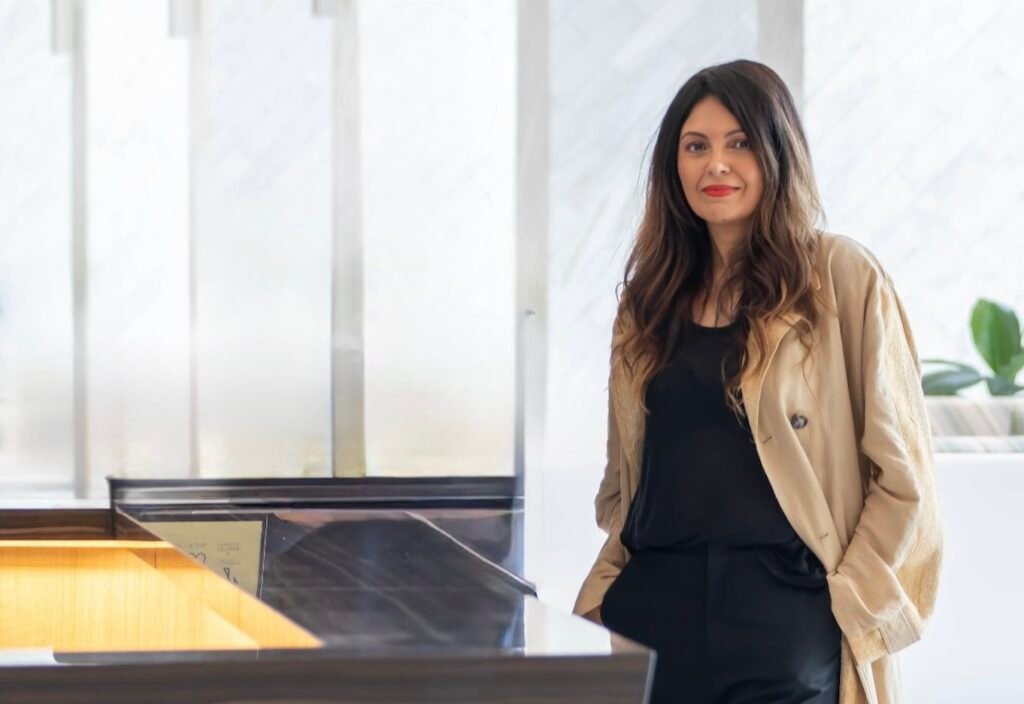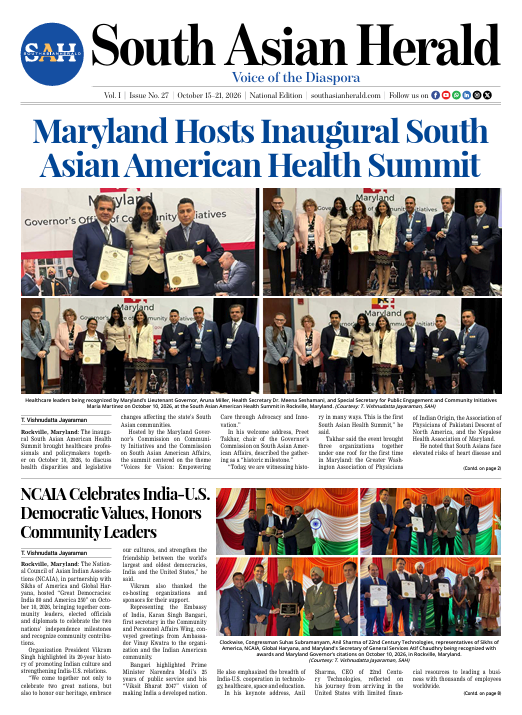
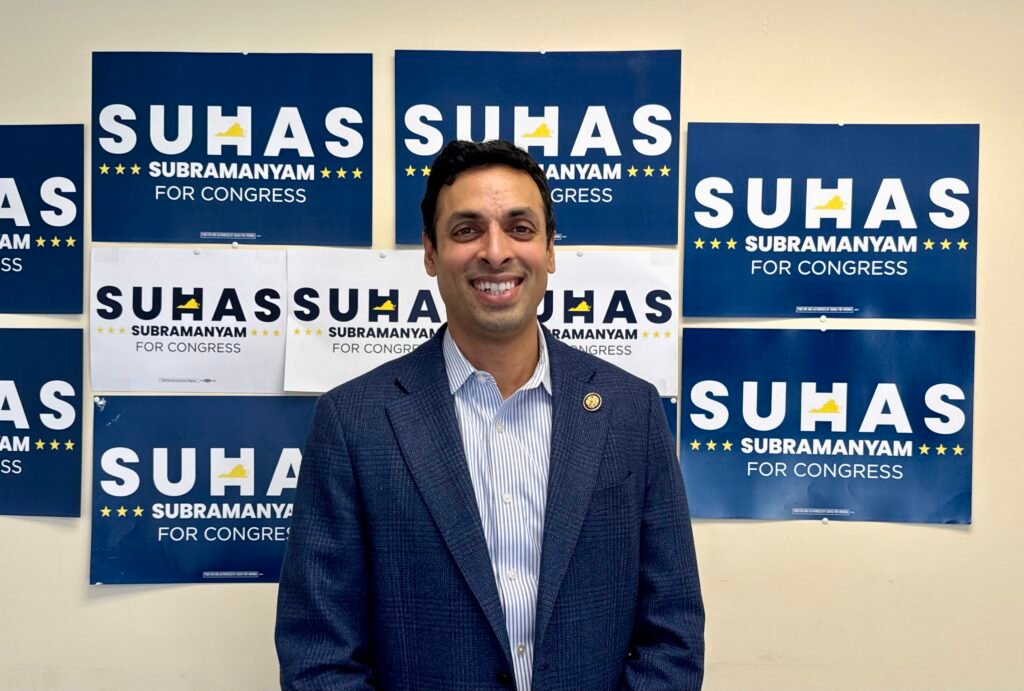
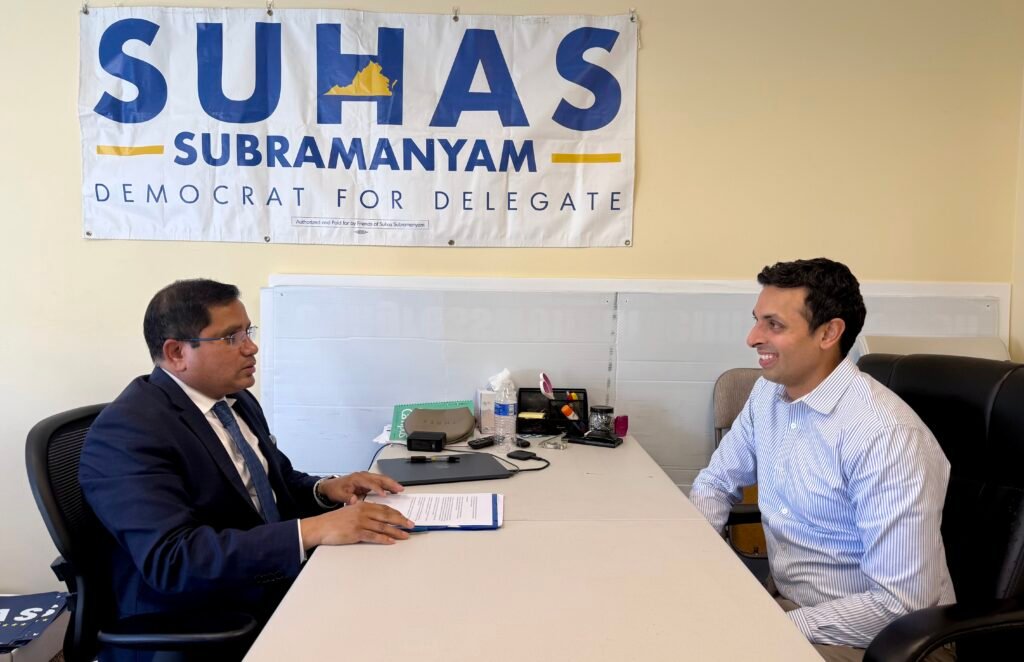
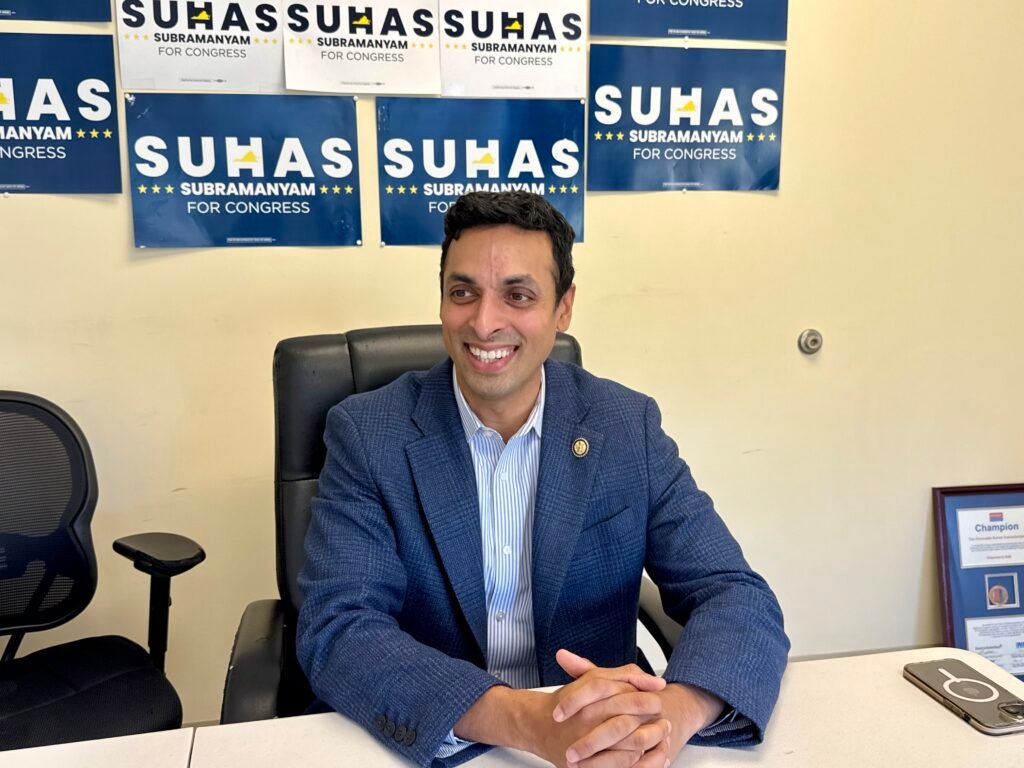
As he approaches the end of his first congressional term, US Representative Suhas Subramanyam, who made history as the first Indian American to be elected to the U.S. Congress from Virginia, reflects on a challenging period for Northern Virginia, citing federal workforce cuts, rising living costs, and concerns about immigration enforcement. In an exclusive interview with South Asian Herald, on October 13, 2026, at his office in Ashburn, Virginia, he discusses his efforts to protect federal employees, secure funding for local priorities, and establish safeguards for data center development.
Subramanyam also shares his views on the Iran conflict, opportunities to strengthen U.S.-India relations, religious freedom, and the growing contributions of South Asian Americans in public service and journalism. Looking ahead to reelection, he outlines his priorities for another term and emphasizes responsiveness to constituents across party lines.
As you approach the end of your first congressional term, what has changed for the better in your constituents’ lives because of your work, and where have you fallen short?
Unfortunately, this has been a Congress that has not been good for our community. We’ve seen cuts to the federal workforce, as well as cuts affecting contractors and their contracts in Virginia. Federal workers and contractors have been hit the hardest.
Advertisement
We were proud to stand up for federal workers during these cuts. We were ultimately able to save many people’s retirement benefits and push to reverse some of the cuts, but it has been a difficult two years for our community.
Pair that with the rising cost of living because of Trump’s tariffs and the Iran war, attacks on immigrant families, and the increase in our national debt because of the “big, beautiful bill.” To me, our country and our community need a change in leadership. I’m running for Congress again so we can have new leadership in Congress and put the people over the president.
You have supported congressional efforts to assert war powers over the Iran conflict. Beyond requiring congressional authorization, what outcome should the Congress pursue, and what steps would you support to achieve it?
This is an illegal war. The president must come to Congress after 60 days to continue a war. A blockade is an act of war, as are the other things happening in the Middle East right now.
To me, the president needs to come to Congress and work with us to end this war. This was a war of choice. It should never have happened in the first place. It was a failure of diplomacy. The president fumbled this, he knows it, and he’s having trouble getting out of it now.
Your National Data Center Plan proposes requiring data centers to pay for their own power needs. How would that protection work for a Virginia household, and would it address costs associated with existing facilities as well as new projects?
We need to put common sense guardrails on data center development. People in our community are seeing power lines run through their homes and schools, spikes in their utility bills, and the environmental impact of data centers. We need to put the community first when it comes to building them.
I put forward a plan for the federal government to lead and work with industry on siting data centers in places where it makes sense, ensuring that the community is not subsidizing their power needs, and making sure we understand and address their environmental impact.
Data centers generate local tax revenue but also raise concerns about electricity demand, water use, noise, and proximity to homes. What conditions would lead you to oppose a proposed data center in your district?
When the community has to subsidize the construction of power infrastructure for those data centers, that’s a red flag. The community should not have to do that. I don’t pay my neighbors’ power bills, and they don’t pay mine, so we shouldn’t have to pay for a data center’s power needs.
For a South Asian family waiting years for permanent residency, what specific reform would you prioritize, and what is your realistic path to securing enough votes to pass it?
Immigration is one of our superpowers as a country. My family and I wouldn’t be here without our immigration policies and the way we have welcomed immigrants over the past several decades.
The reality is that this administration has gone after immigrant families, whether or not they were here legally. I’ve seen many legal immigrants targeted by ICE or mistakenly placed in detention.
To me, we need comprehensive immigration reform with clear, predictable standards that people who visit or want to stay in the United States can understand and follow.
It’s a shame that we’re also seeing anti-immigrant sentiment, with people saying immigrants are stealing their jobs. Many immigrants on work visas actually create more jobs than they occupy. We need to provide opportunities for American citizens while helping people understand the contributions of work visa programs and immigration more broadly.
Where do you draw the line between legitimate immigration enforcement and enforcement that violates due process? What oversight mechanism would you support to make that distinction enforceable?
We need people to follow the law. Right now, ICE is not following the law. They’re not training people properly, and they’re carrying out immigration enforcement in a way that is more about intimidation than enforcing the laws on the books. There’s also no accountability for some of their actions.
We held a hearing with families of American citizens who were killed by ICE. We should never have to hold such a hearing. That hearing is an indication that this administration has gone way too far on immigration enforcement.
You introduced the LEASH DOGE Act to require greater transparency and accountability. What information should taxpayers be able to see to determine whether DOGE’s actions produced lasting savings or shifted costs elsewhere?
There’s no transparency around what DOGE did, how it did it, or why it did it. We now have more evidence that DOGE was a complete failure. It was more about ideology and creating loyalty tests in support of the president than making our government better and more efficient.
In fact, it made our government less efficient and wasted more taxpayer money than it saved. It was a complete failure, and we need to make sure it doesn’t happen again.
We can improve government efficiency, and I support many bipartisan measures to save taxpayer money. But part of that involves having good people in government. What DOGE did made it harder for our federal agencies to recruit and retain the best people.
Your Federal Telework Protection Act would change how employees request telework. How would you demonstrate that those protections improve government performance while maintaining accountability to taxpayers?
Many federal workers live in Loudoun County and have agency offices in D.C., but much of their work can be done remotely. Some took their jobs in part because telework policies were in place for situations such as a sick child or an adult relative who needed an extra hand.
Instead, we’re having them spend hours on the road that they could spend working. From an efficiency perspective, it makes more sense to let them spend an extra hour working and another hour with their families, at least once or twice a week when there are extenuating circumstances.
But this administration tried to unilaterally take away telework programs and policies that helped attract good people. The private sector uses telework regularly. If the government wants to compete with the private sector for the best talent, we need a flexible telework policy to help recruit those people.
The evidence shows that people who telework are just as efficient, if not more efficient, than those who don’t. Working from home is not for everybody, but it works for many people. There are plenty of metrics we can put in place to ensure the work is getting done.
As the world’s two largest democracies, India and the United States have significant opportunities to collaborate on global challenges. What role do you envision playing in advancing this partnership as a member of Congress?
There is an inextricable bond between the U.S. and India, whether the leaders of the two governments get along or not. Look at the economic ties, academic ties, and immigrant community ties. The Indian diaspora in the United States alone creates a link to India.
Couple that with the fact that India is a large democracy committed to democracy. To me, the best and most sustainable relationships the United States has are with other democracies that share similar values, like India.
I believe the relationship can and should be better. It needs leadership in the White House and on the Indian side to work better together and fulfill the promises made over the last few decades.
It makes all the sense in the world for the U.S. and India to work together. I’m not just saying that because I’m an Indian American. As an American, I see India with significant capabilities and strong economic ties to the United States.
I see an opportunity for the United States to expand its footprint and alliances in Asia, and that makes all the sense in the world to me. I’d like to see us cooperate on other priorities, including space and defense, and work toward a better trade situation.
Against the backdrop of growing concerns about anti-Hindu sentiment, discrimination, and hate incidents targeting Hindus and Indian Americans, how do you assess the current situation? Do you believe existing federal laws provide adequate protection to these communities, or are you considering introducing stronger legislation to combat religious hatred, discrimination, and hate crimes?
I would say there is a broader anti-immigrant sentiment. It often takes the form of accusing immigrants of stealing jobs, even when those being targeted are American citizens or people born here who come from immigrant families. In the end, we all come from immigrant families unless we’re Native American. To me, this xenophobia is spreading.
When it comes to hate against Hindus specifically, I think there is a lot of misinformation about Hinduism, and I’ve tried to clear that up. Many people who are not Hindu practice aspects of Hinduism without realizing it, whether through meditation or yoga.
I believe Hinduism has a lot to offer the everyday American in the 21st century. You can practice many of its tenets without calling yourself Hindu, and we’re not asking you to.
It’s a shame that we’re seeing this anti-Hindu sentiment. As a practicing Hindu, I will try to address it in Congress. I’d like to show people why I’m Hindu and help them understand that they don’t need to be Hindu themselves to respect and even enjoy many facets of my religion.
Overall, we must protect religious freedom and ensure everyone has opportunities and the freedom to express themselves, regardless of religion, race, background, nationality, or ethnicity.
Which contributions of Virginia’s South Asian communities do you believe receive too little recognition, particularly beyond technology, medicine, and business?
I’m very optimistic about the contributions the diaspora will make to public policy and journalism. We’re seeing a growing number of Indian Americans enter public service and journalism, fields in which we have generally been underrepresented.
We now have many people running for office up and down the ballot and winning. We also have prominent people entering fields that our parents may not have considered traditional paths for us. We have a new generation of leaders working across different fields, and that’s only a good thing.
How can Virginia create stronger pathways for South Asian residents to serve on public boards, enter public service, and help shape policy throughout the year?
We need people to take that step themselves and show others what’s possible. When the community sees an Indian American serving on a board, it inspires others to do the same and helps them realize they can do it too.
I was the first Indian American elected in Virginia at the General Assembly or federal level. Since I was elected, others have followed, and many more have run for office or entered public service.
I like to think that once a few people do it and succeed, it starts to snowball, and many more will follow.
Looking at your work during 2025 and 2026, which initiatives have become law, which have produced changes through agency action, and which remain proposals? What is your strongest example of a measurable result?
We passed a lot of legislation to make government more efficient, and it was all bipartisan. We were also able to secure funding for projects across Northern Virginia.
There’s water infrastructure that needs to be upgraded, and there are significant housing challenges here. We were able to secure money for workforce housing in Virginia.
Despite being on the wrong side of a trifecta, I’m really proud of what my team and I were able to accomplish under the circumstances. If I’m elected again and serve in a Democratic majority, we’re going to be able to do 10 times as much.
How do you assess your chances of winning reelection, and what evidence gives you confidence beyond fundraising totals and support from committed Democrats?
We feel really confident because I’m talking to voters every day. I’m hearing how frustrated they are with the Trump administration, how excited they are to support me, and that they think I’m doing a good job.
These voters include Democrats, but also Republicans who are fed up with Trump’s policies and interested in seeing what a Democrat can do in Congress.
My team has also worked hard to be responsive when people reach out, and people in both parties’ respect and appreciate that. We’re going to continue the work and try to do even more in the next Congress.
My hope is that we can put forward a vision in which every Virginian and every American feels included in the policymaking process and feels they can trust Congress again.
With the elections just two weeks away, what message would you like to share with voters in your district?
My message to voters is: Come out and vote. Don’t be scared off by rumors about ICE at the polls or claims that early voting or voting by mail cannot be trusted. Those are false.
If you see something irregular, tell our campaign. But come out and make your voice heard. Many people fought and died for this democracy, and it’s our job to exercise our voice.
Whether or not you vote for me, I will always be available to people in our community and responsive when they reach out.