Join WhatsApp Channel


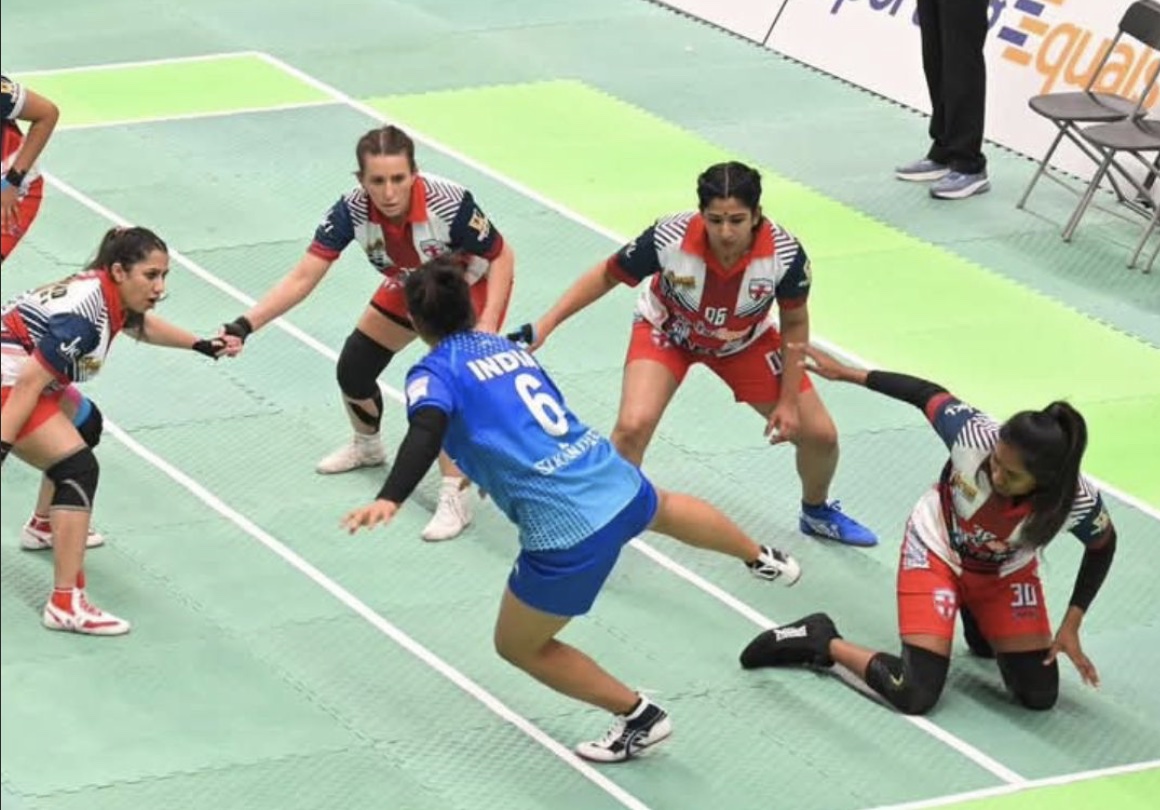
Can members of the overseas Punjabi community imagine North America, Europe, or Australasia without a kabaddi tournament for the entirety of 2026? At first glance, such a prospect appears unlikely. Yet many devoted followers of the sport, widely regarded as the “mother sport” of Punjabis, believe a pause could allow for much-needed reflection and renewal, enabling kabaddi to return stronger and better organized.
Supporters argue that, if structured effectively, kabaddi could be managed on the lines of major global leagues such as the NBA, NFL, and IPL, given its widespread appeal and loyal fan base. Circle kabaddi, in particular, is often likened to a “phoenix” capable of rising anew from adversity.
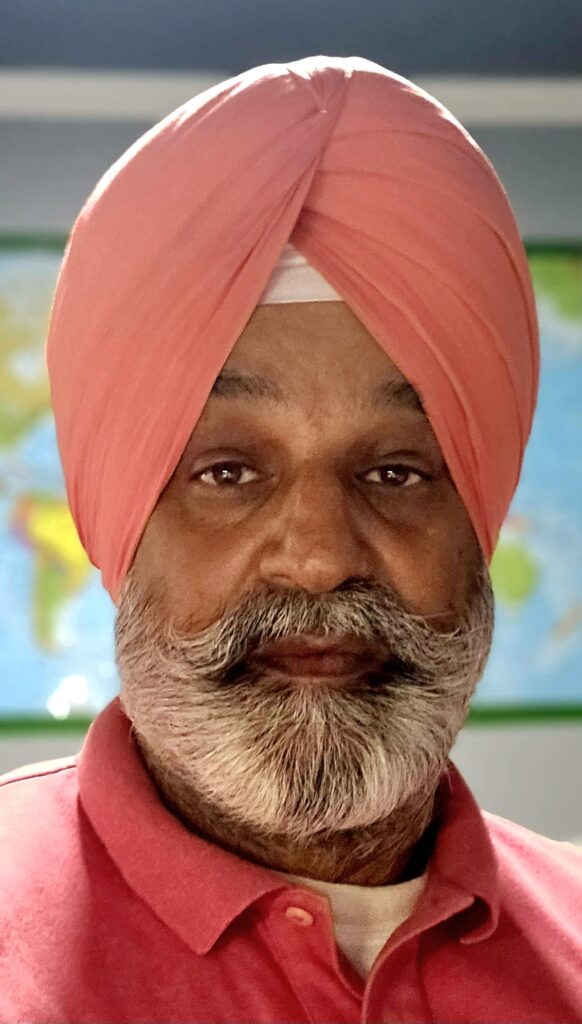
“Yes, it can, provided the introspection or the arduous exercise of restructuring the game at all levels, without disturbing its philosophy, is undertaken with total sincerity,” says Tejinder Singh Aujla, a Surrey-based sports thinker and historian. Aujla has proposed a detailed blueprint aimed at preserving and revitalizing this ancestral and traditional “Maa Khed” of Punjabis, which he believes is at risk of decline without reform.
Interest in kabaddi remains strong across the global Punjabi diaspora, particularly around major international tournaments, including World Cups typically held from around Diwali in November through the end of the harvest season in April.
These competitions have featured teams from India, Pakistan, England, Australia, Germany, France, Italy, the United States, and other countries. On occasion, a team fielded by the Sikhs’ highest temporal authority, the Shiromani Gurdwara Parbandhak Committee, has also participated. Notably, this is the only team from India to compete internationally with players maintaining unshorn hair.
For the Punjabi community, kabaddi represents one of its largest sources of entertainment, with overall spending related to the sport estimated to run into several billion dollars annually.
Although kabaddi is played year-round, Punjab hosts a dense calendar of prize-money tournaments during the winter months. During this period, large numbers of players and enthusiasts travel to the region to showcase strength, agility, and tactical skill. While the FIFKA has announced a complete ban on kabaddi tournaments worldwide for 2026, it has made an exception for Punjab. There, elite players from across the globe continue to compete, drawing crowds eager for high-level play.
Internationally, the most widely accepted format is known as “National Style,” played on a smaller rectangular court. Among Punjabis, however, the preferred version remains “Circle Style” or “Indian Style,” which uses a full circular field.
In circle kabaddi, each team is divided into raiders and jaffis, also known as holdbacks or stoppers. When a raider enters the opposing team’s territory, he advances toward the jaffis. One of the four jaffis attempts to restrain the raider, who must continuously chant “kabaddi” without breaking his breath. If the chant stops, the raider is declared out, resulting in a point for the defending team and a loss for the raider’s side.
Blending elements of athletics, wrestling, gymnastics, and judo, this ancient team sport, with a history spanning nearly 4,000 years, continues to serve as a cultural bridge between the Punjabi diaspora and its homeland, Punjab, the land of five rivers in South Asia.
Though Punjab regards kabaddi as its first love, the sport holds a broader international footprint. Kabaddi is the national sport of Bangladesh, while Iran emerged as a competitive force after hiring an Indian coach ahead of the 2006 Asian Games. The British Army, British Police, and Irish Army have also long patronized the sport by maintaining regular teams.
During the World Wars, large numbers of Punjabis from then-undivided India served in British forces across Asia and Europe, carrying the sport with them to new continents. This global exposure contributed to kabaddi being featured as a demonstration sport at the 1936 Berlin Olympic Games.
Kabaddi became part of India’s National Games in 1938 and received a major boost in 1990 when it was included in the Asian Games. Earlier, when India hosted the 1982 Asian Games in New Delhi, kabaddi was showcased as a demonstration sport alongside Malaysia’s sepak takraw. However, it was the National Style of kabaddi that was featured, not the Punjabi or Circle Style. Efforts continue to have the sport included in both the Commonwealth Games and the Olympic Games.
The Amateur Kabaddi Federation of India was established in 1973 to rationalize the sport’s rules and regulations, though its authority extends only to the National Style. The Asian Kabaddi Federation was later formed to oversee the sport at the continental level.
Given its popularity and mass appeal, efforts to organize kabaddi World Championships began as early as the 1990s. During this period, England’s Channel 4 aired documentaries highlighting the sport’s origins and growing global following.
In 2009, the Punjab Government launched the Kabaddi World Cup with prize money. Hosts India won the inaugural edition, which featured teams from 12 countries, including Iran and Pakistan. Teams from Canada, the United States, and Spain were composed entirely of expatriate players. A few editions followed before the tournament was discontinued.
Despite Canada having a Sikh Sports Minister in Bal Gosal in the early 2000s, kabaddi failed to gain official recognition, largely due to deep divisions among groups claiming authority over this “Maa Khed” of Punjabis.
Explaining his reform blueprint, Tejinder Aujla says that kabaddi enjoys massive popularity, deep cultural roots, and substantial private funding, yet lacks professional structure and official recognition. The blueprint proposes a realistic, legal, and phased reform plan to transform Circle Kabaddi into a credible, sustainable, and nationally recognized sport without compromising its traditional essence. He argues that recognition must begin at the village and club levels, progress to the national stage, and ultimately extend internationally through government affiliation. A time-bound roadmap of 10 years is proposed to achieve this goal.
Aujla also advocates the principle of one nation, one federation, and one rulebook. For player safety, discipline, and dignity, he calls for mandatory registration with the federation, greater transparency in governance, and modernization of administrative structures while preserving the sport’s cultural heritage.
Reforms, he says, should begin with formally naming national governing bodies such as the Kabaddi Federation of India, the Kabaddi Federation of Canada, or the Federation of the Kabaddi Associations of the United States. These bodies must be led by visionary, statesman-like leadership and registered under relevant national laws. They should adopt a model constitution aligned with the National Sports Development Code (2011), mandating athlete representation and clearly defining term and age limits for office-bearers. Existing kabaddi organizations should be absorbed as affiliated units rather than treated as rivals.
The next step, according to Aujla, is to convene a national consensus convention bringing together major organizers, promoters, veteran players, coaches, and referees to sign a Circle Kabaddi Unity Charter and freeze parallel claims of authority.
Consensus before control.
Standardization should follow, with a focus on making the sport more spectator-friendly and aligned with established professional sports. The aim is to elevate kabaddi into a well-organized, high-intensity competition comparable to other mainstream games, drawing on best practices from professional sport.
Discipline, Aujla emphasizes, is critical. A strict code of conduct should ensure respect for opponents, officials, and the spirit of the game. Playing fields must be standardized with uniform dimensions and a smooth grass or sand surface.
Clear rules should govern team composition, substitutions, and match duration. Each team would consist of eight players, with rolling substitutions permitted to maintain pace and intensity. Matches would be played in two 20-minute halves, separated by a five-minute halftime. An electronic scoring system should display scores, time, and match data in real time.
A green, yellow, and red card system is proposed, with clearly defined penalties. A green card would carry a two-minute suspension, a yellow card a five-minute suspension, and a red card would result in immediate ejection.
Teams would be allowed to request video reviews, though a failed challenge would forfeit further review privileges. During matches, only registered players and officials would be permitted on the field to ensure smooth conduct.
Aujla’s blueprint also calls for clear regulations governing reserve players, coaches, and designated technical areas outside the field of play to maintain a professional and distraction-free environment. He further recommends mandatory medical presence to oversee injury protocols, along with random doping tests to uphold the integrity of the sport.
Related posts:
 Surrey-Based Promoter Tejinder Singh Aujla Calls for Legal Framework to Rescue Circle Kabaddi from Crisis
Indian Hockey’s Road to LA 2028: Tejinder Singh Aujla on Qualification Challenges, Transition, and Governance
Surrey-Based Promoter Tejinder Singh Aujla Calls for Legal Framework to Rescue Circle Kabaddi from Crisis
Indian Hockey’s Road to LA 2028: Tejinder Singh Aujla on Qualification Challenges, Transition, and Governance
 City of Brampton Breaks Ground on Cassie Campbell Field Hockey and Multisport Training Dome
 Punjabi Community in Midwest Celebrates International Mother Language Day with Literary Tributes and Cultural Performances