Join WhatsApp Channel

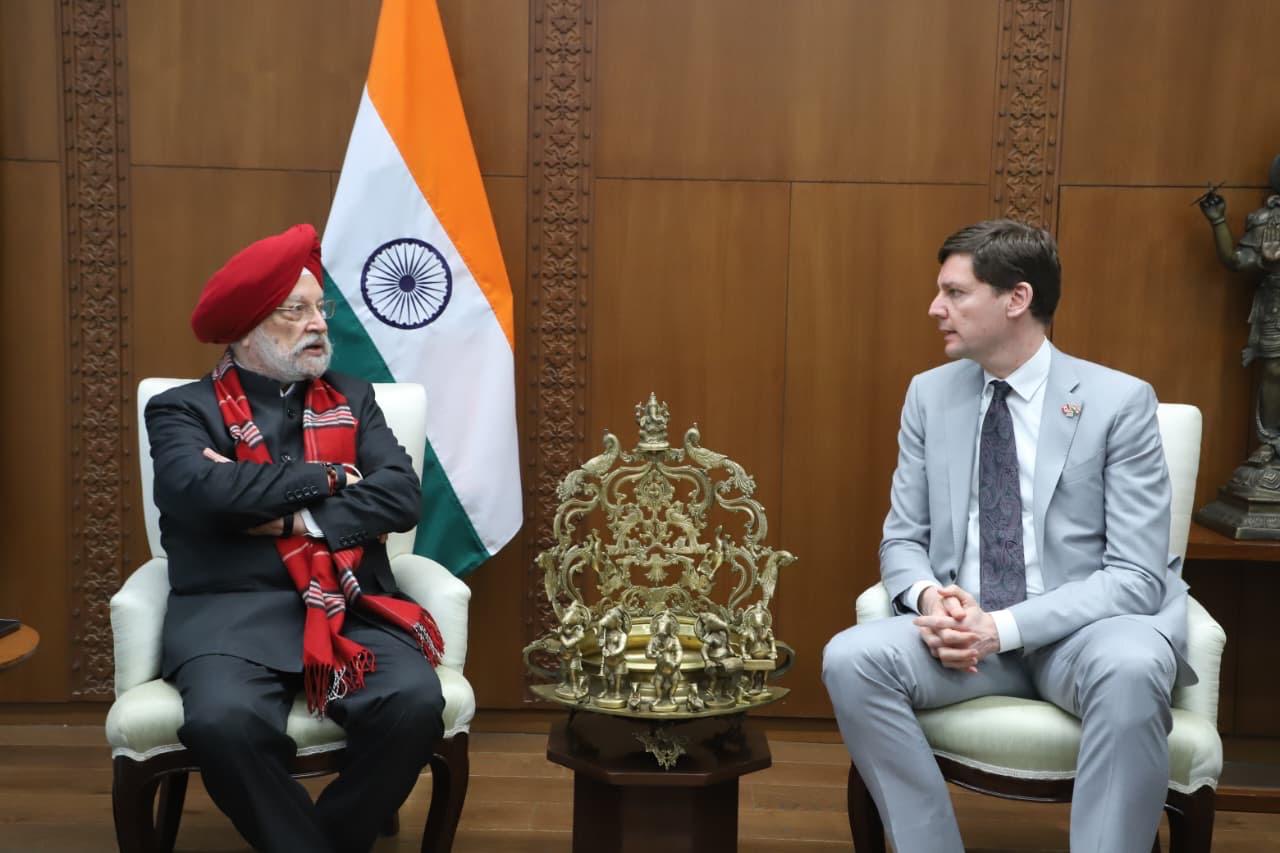
A high-level British Columbia delegation led by Premier David Eby has focused its six-day visit to India on strengthening business, technology, and innovation ties, positioning trade diversification as a priority amid ongoing U.S. trade tensions. The delegation has emphasized economic cooperation over political disputes, framing the mission around protecting British Columbians’ standard of living and expanding long-term growth opportunities.
Midway through the visit, Eby and his team reported progress in advancing partnerships with government and business leaders in Bengaluru, Karnataka, India’s largest innovation hub. The engagements aim to attract investment, foster collaboration in innovation, and build durable institutional and commercial relationships.
In Bengaluru, British Columbia and the state government of Karnataka signed a letter of intent expressing mutual interest in collaborating across life sciences, biotechnology, medical technology, medical devices, and digital health. The agreement is intended to support joint opportunities that combine B.C.’s research strengths with Karnataka’s deep pools of engineering talent, entrepreneurship, and global scale.
“B.C.’s technology and life sciences businesses are second to none, and in the face of U.S. tariffs, we are strengthening our economy by deepening trade and investment relationships with diverse, reliable partners,” Kahlon said. “Bengaluru is the tech capital of India. Its rapid growth and innovation ecosystem make it an important partner for B.C.’s emerging sectors. These relationships create new opportunities for collaboration, investment and shared success.”
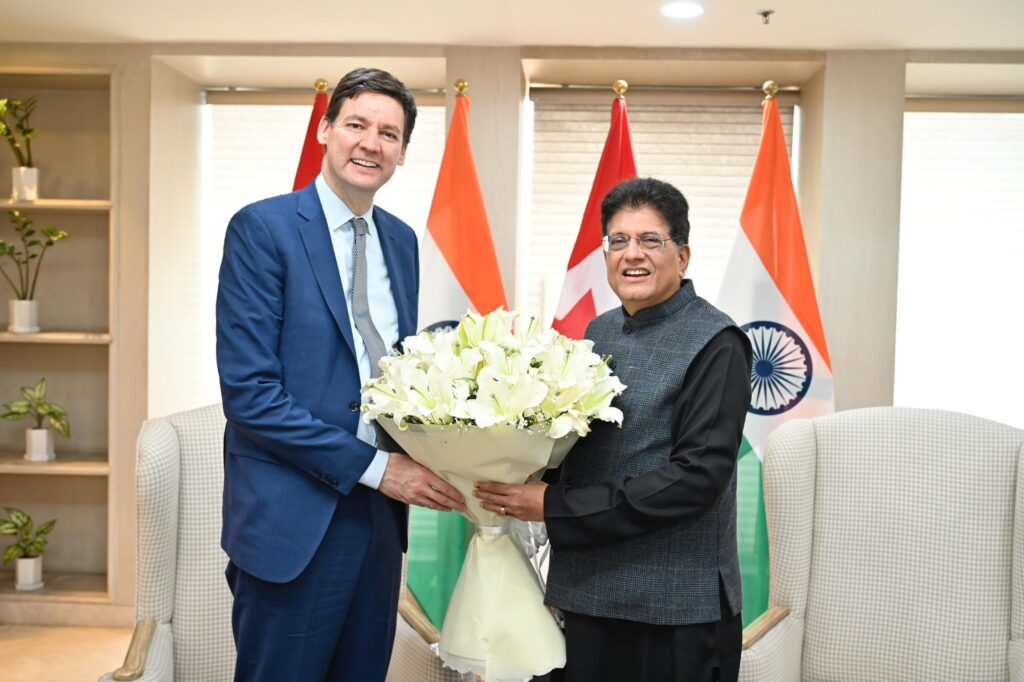
Following meetings in Bengaluru, both sides agreed to promote research collaboration between companies in B.C. and Karnataka, strengthen investment ties, and explore a future Karnataka delegation visit to Web Summit Vancouver 2026.
The trade mission has drawn criticism from some quarters due to Canada–India tensions following statements by former prime minister Justin Trudeau in 2023 regarding credible allegations that Indian agents were linked to the killing of Sikh activist Hardeep Singh Nijjar in Canada. Pro-Khalistan groups accused Eby of prioritizing trade over justice in statements issued before his departure.
India’s government has denied ordering extrajudicial killings in Canada. Four men, all Indian nationals who arrived in Canada several years ago, have been accused of carrying out Nijjar’s killing. Eby said he supports the ongoing trial process and stressed the importance of ensuring justice for Nijjar and the affected community.
While in India, Eby also addressed concerns related to a recent spike in extortion-related crimes in British Columbia’s Lower Mainland. With 16 extortion reports recorded in Surrey during the first two weeks of 2026, he said the province’s extortion task force would provide an update to the community next week. He cited developments including deportations, an arrest in India, and increased cooperation between Canadian and Indian law enforcement agencies. “But bluntly, we need better results. We need to see more arrests, and whatever we can do to support the police to be able to get the job done, we will do so,” he told reporters in Mumbai.
“At the same time, we can’t sit around while our standard of living is eroded and our economy is eroded by the decisions of the president of the United States,” Eby said, referring to the U.S. trade war. “India is going to be the third largest economy in the world, and Canadians and British Columbians will only benefit from a close relationship with India.”
Ahead of the visit, the B.C. government said exports of B.C.-origin goods to India were valued at $1.3 billion in 2024. Kahlon said the province has “the highest share of exports to India of any province.” Eby and Kahlon are scheduled to remain in India until January 17, with additional stops in New Delhi and Chandigarh to meet government and business leaders.
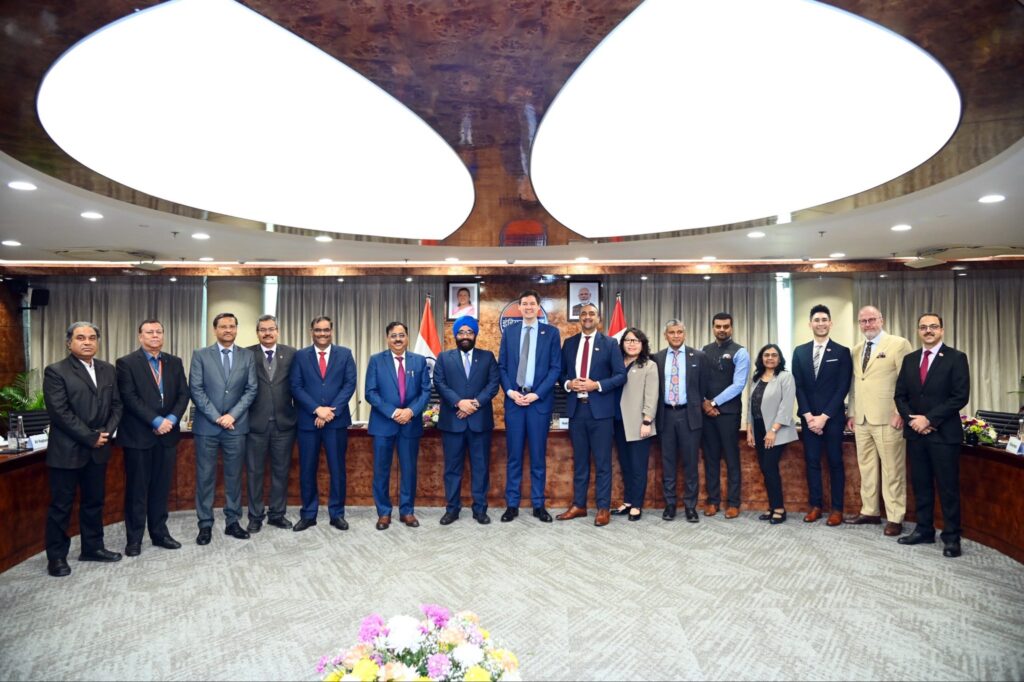
Business Council of British Columbia President and CEO Laura Jones said India represents a significant market that could help diversify growth in the provincial economy.
During his meetings in Karnataka, Kahlon led roundtables with B.C. and Indian companies to identify opportunities for trade and investment. He also promoted Web Summit Vancouver 2026, positioning British Columbia as a global technology hub. Meetings were held with Indian technology firms and with B.C. companies operating in India, including Telus Digital Services, Lululemon, Earth Daily Analytics, and Yactraq Online, to discuss operational challenges, growth opportunities, and potential provincial support.
Kahlon also met with Sharath Kumar Bache Gowda, chairman of the Karnataka State Electronics Development Corporation Limited, to discuss expanding collaboration across life sciences, technology, and innovation ecosystems.
“Global collaboration drives commercial success in life sciences,” said Wendy Hurlburt, president and CEO of Life Sciences BC. “Strengthening trade and investment ties with high-growth markets like India, one of the world’s largest economies, is critical to accelerating innovation, scaling our companies internationally and ensuring the long-term competitiveness of Canada’s life-sciences sector.”
The mission aligns with British Columbia’s Look West industrial and economic plan and its broader trade diversification strategy, which prioritizes faster delivery of major projects, market diversification, and growth in targeted sectors including technology, life sciences, aerospace, marine industries, artificial intelligence, quantum technologies, agriculture, and construction innovation.
British Columbia is home to more than 12,000 technology companies and has established strengths in AI, quantum computing, and clean technology. Information technology remains B.C.’s top investment sector in India. Companies such as TELUS, Lululemon, and Pani Energy operate in Bengaluru, collectively supporting more than 1,400 high-paying jobs. The province currently maintains four trade and investment offices in India, located in New Delhi, Mumbai, Bengaluru, and Chandigarh.
Often referred to as the “Silicon Valley of India,” Bengaluru contributes more than 43 percent to Karnataka’s economy and hosts over 40 percent of India’s Global Capability Centers. Its economy is driven by information technology, biotechnology, aerospace, and electric vehicle manufacturing.
The letter of intent commits both governments to advancing collaboration in life sciences and biotechnology, encouraging two-way trade and investment, and promoting knowledge exchange through workshops, delegations, policy dialogues, and institutional partnerships.
Eby also highlighted strong interest from Indian companies in British Columbia’s mining and energy sectors. He said discussions with major conglomerates and energy companies consistently included mining opportunities, noting that more than 20 mines in the province are at various stages of development.
The premier added that British Columbia’s liquefied natural gas sector has also attracted attention, citing interest in projects such as Woodfibre LNG in Squamish, LNG Canada Phase 2 in Kitimat, and the Ksi Lisims project near Prince Rupert. He said Indian stakeholders view LNG as a transitional energy source that can help reduce carbon intensity and air pollution as India’s economy continues to expand.
Related posts:
 OFIC Urges Canada to Fast-Track CEPA Talks as British Columbia Trade Mission Arrives in India
 Canadian Leaders Urge Terrorist Designation for Lawrence Bishnoi Gang Amid Threats to South Asian Community
 CHCC India Mission Gains Momentum as BC Premier Prepares Trade Visit to Strengthen Canada–India Economic Ties
 Immigration and Bail Reforms Set to Rock Ottawa