 Join WhatsApp Channel

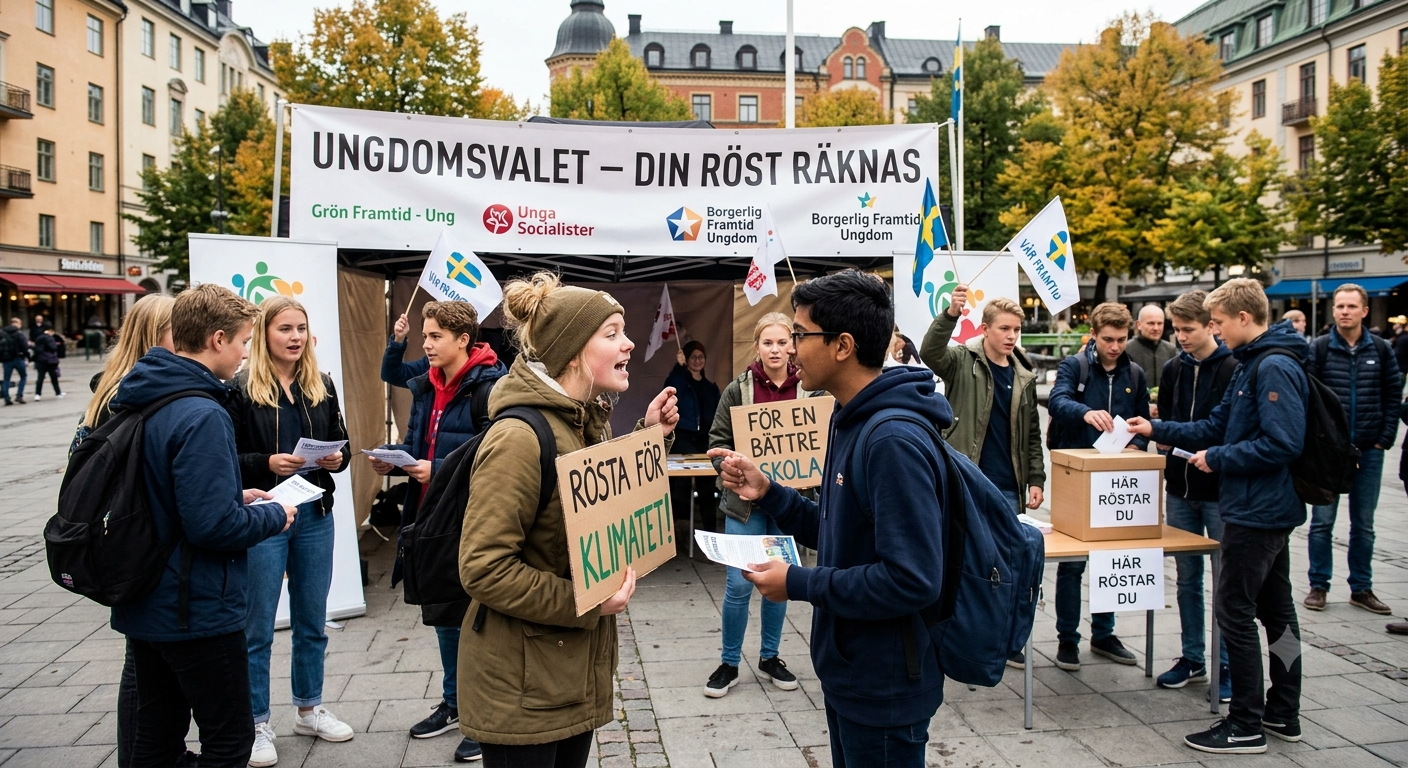
On a recent visit to Europe, when India’s young “cockroaches” are supposedly reclaiming Indian politics via the Cockroach Janta Party filled with anger and wanton protesting, I found myself watching a very different kind of political awakening unfold in Sweden, a country that doesn’t weaponize ideas but gives their youth the right tools to think.
On the way to a family dinner, the conversation took a turn when my 15-year-old nephew Rohan Abraham asked his parents, “Which party are you voting for, this year?” My ears perked and what started as a simple discussion now had me hooked as the ebb and flow of the conversation metamorphosed into a full-fledged debate.
My cousin quickly interjected to tell me that the students were also having a mini/ mock election that would take place before the adults voted. I quickly nodded, not wanting to miss any of my nephew’s excited observations.
Sweden works on a four-year election cycle where representatives are elected to the Riksdag (Swedish parliament). As the representatives ready themselves to inspire the adults to vote in their favour, a firm undercurrent is forming concomitantly in schools.
Along with the adults a mock election for the students are also conducted, keeping in mind that these young fledglings will be handed over the baton in the future.
Swedish schools have been holding mock elections for young students since the 1960s. Given the current international political climate, preparing our youth for futuristic problems with a nuance that most other countries do not offer their youth makes it a moot point for discussion.
Initial discussions are held a month before the elections where the youth are expected to analyse the current trends by educating themselves on the plethora of parties and candidates.
This includes various themes which include the UN development goals on education, economy and ecology.Speaking to me about his own school life Rohan excitedly shared, “First they [the students] must research independently and select which party they are supporting, followed by healthy debates among each other which acts as an enabler for fresh ideas and a closer look at the problems that the country faces.”
These teenagers are encouraged to watch all the live debates of the political candidates, each positing themselves as the best fit for politics. This enables them to think, question and align themselves with a certain ideology that they best believe in.
The 15-year-old adds, “Although people under 18 can’t vote, they can still affect the elections in their own way. Firstly, they try to convince their parents to vote for who they are convinced could be good. Second, they will share their opinions on social media to try to convince adults to vote for the “right” party.”
This seems to be the crux of Swedish politics: inspiring healthy inter-personal discussions even at home broadening the horizon of political maturity, where you are not just taught how to think but to ask the right question leaving no space for callousness.
In a way younger politicians also must interact with the young making them a soft lobby for ideas that the party embodies and manifests.
With social media transitioning into an independent political space, it becomes necessary to allow the young to express their hopes, their fears, their expectations and disappointments too.
In many ways allowing the young to build belief systems independent of their parents has become imperative. While the conversation caught steam in the run up to the Swedish elections, I was caught contemplating on how, in the midst of all the mud-slinging and personal rhetoric, the world’s largest democracy has lost its ideological spine.
While India currently grapples with the emergence of cockroaches scurrying across the land screaming for resignations and apologies, Sweden is investing quality time and effort making politics mainstream.
Where the cockroach janta party is trying to change the trajectory of Indian politics with anger and frustration, Sweden has been quietly creating an independent forum for their youth to debate-making for a healthier political future. The Swedes are not just creating an environment conducive to this kind of healthy debate but are also establishing a forward-thinking generation that knows what matters.
Rohan explains excitedly, “In class, students are divided into eight groups, one for each major party:Vänsterpartiet, Socialdemokraterna, Miljöpartiet, Centerpartiet, Liberalerna, Kristdemokraterna, Moderaterna and Sverigedemokraterna. “The teacher selects which party and students are divided into groups. Next, the students have to really do some deep research into the party they have been assigned, and stay neutral. “When they have done that, they have to read the party manifesto and present the most important points about the party, and also share what the party gets criticized for. Lastly, we have school elections to see what students think and try to get an overview of how the next election could go.”
It’s interesting to note that the suspense that comes with election results keeps the students also on a hot pipe because the student ballots are opened after the election results are announced.
A comparison is then made between what the young think as opposed to their adult counterparts. Rohan further explains with some determination, “I am inclined to vote for the right more than the left. The left is focused on increasing taxes for the rich and reducing taxes for the poor. They are more focused on the climate and are more open to immigration.
The right on the other hand wants to reduce taxes, keep the same focus on the climate and reduce immigration. I think that if you increase taxes for the rich, nobody is going to want to start companies or the rich are just going to leave the country. Without companies and rich people, the economy will be terrible.
“I believe in the left though. I do think that we should focus on the climate. I also think that we should reduce the intake of immigrants because there are quite a lot already.
“I think that the best party is Moderaterna because they are a trusted party and their opinions are the closest to mine compared to other parties.”
While Rohan has made up his mind along with his Swedish friends, India has sometime before political maturity takes CenterStage.
In an opinionated global diaspora filled with lust for political wins, WhatsApp university-driven decision-making; where cash-for-vote scams are the new normal, and brute-force images make headlines, India has a long way before it can claim to be a responsible democracy whose citizens are self-aware of their rights, duties and responsibilities towards their country.
Moulding public opinion is a responsibility vested in every citizen. It’s easier to put the blame on the government but equally difficult to share the blame.
Educational institutes in India have been producing some of the finest crop of industrialists, politicians, scientists and more. Why then are today’s youth resorting to an existence where they find it necessary to indulge in self-deprecation to prove a point?
You could support any party today but the real question is: Will your children follow brand loyalty blindly or will they also get the opportunity to read, reinforce and respond to the challenges that they are slated to face 10 years from now and ask the responsible question: Why? Why should I vote for an ideology I know little about? Why should I vote for a politician who makes comeback every 5 years, hands folded, back slightly bent and eyes full of concern only to disappear when you most need them?
If our children fail to ask the right question today, they will only be extending the lifecycle of a vicious loop where a section of society votes for a symbol instead of a strong and worthwhile political ideology.
Disclaimer: The opinions and views expressed in this article/column are those of the author(s) and do not necessarily reflect the views or positions of South Asian Herald.
Related posts:
 L’Opéra’s Special Nobel-Inspired Dessert Highlights Sweden’s Tribute to Alfred Nobel in New Delhi
 Tenth Schedule and the Merger Loophole
 The Importance of ‘One Vote’ From Vijay’s Hit Film ‘Sarkar’ to the Defeat of ex-DMK Minister in TN Polls
 Nepal’s Gen-Z Takes Politics From the Streets to the Ballot Box
