Join WhatsApp Channel

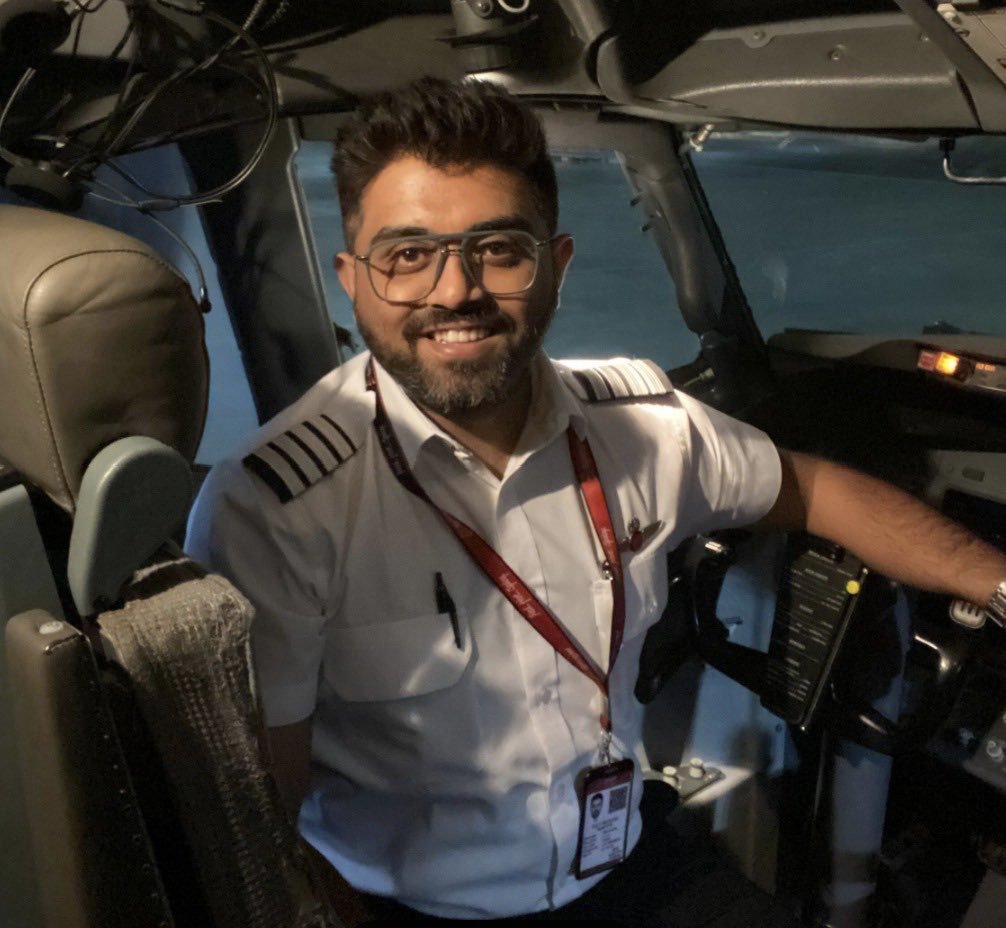
Dubai, UAE: Two hours into the routine three-hour hop from Dubai to Tel Aviv on September 30, the ultimate aviation nightmare breached the cockpit. It wasn’t a security failure from the cabin, but an insider threat. In a sudden, frenzied bid to execute a suicide dive over Israel, the assailant co-pilot turned on the pilot-in-command, Captain Smit Machchhar. Slashing repeatedly with either a smuggled folding knife or the flight deck’s heavy fire axe, the attacker left the Indian captain bleeding profusely on the floor with deep cuts to his head, chest, and arms.
With the attacker overriding the flight path, the Boeing 737 plummeted 14,000 feet in an agonizing 30 seconds. The descent was so extreme it literally tore a portion of the rudder from the tail. Alarmed by the radical trajectory, Israel scrambled fighter jets to intercept what looked like a weaponized missile heading for Tel Aviv.
Yet, seriously injured and lying on the floor of a spiraling aircraft, Captain Machchhar refused to yield.
Maintaining absolute cognitive discipline through hemorrhagic shock, his lacerated fingers found the transponder console. He manually squawked distress code 7700 for a general emergency, immediately followed by 7500—the definitive global code for a hijacking and unlawful interference.
Post-9/11 aircraft architecture explicitly designs bulletproof cockpit doors to lock the outside world out. The mechanical toggle to unlock it was positioned high on the console—directly on the co-pilot’s side. Mustering a final, agonizing surge of adrenaline, Machchhar dragged his body across the floor, reached past his attacker, and flipped the door release switch.
That single, desperate reach effectively weaponized the passenger cabin.
Hearing a muffled scream from the deck, Israeli passengers rushed the threshold. Bursting through the newly unlocked armor, they found the cabin controls being frantically bashed by the rogue co-pilot. Passenger Yaniv Hayun—who later credited his split-second instincts to years of watching Air Crash Investigation—wrenched the control column back, arresting the aircraft’s fatal dive just in time. Simultaneously, other passengers pinned the rogue co-pilot to the floor, binding him tightly with zip ties and corded multimedia headphones.
Dr. Shota Musaev, a dentist among the passengers, applied emergency trauma care directly on the cockpit floor, stabilizing Machchhar’s crashing blood pressure seconds before it became fatal. Two off-duty Flydubai pilots travelling in the cabin stepped into the vacancy, stabilized the damaged Boeing, and safely executed an emergency landing in Tabuk, Saudi Arabia.
Captain Machchhar’s calculated defiance under extreme physical trauma drew instant global awe, with world leaders praising his superhuman clarity. He didn’t just survive an assassination attempt at Mach 0.8; he unmade a modern fortress from the inside out so his passengers could save themselves.
As Flight FZ 1073 sat on the tarmac in Tabuk, investigators were left to untangle the terrifying reality of an insider threat. Yet, the aviation world’s focus remains anchored on those critical, chaotic minutes inside the flight deck. Captain Machchhar’s actions will likely be studied in simulators for decades. Under the ultimate test of physical trauma and cognitive panic, his survival instinct didn’t default to self-preservation—it defaulted to the absolute protection of his passengers.
Related posts:
 Air Disasters-4: Adanis, IndiGo Rule Indian Aviation as Government Agencies Get Elbowed Out
 Air Disasters-2: When is “Orange” Black?
 Fuel Cutoff to Both Engines Seconds Apart May Have Caused Air India Flight 171 Crash in Ahmedabad: AAIB Preliminary Report
 Air India Unveils Non-Stop Flights to Newark from New Delhi and In-Flight Wi-Fi: A New Era of Luxury and Connectivity