Join WhatsApp Channel

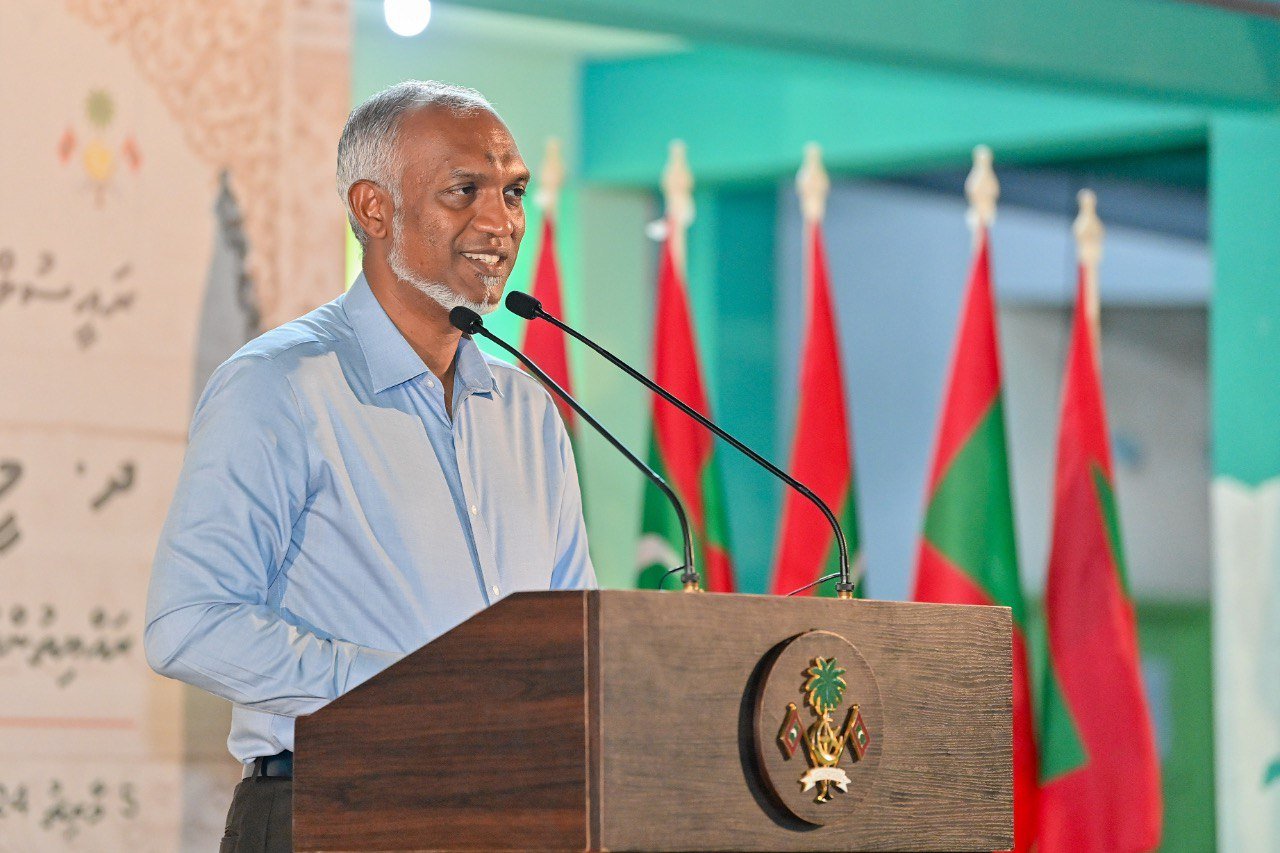
President of Maldives Mohamed Muizzu’s Cool School programme is turning a nationwide school-cooling rollout into a wider climate-adaptation test, combining air conditioning, electrical upgrades and renewable energy as heat stress places further growing concerns of pressure on children and education across the islands.
When he first set out the programme, President Muizzu said renewable-energy projects in schools would be developed specifically to power classroom air conditioning, responding to repeated requests from students and teachers. In his Presidential Address, he linked the project directly to learning conditions, saying: “I aim to make the school environment conducive to learning and enjoyable for students.” He also said work had begun towards powering the entire Cool School project with 100 per cent solar energy.
As of July 7, air-conditioning installation had been completed in 61 per cent of the country’s 217 government schools. All required units had reached the remaining schools, with electrical-grid upgrades now a key part of the outstanding work. The programme is designed to air-condition 3,704 classrooms nationwide.
The energy challenge is significant, as the Education Ministry has estimated that school electricity expenditure could rise by around 38 per cent once cooling is fully operational. The Government has therefore tied Cool School to a broader solar push: solar panels had been installed at 53 schools by mid-2025, while around 30 per cent of the project’s energy demand is intended to be met through renewables.
President Muizzu has placed that approach within a wider energy-security strategy, including a national target for 33 per cent of electricity demand to be met from renewable sources by 2028. Speaking earlier this year, he said: “Energy transition is another area where necessity has driven innovation.”
For the Maldives, the educational case is immediate. UNICEF Maldives warned in June that children and young people face increasing risks from heat stress and climate-related disruption to learning. In August, students at Utheemu School told the President that air conditioning installed through Cool School had improved the comfort of their learning environment.
The programme is also part of a wider effort to make education infrastructure more resilient. In June, the Ministry of Education secured a US$200,000 Global Partnership for Education grant for climate-smart education, including structural assessments of atoll schools, climate-informed planning, curriculum development and teacher training.
The practical dilemma is one facing many climate-vulnerable countries: adaptation can protect people from heat, but technologies such as cooling can also increase electricity demand. In the Maldives, where communities and public services are spread across islands, the Government’s approach is to address cooling, local grids and renewable generation together rather than as separate infrastructure problems.
If delivered at scale, that approach is intended to mean more stable learning conditions for students, stronger school electricity networks and a larger role for distributed solar — while limiting the additional fuel and cost exposure that would come from meeting new cooling demand through conventional power alone.
Muizzu has argued that the same constraints facing island states can also drive solutions relevant elsewhere. As he told the Maldives-Germany Business Roundtable: “This is where the Maldives’ experience becomes relevant beyond our borders.”