Join WhatsApp Channel

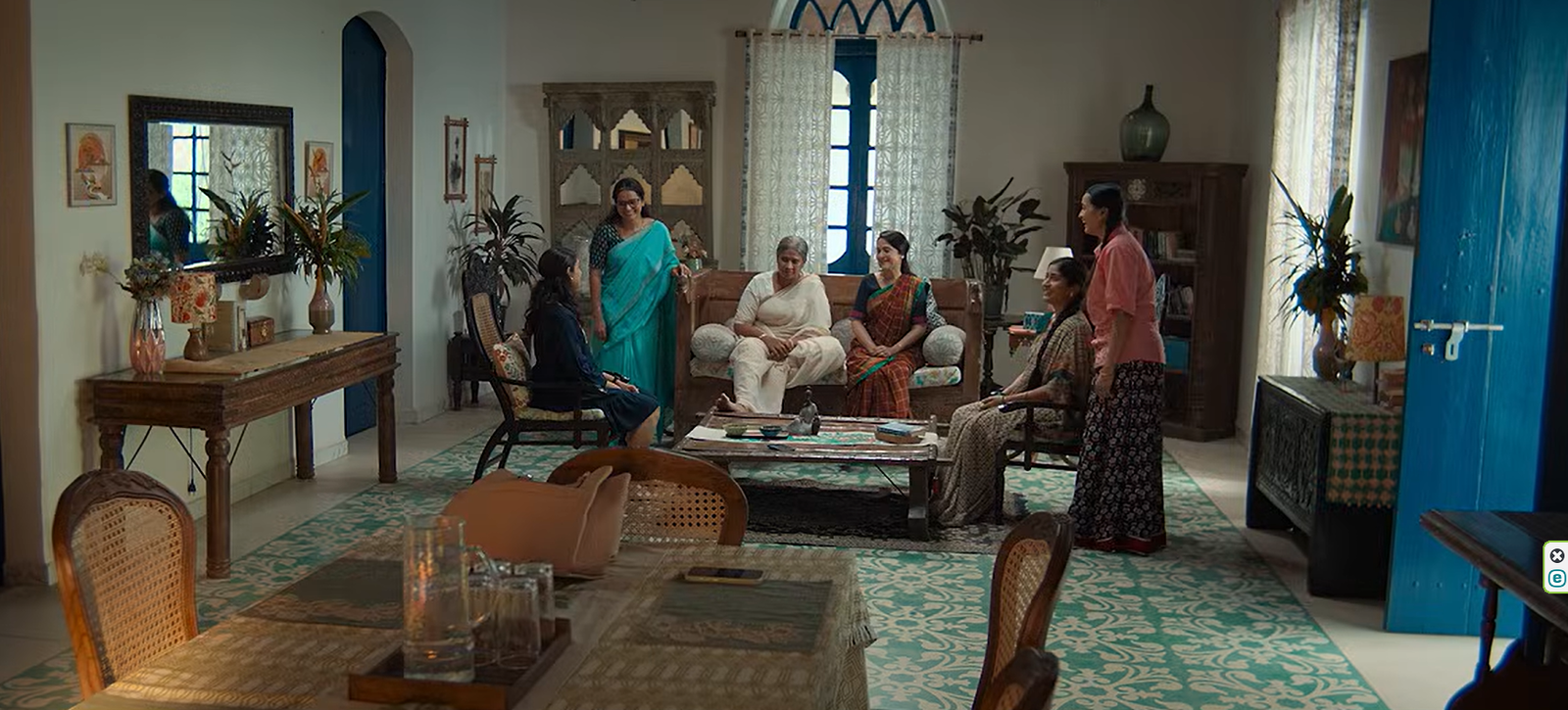
It’s entertaining, emotionally riveting but it is feminism in overdrive. Bandkhor (which means a rebel) tells the story about a vivacious but volatile city girl, Meera (Priyadarshini Indalkar), who hails from a village and is in a live-in relationship with Neel (Sanket Pathak) and whose (platonic) bestie is Abhas (Siddharth Bodke).
When Neel suspects her for double-dating Abhas, a furious Meera breaks off with him. Summoned by her mother, Seema (Titeeksha Tawde, with whom her relationship is also fractured) home as her grandfather Namdev (Angad Mhaskar) has expired, she rushes there and is catapulted into a tumultuous situation.
The widowed grandmother, Usha (Chhaya Kadam, masterly as always!) speaks facts and announces that her dead husband was a philanderer. His mistress Sharda (Mrinal Kulkarni) is also living with them, thanks to him. Contrary to the norm, this ‘woh’ (other woman) is herself a long-suffering lady with a tragic past that was exploited by Angad.
Usha’s son, Sadanand (Mangesh Desai) is a domineering and chauvinistic man who considers women worthy of only cooking and raising children and has prevented daughter Rupa (Pooja Katurde) from chasing her dream of higher education. He wants her to marry her off to his friend’s son as he also has political ambitions. His wife, Urvashi (Nityashri) cannot assert herself either.
Seema also has a colleague, Rahul (Mahesh Vaman Manjrekar), with whom she shares a hesitant mutual respect and relationship, but she too has had a past and
Sharda now wants to leave the household, but Usha, knowing her backstory and aware that Sharda’s son Mandar (Mayur More) from Angad, is a total blackguard, insists that she continue to safely live with them, asserting her broad-minded mindset with her son and even Meera, who is disgusted with her late grandfather’s actions.
As time goes on, Meera tries to motivate Rupa into achieving her dreams, but surprisingly here, the otherwise determined Usha never takes a stand for her granddaughter!
Soon, Usha tells her why Meera’s dislike for her mother is woefully unjustified. Meera is the product of the past traumatic relationship, where Seema’s ex-husband had wanted a boy and thus wanted her to abort a daughter, as determined by an illegal sex-determination test! Seema has left him and brought up Meera singlehandedly.
All the ends are slowly wrapped up, and the three regressive males (Sadanand, Neel and Mandar) are made to see reason, while Rahul and Abhas help the women celebrate their solid bond and support for each other.
The story (Mahesh Waman Manjrekar) gets into hyper-feminist mode as, but for Rahul and Abhas, who footage-wise have limited roles, all the men are shown in a negative light, including three more characters—Seema’s ex-husband, ex-father-in-law and their spiritual guru.
Manjrekar tries to pitch in for gender equality from a different angle than the Baipan Bhaari Deva-Jhimma–Jhimma 2 tenors and succeeds in making a case for gender equality in a strong yet interesting manner. But the subtleties cannot be missed—about how Usha stands up for Sharda and against her son in diverse key matters but does not defend or protect Urvashi or Rupa. Also, the sudden change of heart in both Sadanand and Mandar is far from convincing as it is abruptly shown or narrated respectively. The Neel-Abhas angle in the climax is, however, done very well.
The music (Hitesh Modak, Piyush-Mahesh) is average and includes a meaningful (A.M. Turaz-written) Hindi ghazal, the cinematography (Karan Rawat) eye-filling and the dialogues (Irawati Karnik, Siddharth Salvi) generally crisp, though there is a slight tendency to preach on occasion to the audience. As director, Manjrekar is excellent at getting in outstanding performances.
Besides Kadam’s towering turn, Titeeksha Tawde is surpassingly brilliant as Seema. Her tones, gentle smiles and expressions make her rise far above the script. As the cocksure Sadanand, Mangesh Desai impresses. Siddharth Bodke (known for his singular performance as the whistleblower in Drishyam 2) is terrific as the tender-hearted Abhas. I also liked Nityashree Dnyanlaxmi as Urvashi. Priyadarshini Indalkar is effective as Meera.
Despite the overt women-empowerment tones, Bandkhor makes for a good watch.
Rating: ***
Vinsan Graphic Productions’ Bandkhor Produced by: Sanjay Shetye Directed by: Mahesh Vaman Manjrekar Written by: Mahesh Vaman Manjrekar, Irawati Karnik & Siddharth Salvi Music: Hitesh Modak & Piyush-Mahesh Starring: Chhaya Kadam, Mrinal Kulkarni, Priyadarshini Indalkar, Pooja Katurde , Titeeksha Tawde, Nityashree Dnyanlaxmi, Mangesh Desai, Siddharth Bodke, Sanket Pathak, Angad Mhaskar, Mayur More, Mahesh Manjrekar & others