Join WhatsApp Channel

The singular defining feature of India’s digital payments revolution till now has been that paying with UPI has been almost free.
The Central Government has on Monday let it be known that from October 15, it will change, not for most transactions, but for quite a few kinds of transactions. The new system will bring in a fee named the Merchant Discount Rate (MDR), of 0.4 per cent on UPI payments made to merchants when the transaction exceeds Rs 2,000. However, the charge will be capped at Rs 300 per transaction for payments of Rs 75,000 or more.
The distinction matters as the charge will not apply to person-to-person payments, such as money transferred between family members or friends. Merchant payments of up to Rs 2,000 will also remain outside the levy. Certain essential categories, including railways, telecommunications, insurance and fuel, will face a flat Rs 5 charge above the threshold. The government has said that the MDR will be borne within the payments ecosystem rather than charged directly to users. Which means, the fee is theoretically to be paid by merchants and not by consumers, at least formally.
The National Payments Corporation of India, which operates UPI, has structured the system so that most routine transactions will continue without a fee, officials have explained. That makes the change less dramatic than the phrase “the end of free UPI” might suggest. However, this is an important and momentous decision, as with this fee, India has begun to price its digital payment infrastructure, which till now was deliberately kept outside the normal economics of payments. UPI was designed not simply as another payments product, but as public digital infrastructure available to the masses, and it succeeded. UPI handled a staggering 24,162 crore transactions worth Rs 314 lakh crore in 2025-26.
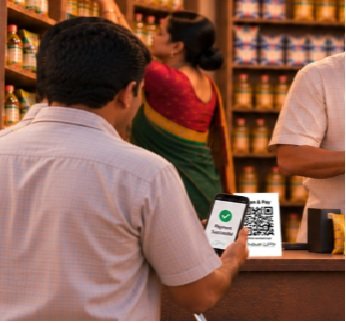
A vegetable seller could put up a QR code, an Uber driver could accept a payment without a card machine, or a small restaurant could receive money without negotiating merchant fees with any bank or card network. Consumers could pay directly from their bank accounts without carrying cash. That simplicity helped turn UPI into a habit, and the number of users grew roughly fivefold in five years. To run this system, the government argues there is a need for a durable reward system which can be brought about by gauging a fraction of the money changing hands.
However, the fact is that for India’s banks and fintech platforms like Paytm, Google Pay, WhatsApp Pay, etc., the tiny charge of 0.4 per cent on payments above Rs 2000 is not small change. The MDR revenue will be divided among them, and at current volumes, estimates suggest that the new revenue could amount to roughly USD 2 billion a year. Banks are expected to receive about 40 per cent of the money, while payment platforms and other intermediaries would get the rest. This means the companies that have helped build India’s UPI economy will now face a far more attractive revenue and profit curve.
UPI is an open payments network, but the consumer-facing market is dominated by a relatively small number of large applications and financial-technology institutions. The larger platforms already process humongous volumes of transactions. Even when most individual transactions generate no MDR, their scale allows them to spread the cost of maintaining their businesses across a vast user base and make a substantial profit. However, a small fintech company entering the market would not have the same advantage, and the structuring of the very fee which is supposed to make the business attractive could work as a disincentive to entry.
The other question that some critics have raised is that in the end, the fees charged will be passed on to customers. Formally, the charge being levied, which is very small, falls upon the merchant in any transaction, and the government has advised banks to ensure that merchants do not pass the cost on to consumers. However, as has been the Indian experience, such instructions are rarely followed without any viable mechanism for preventing merchants from adjusting prices to cover and perhaps even profit from the fee being levied.
A business, for instance, could offer one price for cash and another for UPI payments. It could reduce discounts or make smaller adjustments to its prices that are harder to identify as a payment charge. Whether such practices become widespread will determine how much of the new MDR fee ultimately raises the cost for the man on the street. The government will also need to establish whether the new revenue stream for fintech companies and banks actually helps bring in better security, stronger fraud prevention, and continued innovation in UPI services. (UNI)