 Join WhatsApp Channel

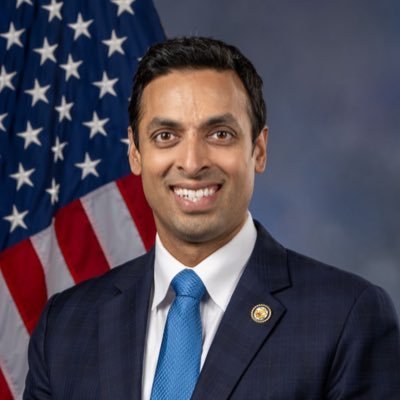
U.S. Rep. Suhas Subramanyam has accused the Trump administration of politically weaponizing the Justice Department after the FBI and DOJ told him that his phone conversations with Virginia Senate President Pro Tempore Louise Lucas were intercepted as part of a federal investigation into the state senator.
Subramanyam, a Democrat who represents Virginia’s 10th Congressional District, said the disclosure was “deeply concerning,” particularly because the surveillance occurred between March and May, when Virginia was embroiled in an intense political battle over a proposed redistricting referendum.
The congressman said federal officials recently informed him that conversations he had with Lucas had been monitored during an investigation involving the state senator. Subramanyam did not say that he was a target of the federal investigation.
“The FBI and DOJ recently informed me that my phone conversations with State Senator and President Pro Tempore Louise Lucas were being monitored as part of their investigation into Senator Lucas,” Subramanyam said in a statement.
The disclosure places a sitting member of Congress at the center of a federal investigation involving a prominent Virginia Democrat and has raised questions about how communications involving elected officials were obtained, reviewed and handled by federal investigators.
Subramanyam focused particular attention on the timing.
“The timing of this wiretap and investigation is extremely suspicious,” he said, noting that the surveillance took place “at the peak of campaigning for the redistricting referendum in Virginia.”
The redistricting fight has been politically consequential in Virginia, where control of congressional districts has become an increasingly important issue for both parties ahead of the 2026 elections. The controversy surrounding the surveillance therefore comes at a moment of heightened partisan tension in the state.
Subramanyam also linked the timing to a separate confrontation between congressional Democrats and Attorney General Pam Bondi over the federal government’s handling of the investigation involving Jeffrey Epstein. He said the surveillance occurred while the House Oversight Committee was pressing Bondi to testify about the Epstein investigation.
“This should concern anyone who believes in a real Department of Justice that serves the American people and not a singular President,” Subramanyam said.
His comments amounted to a direct attack on the Justice Department under President Donald Trump. Subramanyam accused the administration of turning federal law enforcement into an instrument for pursuing political opponents.
“Trump’s DOJ has become his own personal law firm, with his former personal attorney carrying out vendettas on Trump’s political enemies,” he said.
Subramanyam alleged that the administration had pursued politically motivated investigations involving state attorneys general and former FBI Director James Comey, and argued that the interception of his conversations with Lucas represented another troubling development.
“Now they admit they have surveilled conversations by a sitting Democratic Congressman,” he said.
The circumstances surrounding the investigation into Lucas remain the subject of scrutiny. Federal agents conducted searches in May at Lucas’ legislative office in Portsmouth and at a cannabis dispensary co-owned by the senator, according to reports. The federal investigation has focused on matters connected to Lucas and business operations associated with her.
The broader investigation reportedly began during the previous presidential administration, although federal authorities have not publicly disclosed the full scope of the inquiry or announced charges against Lucas. The existence of an investigation, however, does not by itself establish wrongdoing.
The latest disclosure has created a new political dimension because communications involving Subramanyam, a federal lawmaker, were apparently captured during the investigation. It also raises questions about the legal authorization for the surveillance, the safeguards governing communications involving elected officials and whether any privileged or politically sensitive conversations were collected.
Subramanyam’s statement did not provide details about the court authorization for the surveillance or specify how many of his conversations with Lucas were intercepted. It also did not say whether any material obtained from those conversations was subsequently used by investigators.
The Justice Department and FBI had not immediately responded to Subramanyam’s allegations in the statement.
For Subramanyam, however, the disclosure is not simply a question of investigative procedure. He portrayed it as part of what he considers a broader pattern of political pressure by the Trump administration against Democratic officials and critics.
“If this surveillance was done to scare us and to get Democrats to stop pushing back against Trump’s political overreach, they are mistaken,” he said.
“We will not back down. We will continue our investigations into this President and his corrupt administration.”
The confrontation could add another layer of tension between congressional Democrats and the Trump administration, as lawmakers continue to challenge the White House and Justice Department over the use of federal investigative powers.
For Virginia Democrats, the episode also comes as the state heads deeper into another consequential election cycle, with redistricting, congressional control and the boundaries of federal and state political power already fueling intense partisan debate.
Subramanyam, an Indian American Democrat, was elected to Congress in 2024 after serving in the Virginia General Assembly. A lawyer and former technology policy adviser in the Obama administration, he has emerged as one of the prominent South Asian American voices in Congress.
His accusation now puts his own communications with one of Virginia’s most senior Democratic legislators at the center of a controversy over federal surveillance, political accountability and the independence of the Justice Department.
The immediate question for Congress and Virginia lawmakers is likely to be how broad the surveillance was, what legal authority was used to obtain the communications, and what happened to conversations involving lawmakers who were not themselves targets of the investigation.
Those answers could determine whether the episode remains a political controversy surrounding a single federal investigation—or becomes part of a much larger fight over the use of federal law-enforcement powers against political opponents.
Related posts:
 Trump Aims for Democrats’ Jugular with New Epstein Demands — Even as MAGA Fractures Over Files
 Indian American Leaders Applaud “Historic” Inauguration of Virginia Gov. Spanberger and Lt. Gov. Hashmi
 Alina Habba Disqualified as New Jersey Attorney After Appeals Court Finds Appointment Violated Federal Law
 Federal Judge Rebukes DOJ as Comey Case Revives Long-Running Feud with Trump
