 Join WhatsApp Channel

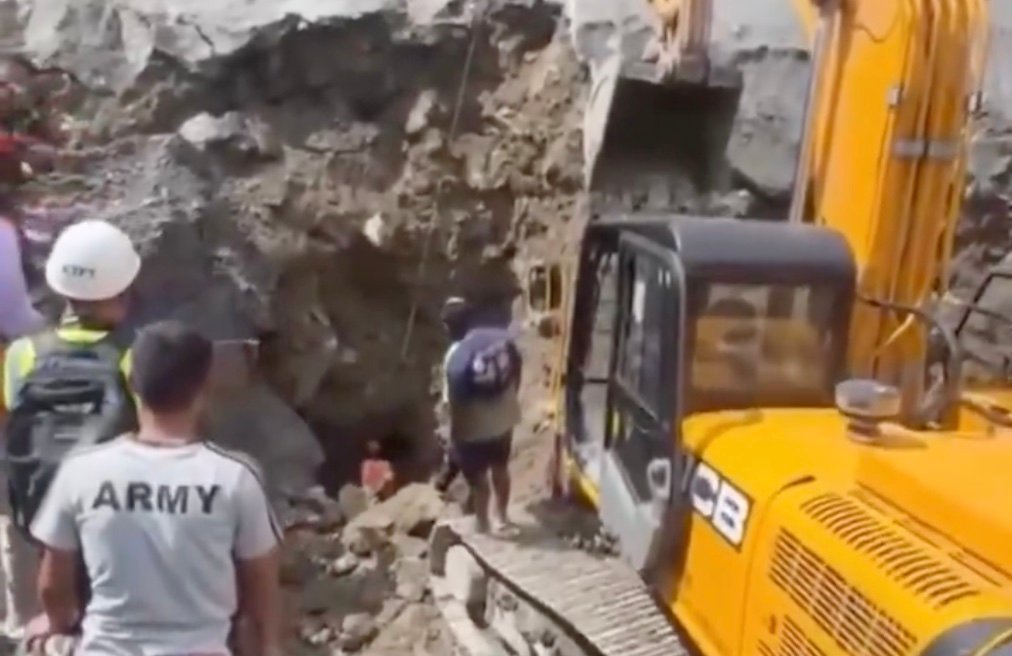
Rescue teams in Nepal continued their search for survivors and missing people through waterlogged hydropower tunnels on September 2, where hundreds of workers remain unaccounted for seven days following the devastating flash floods in areas near the Chinese border and the destruction left in their wake.
The death toll from the disaster has risen to 1,003, Nepal’s National Disaster Risk Reduction and Management Authority (NDRRMA) said on Wednesday afternoon.
Nearly 4,000 people remain unaccounted for, according to the Foreign Ministry, including around 590 foreign nationals from 39 countries. About 11,800 people have been rescued.
As authorities work around the clock to deliver relief and supplies to survivors, teams are racing to search 12 to 13 tunnels serving hydropower projects along the Trishuli river corridor, where hundreds of people are believed to have been trapped.
The NDRRMA has listed 639 people associated with hydropower projects as missing, although authorities have yet to determine how many may be inside the tunnels and how many could have been swept away by floodwaters.
At the Upper Trishuli-3A Hydropower Project, where rescue teams located and drilled into the head of a tunnel on Monday, workers were continuing to pump in air and drain water to make it possible to enter.
Excavators and rock breakers were also clearing access routes to the 4km-long tunnel, where between 30 and 40 people are believed to be inside the underground powerhouse, as per the Kathmandu Post.
Personnel from the Nepali Army have been working with specialists from several countries, and have managed to make some progress inside several tunnels since Monday. The Foreign Ministry said 24 Indian and nine Chinese tunnel-rescue specialists were deployed at the affected sites, while a South Korean team had also arrived in Nepal.
A joint rescue team reached 200 meters into the 9.5km-long Upper Trishuli-1 tunnel. Rescuers had also advanced about 50 meters into the Chilime tunnel and around 150 meters into the Langtang tunnel, both of which are about 3km long.
The Nepalese Army said 279 people had been rescued alive from hydropower projects immediately after the floods, including 221 from Upper Trishuli-3A and 33 from Upper Trishuli-1.
More than 21,000 Nepalese security personnel are involved in search, evacuation and relief operations. The NDRRMA said 37 trucks and 37 utility vehicles carrying food and relief supplies had been dispatched to affected areas, while additional supplies had been delivered through nine helicopter flights.
Nepal has also requested equipment including LiDAR systems, temporary bridge units, freezers, DNA testing kits and high-capacity drones to support rescue and relief operations.
The Foreign Ministry said it was helping the families of missing foreign nationals obtain information about their relatives and, where necessary, assisting with identification and repatriation. It also acknowledged the “pain and uncertainty” faced by families still waiting for news of their loved ones.
Financial assistance for people affected by the devastating flash floods in the Bhotekoshi and Trishuli river systems on August 26 has also increased.
Prime Minister Balendra Shah told the House of Representatives that the government was raising financial assistance for flood victims through the Prime Minister’s Disaster Rescue and Relief Fund.
By Wednesday, NPR 7 billion 885 million 7,217 (approx. $51.87 million) had been deposited into the fund, Shah said, of which NPR 1 billion (approx. $6.58 million) was released on Tuesday to the NDRRMA. Around NPR 67.5 million (approx. $444,000) of that money had already been distributed to 15 flood-affected municipalities across Rasuwa, Nuwakot, Dhading, Gorkha and Tanahun.
The fund currently has a balance of NPR 6 billion 885 million 7,217 (approx. $45.29 million), while an additional $6,141,702 (approx. NPR 93.36 million) has been deposited.
Related posts:
 Nepal floods: Five Indians Among Those Rescued from Trishuli III Hydropower Project
 PM Modi Assures Nepal of India’s Full Support After Deadly Flash Floods
 Death Toll from Nepal’s Disastrous Floods Rises to 903 as Thousands Continue to Remain Missing
 Nepal Floods: World Bank Pledges ₹25 Billion as India Mobilizes Emergency Aid
