Join WhatsApp Channel

For thousands of years, healing traditions across South Asia have treated health as more than disease. Mind, body, environment and inner life were understood as connected, with meditation, breath, movement, sound and touch woven into broader approaches to health and healing. Today, some of the questions at the heart of those traditions are being explored with the tools of modern science.
Researchers are studying the effects of meditation on the brain and body, the role of social connection in health, biological mechanisms that may underlie healing practices, and the emerging science of consciousness and the human biofield. We know considerably more than we did even a few decades ago, yet important questions remain unanswered.
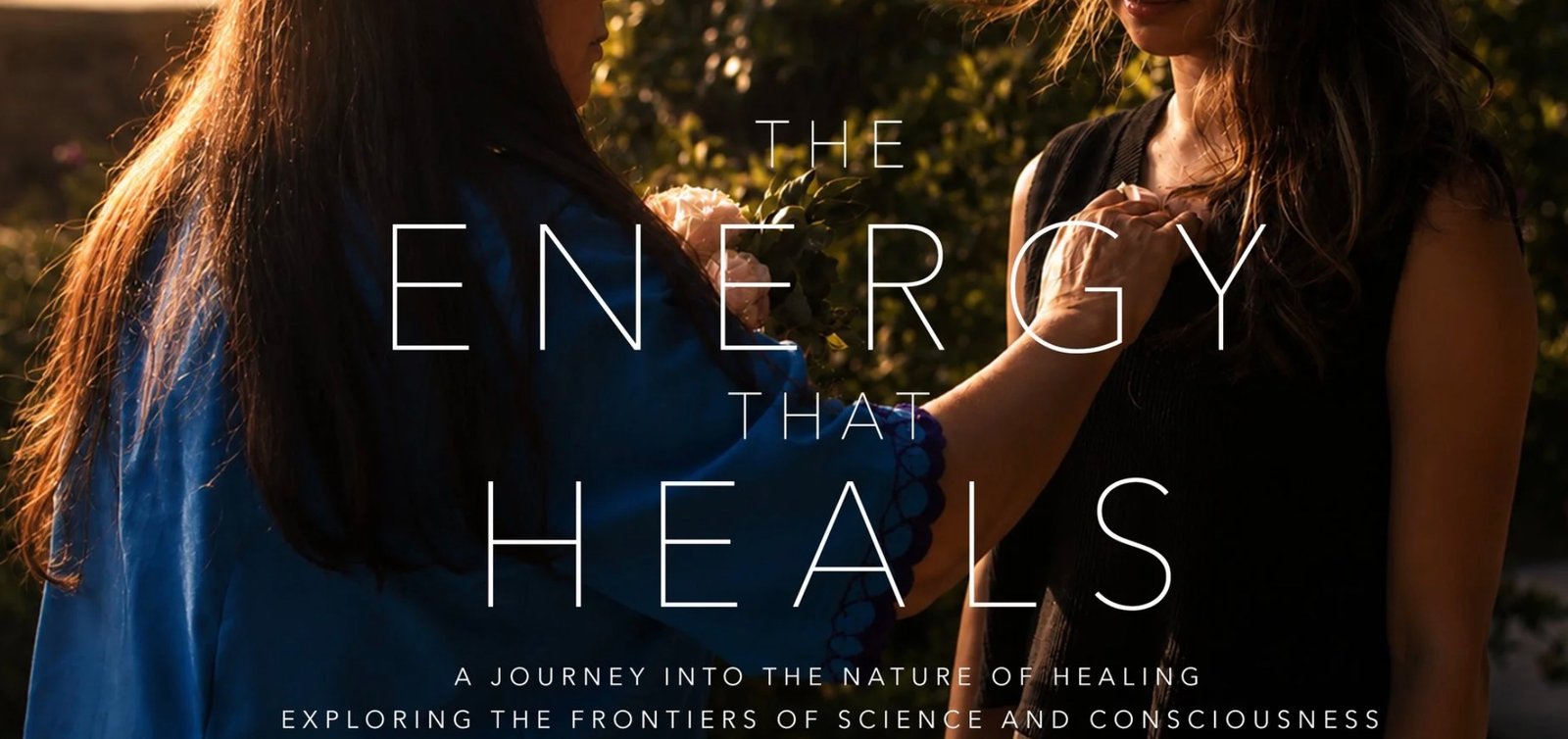
That intersection of what we know, what we are beginning to understand and what we still need to explore is at the heart of The Energy That Heals, a new feature documentary from the Consciousness and Healing Initiative (CHI) and in partnership with Three One Creative. The film brings together physicians, neuroscientists, consciousness researchers, integrative medicine pioneers, healing practitioners and people with their own experiences of healing.
Modern medicine has transformed our lives, and rigorous science is essential to understanding what works, for whom and under what circumstances. At the same time, our understanding of health continues to evolve, and the film gives audiences an opportunity to explore that evolution and consider questions about the relationships among mind, body and consciousness that science is still working to answer.
CHI has been asking these questions since its founding by Dr. Shamini Jain, a clinical psychologist and scientist whose work spans psychoneuroimmunology, integrative health and biofield science. Jain, who is of South Asian heritage, has also examined Indo-Tibetan perspectives on healing alongside contemporary scientific inquiry.
That connection has particular relevance today. Yoga and meditation, along with other practices rooted in South Asian traditions, have become familiar to millions of people worldwide. Researchers are now examining aspects of these practices through the lenses of neuroscience, physiology, psychology and medicine.
Traditional knowledge and scientific evidence are not interchangeable, and we should not pretend that they are. But traditions developed over centuries can offer important questions to investigate. Science gives us a disciplined way to test those questions, challenge assumptions and follow where the evidence leads.
That is the space CHI was created to serve.
CHI brings researchers, healthcare professionals, healing practitioners and educators together around the science of healing. The goal is to create room for serious exploration without lowering the bar for evidence. We can be open to what we do not yet understand while being equally clear about what the research does and does not show.
One of the challenges, however, is getting that work beyond laboratories, academic journals and conferences. This is where filmmaker Christina Vircillo Bresson and Three One Creative have played an important role.
Bresson is an award-winning executive producer and director who founded the New York production company Three One Creative in 2006. Over more than 25 years in production and visual storytelling, her work has included projects for NBC, ESPN, Scientific American, MTV and Food Network. Her interest in consciousness and healing is also longstanding. Her previous documentary, The Way of Miracles, explored healing through both scientific inquiry and personal experience.
With The Energy That Heals, Bresson and CHI have taken complicated research and deeply personal experiences and made them accessible to people who may never pick up a scientific journal or attend a conference on consciousness. That matters because good research has limited impact if the people who could benefit from it never encounter it or cannot understand what it means.
It also points directly to what comes next for CHI.
As we have listened to researchers, practitioners and members of our community, one challenge has become increasingly clear: these groups often operate in separate worlds. Researchers can produce important findings that remain largely within academic circles. Practitioners may have years of experience but limited access to research that could inform their work. The public is left navigating a rapidly growing wellness marketplace where credible information, promising research and unsupported claims can be difficult to distinguish.
CHI has an opportunity to help close those gaps.
Our next phase will place greater emphasis on translating research into information people can understand and use. Practitioners need clearer pathways to education, research and responsible standards of practice. The public needs better ways to understand different healing approaches, the evidence behind them and how to identify practitioners committed to ethical practice and researchers need stronger connections to the people applying these approaches in real-world settings.
That last piece matters. Practitioners often see patterns and encounter questions that have not yet reached the laboratory, while researchers bring the methodology needed to examine those observations systematically. Creating stronger connections between these communities can improve both research and practice.
This is why we see The Energy That Heals as a beginning rather than an endpoint for CHI.
Film has the ability to open a door. Someone who would never read a paper on biofield research may listen to a scientist explain the work on screen. Someone unfamiliar with a healing modality may become curious enough to learn more. And a practitioner may encounter research that changes how they think about their work. We have seen this evolution before. Meditation is perhaps the clearest example. Once regarded by much of the Western medical establishment primarily as a spiritual practice, it is now the subject of extensive research into stress, attention, emotional regulation and health. That shift did not occur because science abandoned skepticism. It happens because researchers asked questions, tested hypotheses and continued building evidence.
For South Asian communities, there is another important dimension to this moment. Practices and ideas with deep roots in South Asian cultures are increasingly part of global conversations about health, consciousness and human potential. We can respect where those traditions came from while also allowing them to be questioned, studied and better understood.
The next several years will bring new discoveries. Some will reinforce what practitioners and researchers currently believe, while others will challenge it. That is exactly what should happen.
CHI’s role in this next chapter is to help connect the pieces: researchers with practitioners, practitioners with credible science, and the public with information that helps people make informed decisions about their own health and wellbeing.
The Energy That Heals gives us a powerful way to invite more people into that conversation. Some of the questions it raises are new. Others have been asked for centuries. What has changed is our ability to investigate them—and our willingness to bring science, practice and human experience into the same conversation.
Disclaimer: The opinions and views expressed in this article/column are those of the author(s) and do not necessarily reflect the views or positions of South Asian Herald.