Join WhatsApp Channel

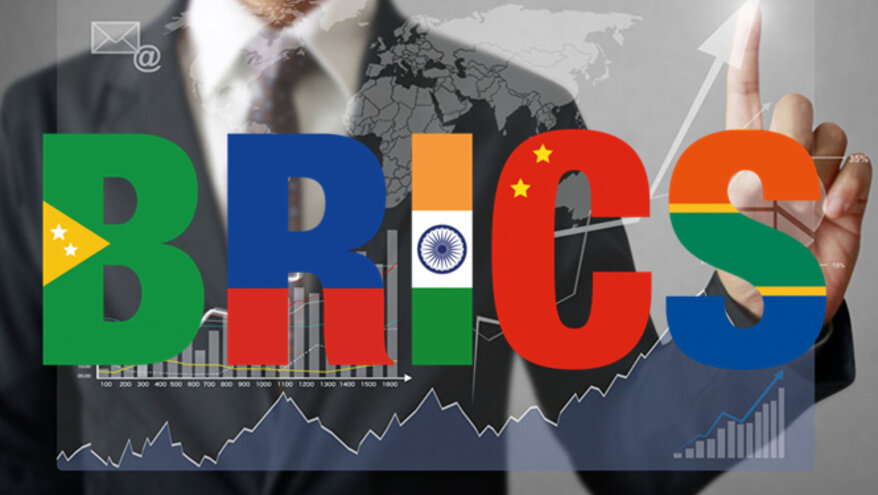
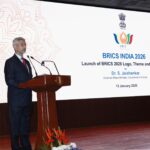
When India hosts the 18th BRICS Summit in New Delhi on September 12–13, it will preside over a grouping that is simultaneously larger, more ambitious and, paradoxically, more difficult to govern. India’s theme — “Building for Resilience, Innovation, Cooperation and Sustainability” — captures the vocabulary of an emerging world order; whether BRICS can translate those aspirations into institutions, agreements and outcomes, however, is the considerably harder question.
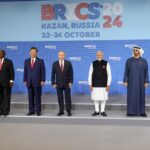
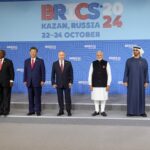
BRICS has always derived much of its appeal from what it represents: the proposition that the architecture of global power, built largely around Western institutions after World War II, no longer adequately reflects the distribution of economic weight, population or political influence. Its expansion beyond the original five members has amplified that argument. Yet enlargement has also created a familiar institutional problem: the broader the tent, the harder it becomes to agree on what the tent is for.
The New Delhi summit will therefore be judged less by the grandeur of its declaration than by its ability to demonstrate that BRICS can function despite its internal contradictions.
Those contradictions are formidable. India and China remain strategic competitors despite attempts at diplomatic stabilization. Russia’s confrontation with the West has given Moscow a powerful incentive to promote alternatives to Western-dominated financial systems, while other BRICS members may be more interested in diversification than confrontation. The group’s members differ sharply on regional conflicts, trade priorities, energy transitions and the pace at which the bloc should expand. Consensus, which gives every member political comfort, can also reduce collective action to the lowest common denominator.
Nowhere will the gap between rhetoric and reality be more closely examined than in finance.
The debate is frequently simplified into a dramatic contest between BRICS and the US dollar. But the more consequential story is less revolutionary and more incremental. BRICS is exploring local-currency settlements, links between national payment systems, Central Bank Digital Currency (CBDC) interoperability and platforms such as BRICS Pay and BRICS Bridge.
These are attempts to create practical alternatives and reduce vulnerability to disruptions, sanctions and expensive cross-border transactions, rather than evidence that a single BRICS currency is waiting in the wings.
That distinction matters. The dollar cannot be displaced merely because countries dislike their dependence on it. Reserve currencies require deep and liquid financial markets, institutional credibility, convertibility and, above all, confidence. BRICS may reduce the dollar’s relative role in specific trade corridors, but building a genuinely integrated financial ecosystem across economies with radically different regulations, currencies and geopolitical interests will be a far more arduous undertaking.
India, consequently, has an opportunity to inject realism into the debate. Its comparative advantage lies not in promoting an ideological crusade against the West but in demonstrating how practical cooperation can work. India’s digital public infrastructure, its experience with fast payments and its broader advocacy of inclusive technology offer a more credible template for BRICS cooperation than grand pronouncements about overthrowing the existing financial order.
The New Development Bank presents a similar test. Conceived as a vehicle through which emerging economies could finance infrastructure and sustainable development without depending exclusively on traditional Western institutions, it has built a meaningful presence, with authorized capital of $100 billion and a growing emphasis on local-currency financing.
Yet its future relevance will depend on scale, speed and its capacity to mobilize substantially more capital rather than merely becoming another multilateral institution with an ambitious mandate and limited firepower.
This is ultimately the central challenge confronting BRICS: ambition has expanded faster than institutional capacity.
New Delhi could therefore be a defining moment, not because BRICS is likely to produce a dramatic new currency or redraw the global financial map overnight, but because it may reveal whether the expanded grouping can move from symbolism to implementation.
Concrete progress on payment interoperability, trade facilitation, climate finance, energy security and digital cooperation would matter far more than another exhaustive communiqué.
India’s chairmanship will be tested by its ability to manage divergence without allowing divergence to become paralysis. The summit’s success should not be measured by how loudly BRICS announces the arrival of a multipolar world, but by whether it can build the mechanisms required to operate effectively within one.
The real question in New Delhi, therefore, is not whether BRICS wants to reshape the global order. It clearly does. The question is whether an increasingly diverse BRICS can first learn to organize itself.
Disclaimer: The opinions and views expressed in this article/column are those of the author(s) and do not necessarily reflect the views or positions of South Asian Herald.