 Join WhatsApp Channel

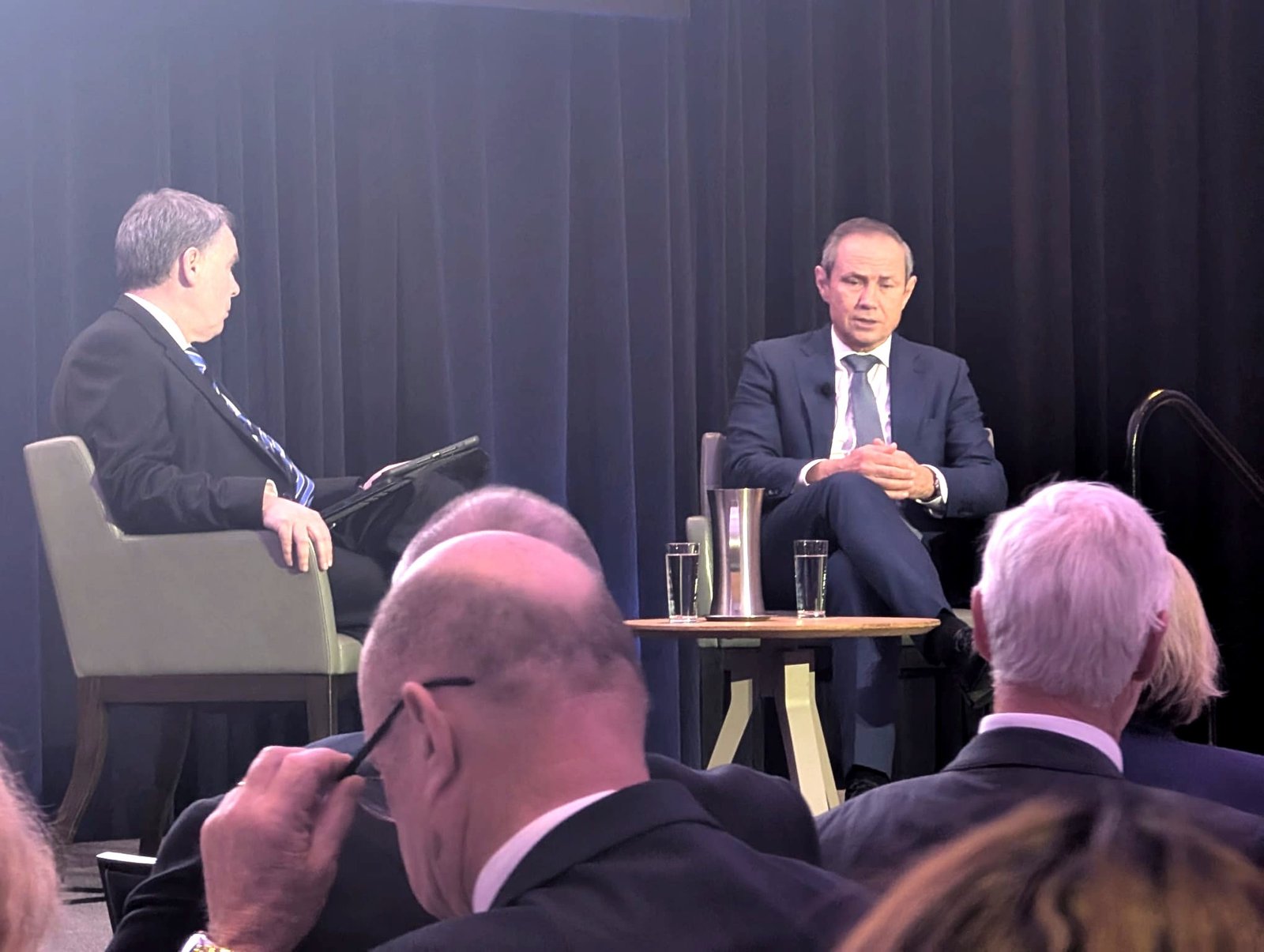
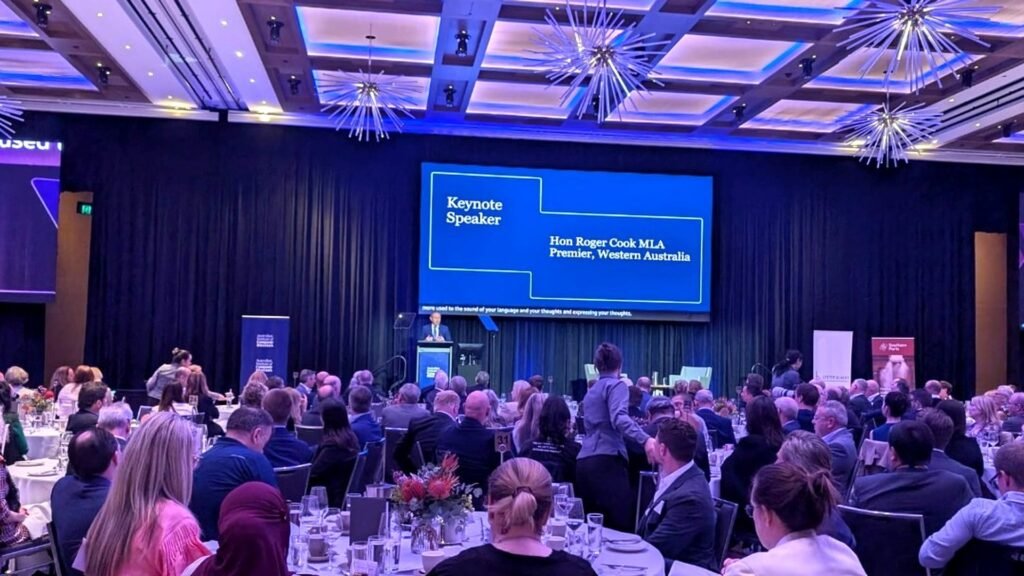
Roger Cook, Premier of Western Australia, delivered the keynote address at the Australian Institute of Company Directors (AICD) WA Annual Lunch on August 21, 2026, at the Westin Perth, highlighting the state’s 27.8 percent economic growth over the past six years, which outpaced the national average.
Cook also highlighted Western Australia’s position as the only Australian state or territory with a AAA credit rating from both S&P Global and Moody’s.
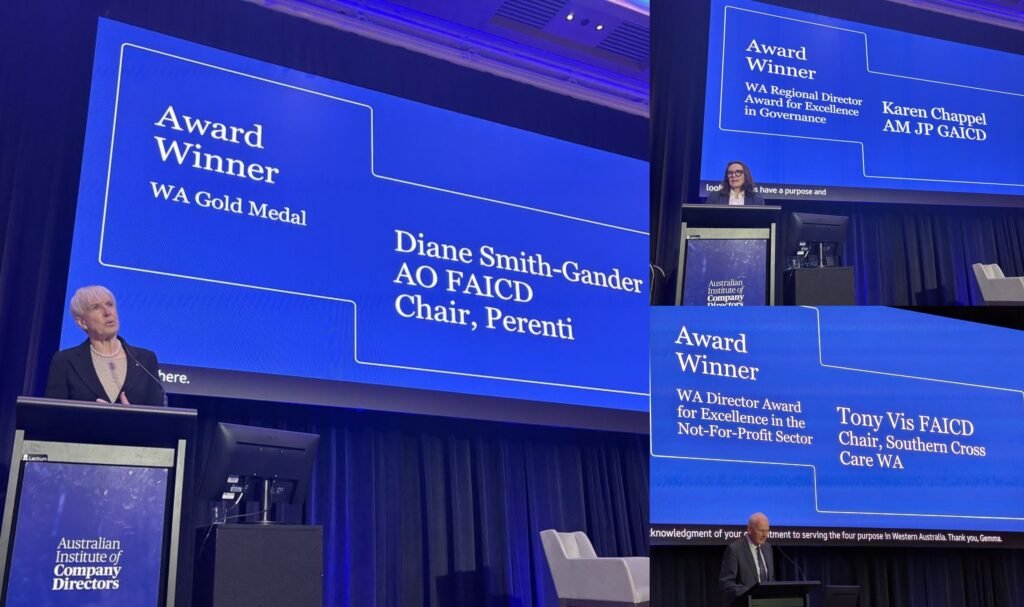
The lunch also featured the presentation of three 2026 WA Director Awards, with the Gold Medal Award going to Diane Smith-Gander, the Award for Excellence in the Not-for-Profit Sector going to Tony Vis, and the Regional Director Award for Excellence in Governance going to Karen Chappel.
Also in attendance were Cheryl Edwardes, GAICD, a former Western Australia government minister; Brian Walker, a member of the Legislative Council; and Fiona Harris, FAICD (Life). Carl Cockerham, GAICD, AICD’s state manager for Western Australia, welcomed guests and later moderated a question-and-answer session with Cook.
Speaking on the state’s economic outlook, Cook pointed to a clean energy investment pipeline he estimated at around 200 billion dollars, saying the sector could support 350,000 jobs over the next 25 years. He said renewables supplied a record 53.4 percent of energy used on the Southwest Interconnected System in the final quarter of 2025.
Cook argued that energy security and national security “will become inseparable” in the coming decades, positioning Western Australia’s gas exports as central to energy security across the Indo-Pacific. He named Japan, China, South Korea and Taiwan among the state’s key trading partners, saying Western Australian LNG could help those markets shift away from higher emitting coal.
Cook also addressed the state’s gas policy, saying Western Australia’s domestic gas reservation settings have helped shield households and businesses from international market volatility. He said the state had “pretty much got it right” on the issue.
On leadership, Cook described himself as a facilitative leader, telling the audience that his role was to give his team “a values proposition and a sense of mission.” He said three principles guide his cabinet: delivering on commitments, managing the issues of the day and charting a vision for the future.
Cook’s keynote was followed by a moderated question and answer session led by Carl Cockerham, AICD’s state manager for Western Australia.
Asked what would separate successful organizations from the rest in the years ahead, Cook pointed not to artificial intelligence but to talent, saying the ability to attract skilled workers would ultimately determine “who is successful in a world which is significantly disrupted.”
Cook also weighed in on the state’s uranium mining ban, saying his government remains committed to current settings while acknowledging a growing argument for using uranium as part of the global response to lower carbon emissions.
On changes in political discourse over his career, Cook said social media had contributed to a fracturing of public debate, with people “taking the aggression that they feel they can express anonymously online” into their everyday interactions.
Asked to identify the single greatest risk facing directors, Cook set aside the expected answers of artificial intelligence, critical minerals and defense, instead pointing to the string of global shocks since he entered state cabinet in 2017, including the COVID-19 pandemic, Russia’s invasion of Ukraine and the conflict in the Middle East earlier this year. “We can’t protect our teams from the future and the shocks that happen to us from global conflicts,” he said, “but we can equip our teams to adapt to them.”
The keynote portion of the lunch then gave way to the presentation of the WA Director Awards.
Keith Wilks, MAICD, chief executive officer of Southern Ports, presented the Regional Director Award for Excellence in Governance to Karen Chappel, AM, JP, GAICD, citing her leadership across Western Australia’s local government sector, including as president of the WA Local Government Association. The award citation described directors who bring “experience and judgment and commitment to organizations and communities across Western Australia.”
Accepting the award, Chappel credited her career in governance to what she described as a love of rules, an ability to speed read board papers and “a love of numbers and data.” She said she intended to keep serving the sector, telling the audience, “I will continue to serve. It is what my purpose is.”
Jemma Buckner, partner in board advisory services at Lester Blades, presented the Award for Excellence in the Not for Profit Sector to Tony Vis, FAICD, chair of Southern Cross Care WA. The award citation described Vis’s leadership style as “big picture” and noted his contribution to the sector had been significant and long standing.
Accepting the award, Vis said it was “an honor to receive this award,” and described fellow not for profit board members as “true servant leaders.” He said demand for community services “has never been greater,” and called for closer partnership between government and the sector to build capacity.
The evening closed with its centerpiece honor, the WA Gold Medal Award, which went to Diane Smith-Gander, AO, FAICD, who in 2025 became the first female chancellor of the University of Western Australia in the institution’s 114-year history. Smith-Gander currently chairs Perenti, Zip Co and HBF Health. David Lock, FAICD, acting president of the AICD WA Division Council, said the award recognized an individual who has made “an outstanding and enduring contribution to corporate life in Western Australia.”
Accepting the award, Smith-Gander called it “an absolute joy to be acknowledged by my peers,” and said the practice of directorship had rarely mattered more, pointing to geopolitical uncertainty and the disruption posed by artificial intelligence. She used her remarks to renew a long running call for Western Australia to be better connected to the national electricity market, saying the state continues to run what she called “an enormous pilot on renewable energy transition” largely on its own, and urged directors in the room to “stand up” on the issues that matter to the state.
Cockerham closed the event by thanking sponsors Southern Ports and Lester Blades, and acknowledged Fiona Payne, FAICD, on her departure from the WA Divisional Council after three terms spanning nine years. Also attending were members of the AICD WA Division Council and Regional Forum, including Maree Arnason, FAICD, a division director on the AICD board; David Buckingham, GAICD; Kelly Hick, FAICD; David Lock, FAICD; Kirsty Moore, GAICD; Bennie Ng, GAICD; Sue Wilson, FAICD; Trevor Hunt, FAICD, chair of the AICD WA Regional Forum; Nils Hay, GAICD; and Timothy Wither, GAICD.
Related posts:
 Western Australia-India Ties in Focus at India’s 80th Independence Day Reception in Perth
 Apple’s Strategic Response: How Tim Cook Is Preparing for the AI Era
 Australia and India Mark National Days with Flag Raising in Western Australia
 Celebrating 10 years of Diwali at the Western Australia Parliament House
