Join WhatsApp Channel

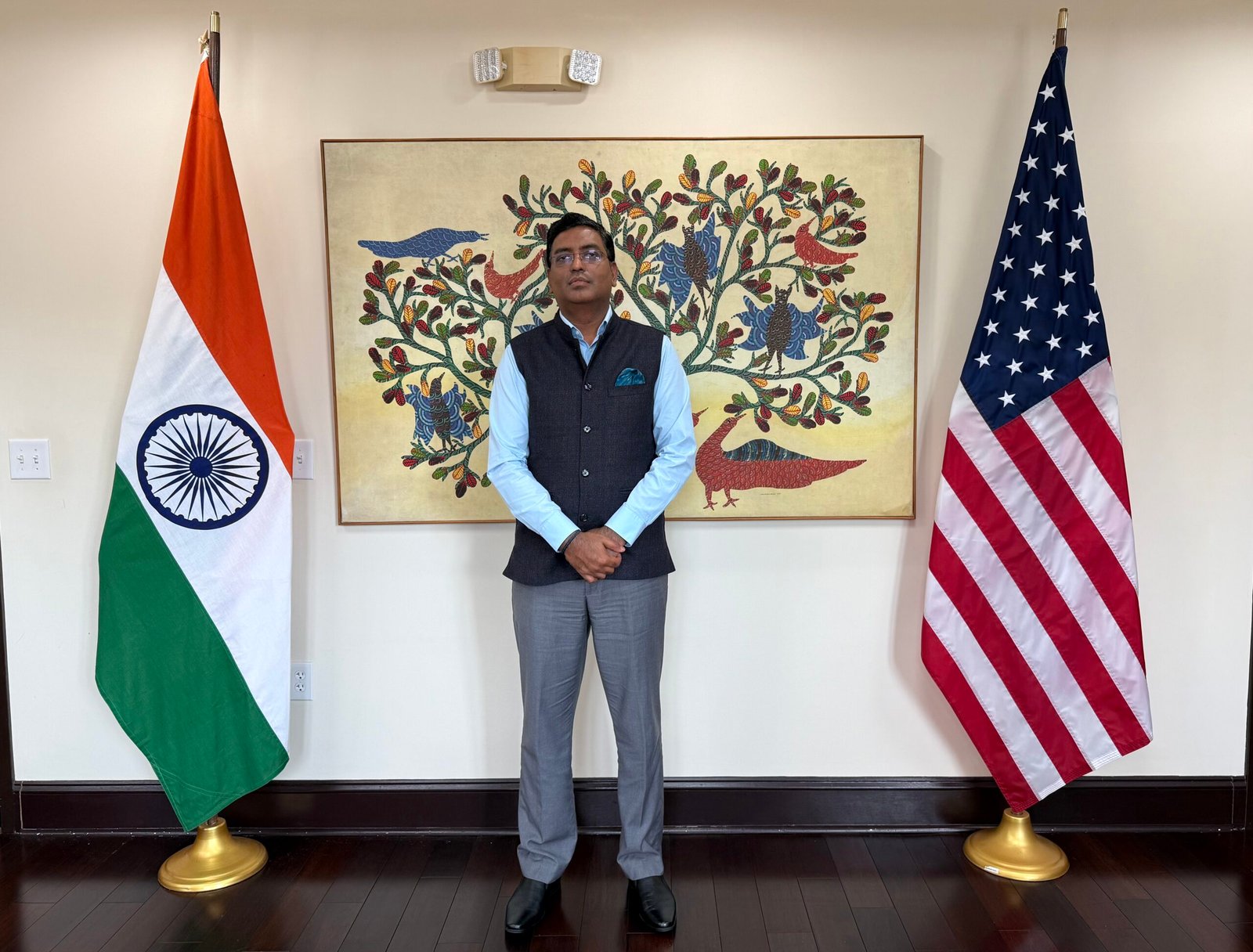
As India and the United States deepen their strategic and economic partnership, the southeastern United States is emerging as an increasingly important center for trade, technology, education and diaspora engagement. Over the past three years, the Consulate General of India in Atlanta, Ramesh Babu Lakshmanan has sought to expand India’s presence across the region by strengthening ties with state governments, businesses, universities, technology networks and Indian American communities. The region now accounts for nearly one-sixth of India’s total trade with the United States, while Savannah handles about 22 percent of India-U.S. trade by port, underscoring the Southeast’s growing economic significance.
As he concludes his tenure in Atlanta and prepares for his next posting in Abidjan, the Consul General reflects on the initiatives and partnerships that have shaped his assignment. In this exclusive interview with South Asian Herald at the Consulate General of India in Atlanta, CG Lakshmanan discusses efforts to advance trade, technology and tourism, improve consular services, deepen engagement with the Indian diaspora, expand educational partnerships, and explore new opportunities in Puerto Rico and across the Southeast. He also shares why diplomacy beyond national capitals can play an increasingly important role in strengthening the broader India-U.S. relationship.
You have served as the Consul General of India in Atlanta for the past three years. Can you reflect on your tenure and highlight some of the key initiatives undertaken to promote trade, technology, and investment between India and the region?
It has been an extremely rewarding tenure for almost three years. One of my priorities was to bring greater attention to the enormous opportunities that exist between India and the Southeast United States, and to make the Consulate a more active platform connecting businesses, governments, universities and the innovation ecosystem.
A particular focus was on building institutional partnerships so that our engagement could be sustained over time, rather than being limited to individual events. We focused on 3 Cs and 3Ts. 3 Cs stand for Community, Consular and Culture including Education and 3 Ts for Trade, Technology and Tourism. We reached out to all Community organizations int eh region and have organized three Conference with all organizations to discuss community issues and brief Consular updates. On Consular, we have opened a new VFS center in Orlando in addition to Atlanta center. We have streamlined Consular services, open consulate for two hours during weekends for emergency services, daily pendency check of services etc. In association with several cultural organizations, we promoted Indian art forms. We have expanded our engagement with universities across the region and recently convened the India–U.S. Education Roundtable to explore partnerships in research, technology, and innovation.
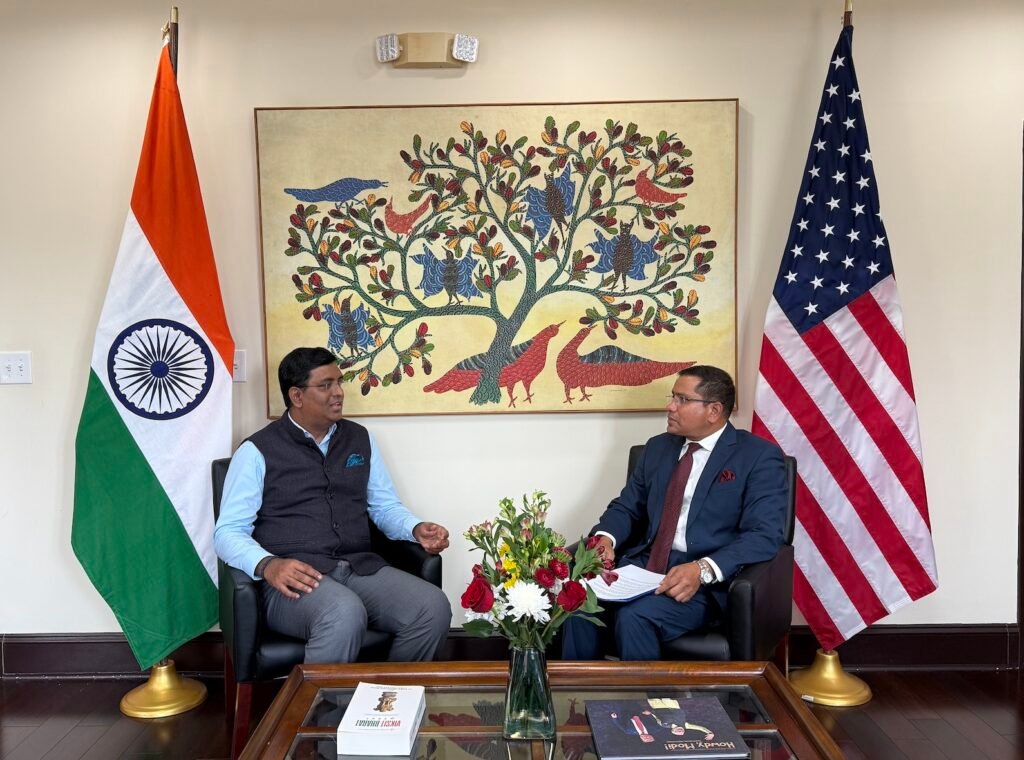
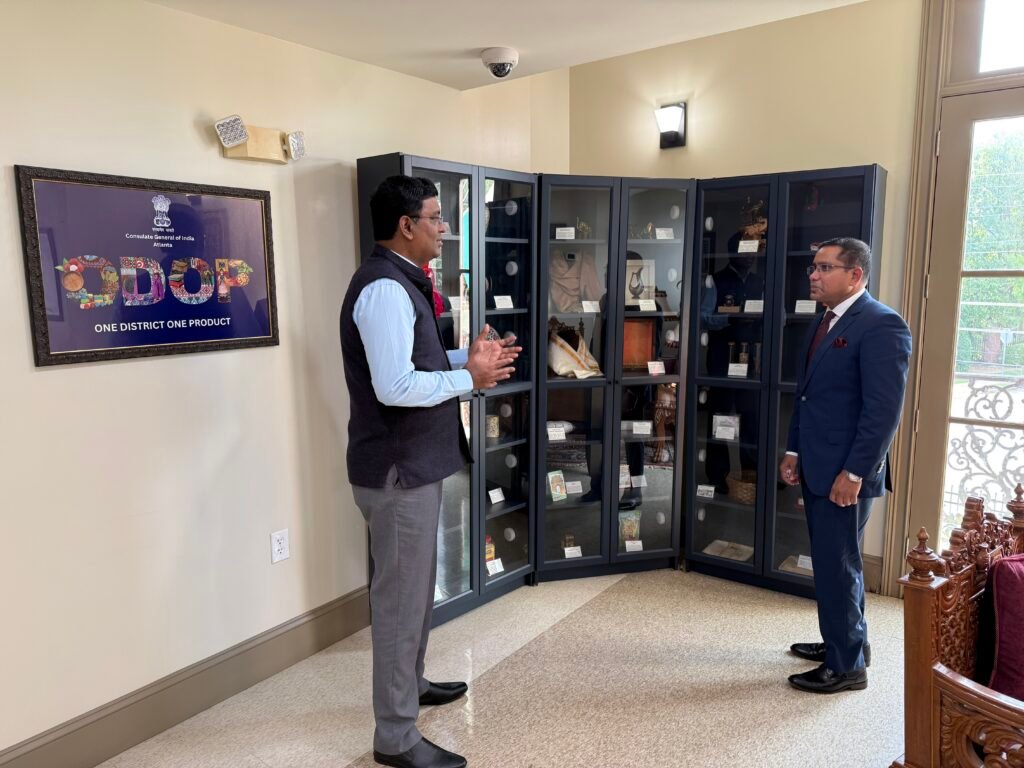
We significantly expanded our partnerships with organizations such as FICCI, USIBC and USISPF, and several of them held flagship engagements in the Southeast for the first time. We also worked closely with state governments, chambers of commerce and companies to highlight opportunities in India, while also showcasing the Southeast to Indian businesses. Technology has become an increasingly important part of this engagement. We have worked closely with TiE Atlanta, Atlanta Technology Professionals, ICAI and others, and introduced platforms such as Tech Thursday to bring together technology professionals, entrepreneurs and innovators. Consulate has initiated monthly Technology Thursday event to discuss various technologies by bringing in eminent speakers and stakeholders. We promoted ODOP, Indian handicrafts during various International festivals around the region. We distributed specially prepared pamphlet on tourism places in India and ran ad in local media on Incredible India.
Going forward, I believe Atlanta can emerge as an important focal point for India’s engagement around the three Ts — Trade, Technology and Tourism. The Southeast’s particular strengths in aerospace, logistics and advanced manufacturing also offer tremendous possibilities for deeper collaboration with India.
Overall, how do you assess the evolving partnership between India and the region? Are there any upcoming trade missions or other initiatives planned to further strengthen economic and commercial ties?
India and USA share global comprehensive strategic partnership. Traditionally, much of the India–U.S. economic conversation has been concentrated around a few established centers. One of our objectives has been to demonstrate that the Southeast deserves a much more prominent place in that conversation.
And the numbers increasingly support that. The region now accounts for nearly one-sixth of India’s total trade with the United States and around one-fifth of U.S. imports from India. Savannah has emerged as a particularly important gateway, handling about 22 percent of India–U.S. trade by port. What is also encouraging is that over the past five years, India’s trade with every state in our southeastern jurisdiction has registered positive growth.
There is a natural complementarity as well. The Southeast is strong in manufacturing, logistics, aerospace, automobiles, technology and higher education. India, meanwhile, is undergoing a major transformation in manufacturing, MSMEs, infrastructure and innovation.
Connectivity is also improving. Delta’s planned Atlanta–New Delhi service will be an important development. On the maritime side, during last three years, Savannah started six direct weekly services to India.
We are also seeing growing interest in direct engagement with India at provincial and local government level. Alabama and Puerto Rico have expressed interest in sending delegations next year, Fulton County has already been engaging with India, and a trade mission from Miami is also being planned. The next step is really to convert this growing interest and connectivity into sustained business and institutional partnerships.
What recent initiatives has the Consulate introduced to make consular services more accessible, efficient, and convenient for the Indian community?
Consular services are perhaps the most direct interface between a Consulate and the people it serves, so accessibility and responsiveness have always been very important to us.
Given the size of our jurisdiction, one of our priorities has been to take services closer to the community. A significant step was the establishment of a new VFS center in Orlando, particularly given the large and growing Indian community in Central Florida.
We have also regularly organized consular camps and outreach programmes across the jurisdiction so that people do not always have to travel to Atlanta. At the Consulate, we have strengthened our Open House mechanism and continue to maintain a 24×7 emergency contact facility. We have allocated two hours of office opening during weekend to cater for emergency services in addition to unscheduled emergency responses.
Another focus has been on making procedures easier to understand. We have developed a step-by-step OCI application video guide and have increasingly used our digital platforms to provide clearer information about documentation and procedures.
The scale of our work has also been substantial. The number of services since last 14 years of the Consulate opening has increased tremendously due to increase in internal migration of Indian Americans to SE USA.
Ultimately, our objective has been quite straightforward – to make consular services more citizen-centric, accessible and responsive.
How would you characterize the Consulate’s engagement with the Indian diaspora across its jurisdiction? What role has the community played in strengthening India-U.S. ties at the regional level?
The Indian diaspora has really been one of our greatest strengths. We have a very large jurisdiction – six states plus Puerto Rico and the U.S. Virgin Islands, and we made a conscious effort to take the Consulate beyond Atlanta.
We have engaged communities across the region through community conferences, consular outreach, student interactions, professional networks and cultural programmes.
But more importantly, we have tried to move from diaspora engagement to diaspora partnership. The Indian-American community is not simply an audience for the Consulate, it is an active partner in strengthening India–U.S. relations.
Indian Americans across the Southeast have distinguished themselves in business, medicine, technology, academia and entrepreneurship. At the same time, they are deeply embedded in their local communities. That gives them a unique ability to serve as bridges between India and the United States.
We are also seeing greater political and civic engagement. For example, one significant development during this period was the establishment of the Georgia Senate India Caucus, creating another institutional platform for engagement between India and the state.
Our effort has therefore been to connect the community’s professional achievements, networks and goodwill with the broader India–U.S. partnership.
India’s Ambassador to the United States, Vinay Kwatra, recently visited Atlanta. What were some of the key outcomes of his visit, particularly in terms of new initiatives, partnerships, or areas of collaboration?
I think the Ambassador’s visit was important because it brought together the different strands of our engagement with the Southeast – political, economic, educational and, of course, the Indian-American community.
One of the highlights was the India–U.S. Education Roundtable, where we brought together leaders from nearly 20 universities across the Southeast. We had a very substantive discussion about what more we can do together from joint research and student and faculty exchanges to dual-degree programmes and partnerships in innovation and emerging technologies. Ambassador also encouraged universities here to explore the new opportunities available under India’s National Education Policy, including the possibility of establishing satellite campuses in India and taking education closer to the learners.
His meeting with Governor Brian Kemp was important in reinforcing our relationship with Georgia, particularly given the growing economic ties between India and the state.
On the business side, we partnered with USISPF to bring together senior executives from around 30 leading companies across the region. The discussion focused very much on the next phase of the economic partnership – manufacturing, technology, innovation, advanced industries and greater two-way investment.
Ambassador also had a very warm interaction with around 200 members of the Indian-American community.
For me, the larger takeaway was the growing recognition of the Southeast’s potential and the fresh momentum the visit provided to the partnerships we have been building here.
You visited Puerto Rico in February this year, where you met with members of the Indian American community and Governor Jenniffer González-Colón. What opportunities do you see for strengthening India’s engagement with Puerto Rico?
Puerto Rico is a very interesting and somewhat underexplored part of our jurisdiction. My visit certainly reinforced my belief that there is considerable scope to deepen India’s engagement there. The leadership in PR is very positive and eager to collaborate more with India.
There are some very natural areas of economic cooperation. Puerto Rico has particular strengths in pharmaceuticals and healthcare, while we also see opportunities in tourism, renewable energy and technology.
Disaster resilience is another area where I believe India has something meaningful to offer. Puerto Rico has experienced major natural disasters in recent years. India was instrumental in establishing the Coalition for Disaster Resilient Infrastructure, and Indian companies have considerable capabilities that could contribute to resilient infrastructure in Puerto Rico.
Puerto Rico also offers an interesting proposition for Indian companies looking at the U.S. market because of its special tax incentives and its position within the U.S. tariff structure. We are currently discussing a possible delegation from Puerto Rico to India early next year, which could help turn some of these possibilities into concrete partnerships.
There is also a very accomplished Indian community there, which is already playing an important role as a bridge.
And I see considerable potential in cultural engagement. We have promoted Indian cinema through film festivals in PR. In that sense, Puerto Rico can also become a bridge for India’s engagement with the wider Caribbean and Spanish-speaking America.
As you conclude your tenure in Atlanta, what experiences and lessons from this assignment will you carry with you to your next posting?
Perhaps the biggest lesson I will carry with me is that diplomacy today increasingly happens beyond national capitals.
Some of the most meaningful partnerships we have built over the past three years have been with state governments, legislators, universities, businesses, technology professionals and community organizations. The India–U.S. relationship is strengthened not only in Washington and New Delhi, but also in places like Atlanta, Miami, Nashville, Birmingham and San Juan.
A second lesson is that a Consulate can be much more than a provider of consular services. Of course, serving our citizens remains our fundamental responsibility. But a Consulate can also be a platform that brings people together, in trade, technology, education, culture and innovation.
And perhaps our greatest asset is the Indian-American community. Their achievements, credibility and deep connections within American society create an enormous reservoir of goodwill for India.
Finally, I leave Atlanta with a strong sense of optimism about the future of India’s engagement with the Southeast. There is still tremendous, untapped potential, particularly in trade, technology, logistics, manufacturing and education. With several important initiatives and engagements already lined up in the coming months, I am confident that this partnership will continue to grow. I look forward to watching it blossom, even from my next posting in Abidjan.
For me personally, it has been a privilege to contribute to this process and to see the Consulate develop into a broader platform connecting India with this dynamic and rapidly growing part of the United States.
Related posts:
 How PRDesi is Creating a Home for South Asians in Puerto Rico
 Indian American Opens ‘Flor De India’ Boutique Hotel in Puerto Rico
 Exclusive: India’s New York Consul General on Trade, Diaspora, and Digital Initiatives
 India–U.S. Business Leaders Highlight Georgia’s Role as Southern Gateway for Economic Ties