 Join WhatsApp Channel

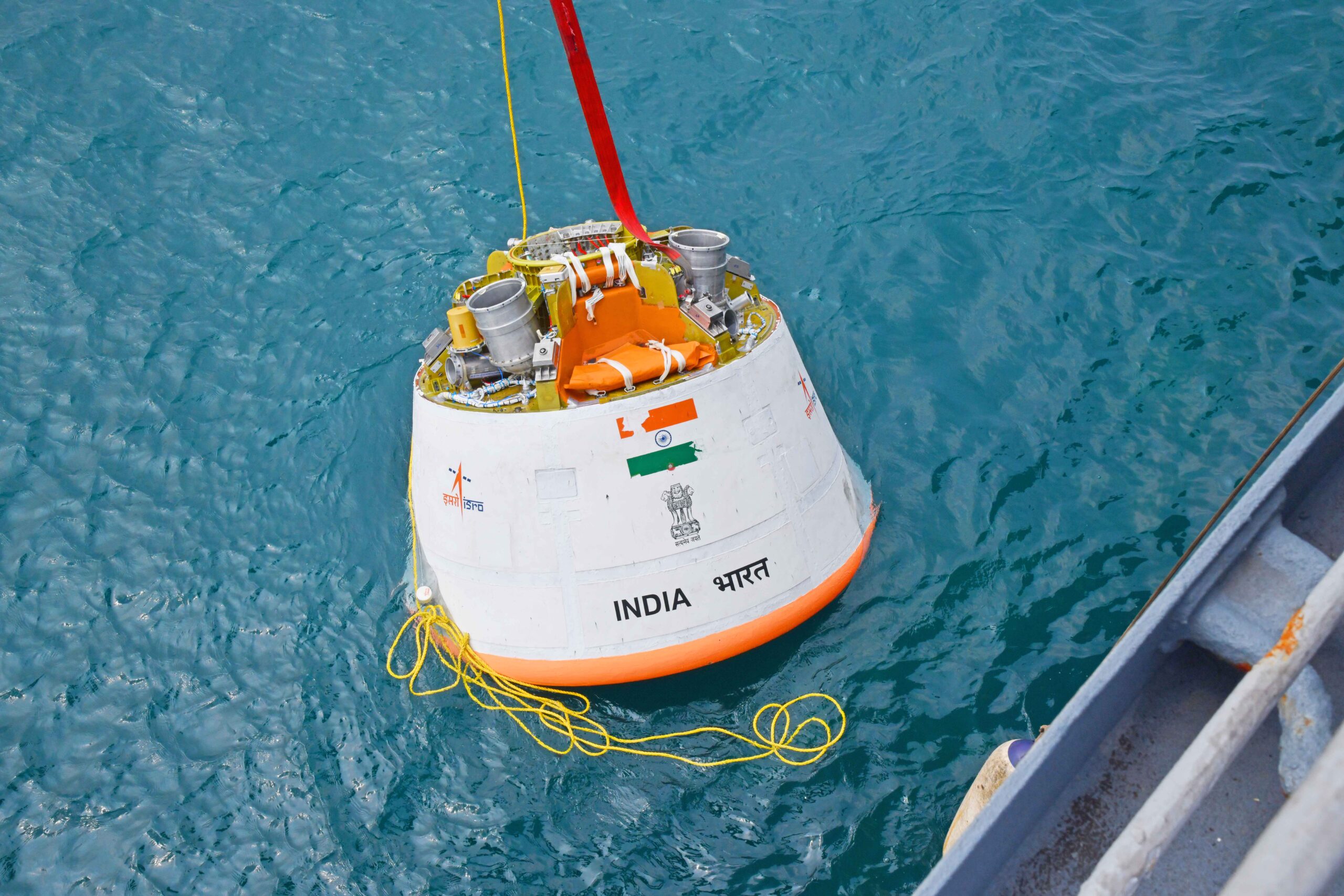
India has entered the final phase of preparations for its first human spaceflight, with the Indian Space Research Organization (ISRO) targeting the first quarter of 2027 for the landmark Gaganyaan mission, which would make the country only the fourth nation after the United States, Russia, and China to launch astronauts into orbit independently.
Over the next several months, ISRO will conduct a series of uncrewed missions, abort tests and recovery exercises to certify every critical system before astronauts are cleared for flight. The campaign is designed to demonstrate that India can safely launch a crew into low-Earth orbit and return them home — one of the most complex challenges in space exploration.
At the center of the effort is the Human Space Flight Centre (HSFC) in Bengaluru, which oversees all aspects of India’s human spaceflight program by coordinating work across ISRO centers, research laboratories, universities and private industry. While Gaganyaan is its immediate priority, the center is also developing technologies that will underpin India’s long-term ambitions in human space exploration.
Union Minister of State for Space Jitendra Singh recently said the program had entered its “final phase,” with the first crewed mission scheduled for early 2027. The successful Test Vehicle Demonstration-1 (TV-D1) mission and the first Test Vehicle Abort Mission have already validated key crew escape technologies. A second abort test, TV-D2, followed by two uncrewed orbital missions, will pave the way for the crewed launch.
The mission will carry three Indian astronauts into a 400-kilometer (250-mile) low-Earth orbit for about three days before splashing down in the Indian Ocean.
Unlike robotic missions, human spaceflight requires every onboard system to meet stringent safety and reliability standards. ISRO has modified its proven LVM3 rocket into a human-rated launch vehicle with enhanced redundancy and safety systems capable of protecting astronauts throughout the mission.
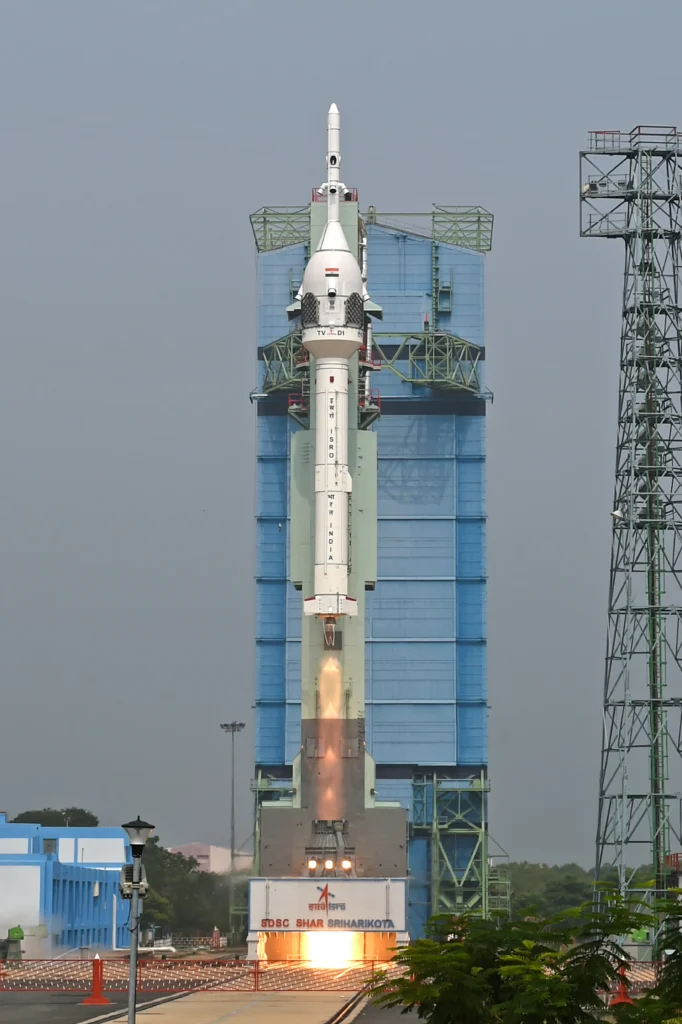
A key feature is the Crew Escape System, designed to rapidly pull the crew module away from the rocket if an emergency occurs on the launch pad or during ascent.
The spacecraft’s Orbital Module consists of a pressurized Crew Module, which will provide astronauts with an Earth-like environment in orbit, and a Service Module that supplies propulsion, power and thermal control. The Crew Module is equipped with life-support systems, advanced avionics, parachutes and thermal protection needed to survive the intense heat of atmospheric reentry.
For HSFC, however, Gaganyaan is only the beginning.
The center is leading research into life-support systems, human factors engineering, bioastronautics, astronaut health, crew certification and mission safety. Those technologies are expected to support future orbital rendezvous and docking missions, construction of the Bharatiya Antariksh Station and, eventually, crewed missions to the moon, Mars and near-Earth asteroids.
Several of those capabilities are already being demonstrated. Earlier this year, ISRO successfully completed the Space Docking Experiment (SpaDeX), making India only the fourth country to demonstrate autonomous docking and undocking in orbit. The technology is considered essential for assembling space stations, servicing spacecraft and supporting deep-space exploration.
India has also gained valuable operational experience through Indian Air Force Group Capt. Shubhanshu Shukla’s mission to the International Space Station aboard Axiom Mission 4. His work in microgravity research and spacecraft operations is expected to help refine astronaut training and mission planning for Gaganyaan.
Preparing astronauts has become an equally demanding undertaking. At ISRO’s Astronaut Training Facility in Bengaluru, four Indian Air Force test pilots selected as astronaut-designates undergo classroom instruction, simulator training, survival exercises, microgravity familiarization, aeromedical evaluation, physical conditioning and psychological assessment. After completing foundational training in Russia, they are now undergoing mission-specific preparation in India.
Before astronauts aboard the spacecraft, ISRO must complete parachute qualification tests, integrated air-drop trials, sea recovery exercises with the Indian Navy and additional abort demonstrations to validate the spacecraft under real flight conditions.
Officials say Gaganyaan is already producing benefits beyond the space program. Technologies developed for the mission are advancing robotics, electronics, materials science, medicine and manufacturing while strengthening partnerships with Indian industry and the country’s growing private space sector.
The mission also marks the first step in India’s Space Vision 2047 roadmap, which calls for establishing the Bharatiya Antariksh Station by 2035 and landing an Indian astronaut on the moon by 2040.
For a nation that has already reached the moon, Mars and the sun through robotic missions, the next frontier is no longer simply reaching space. It is developing the capability to send humans there safely, sustain them in orbit and eventually venture deeper into the solar system.
If Gaganyaan succeeds in 2027, it will represent more than India’s first human spaceflight. It will lay the technological foundation for an era of sustained human space exploration and cement the country’s place among the world’s leading spacefaring nations.
Related posts:
 Shubhanshu Shukla Nears Return from Space: A Strategic Prelude to India’s Gaganyaan Mission
 Shubhanshu Shukla’s Space Mission Sets Stage for Quad’s Next Strategic Leap
 India Nears First Human Spaceflight, Eyes Space Station by 2035 and Moon Landing by 2040
 India’s Cosmic Leap: A Billion Dreams, Will See Visits to Moon, Mars, and Venus
