Join WhatsApp Channel

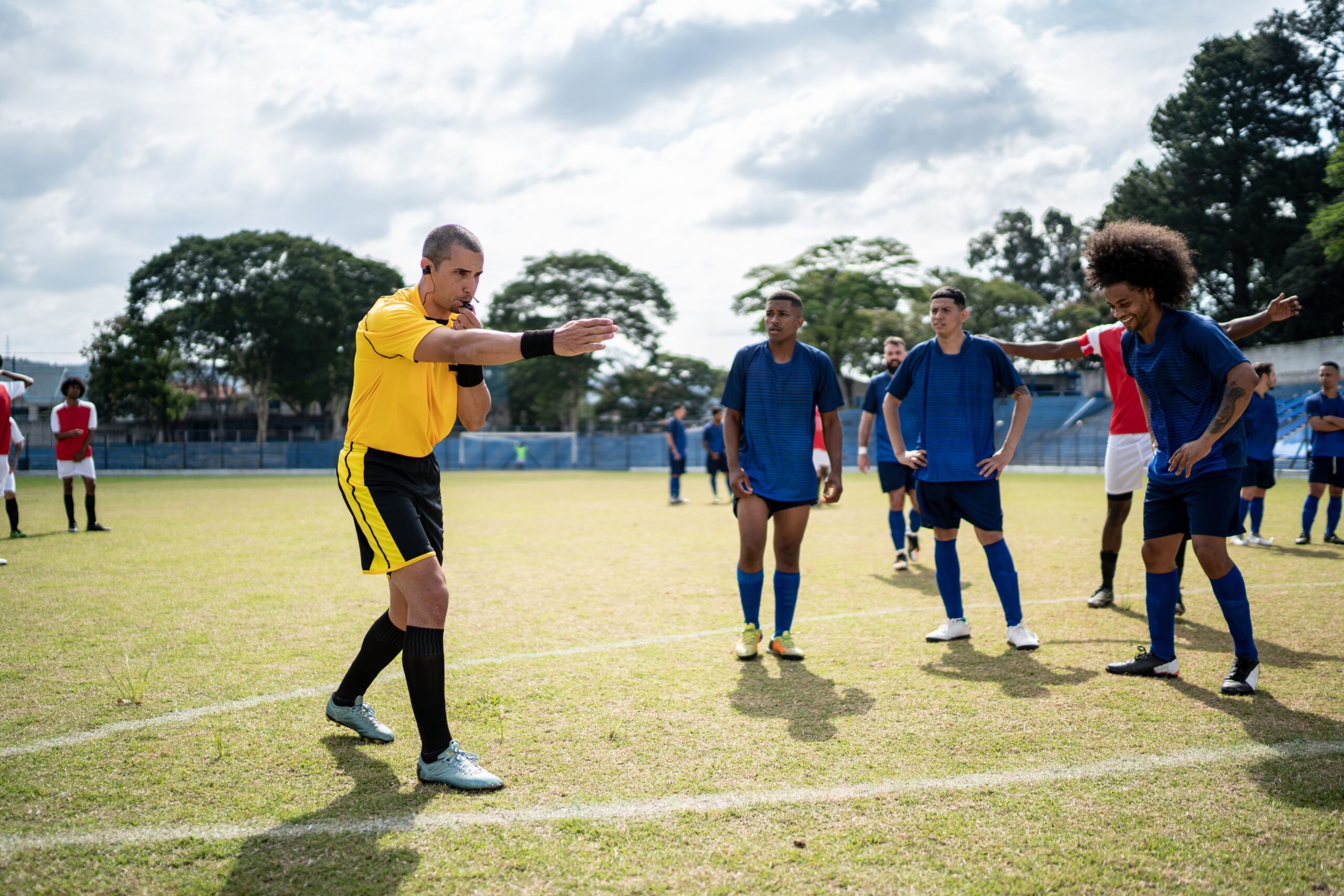
From soccer stadiums to Olympic arenas, it is difficult to imagine sports without the whistle.
This small handheld instrument, weighing only a few grams, carries immense authority. A single blast from a referee, accompanied by a point toward the penalty spot in a tightly contested match, can alter the course of a game. Such decisions have, at times, sparked violent confrontations and even strained relations between otherwise friendly nations.
That is the power of the whistle.
Although modern technology now allows teams to challenge certain decisions through video review systems, the whistle remains the instrument that signals and governs the flow of competition.
Beyond sports, whistles play an important role in everyday life. Police officers use them to manage traffic, while physical training instructors rely on them to conduct drills and parades. In each case, the whistle serves as a tool for maintaining order and discipline.
As the saying goes, change is the only constant.
Sport continues to evolve, with rule changes and technological advancements designed to make games fairer, faster, and more spectator-friendly. Soccer, despite retaining many of its traditional elements, remains one of the world’s most accessible sports. It is easy to understand, follow, and enjoy. Yet even in its simplest form, the whistle remains indispensable, signaling infringements, violations, and critical decisions while assigning responsibility on the field.
Whether in soccer, hockey, basketball, water polo, volleyball, or other team sports, the whistle is central to officiating. This is why international federations impose strict standards when selecting referees and umpires for World Cups, Olympic Games, continental championships, and other major events.
The year 2026 features several global sporting spectacles, including the FIFA World Cup, the FIH Hockey World Cups for men and women, the Commonwealth Games, and the Asian Games. At each of these events, whistles will continue to play a vital role. These modern instruments carry the authority vested in referees and umpires by the rulebooks of their respective sports.
Slovenian water polo referee Boris, a respected figure in aquatic sports, believes the evolution of rules is essential for the future of the game.
“We play water polo for spectators. Spectators demand a fast, clean, intelligent game and understandable rules. Nobody wants static and physical games. So, these were and still are key goals which we want to achieve with the new rules.”
He acknowledged that adapting to new rules takes time for players, officials, and fans alike.
“It was a big change, and everybody needs time to adapt, understand, and follow the new rules, including referees. Until now, a great job has been done with explanations, instructions, and the progress of those rules. I strongly believe that it was a step forward to speed up the game, to get more actions, more goals, and especially to ensure that the movement of the players is under maximum protection.”
Highlighting the role of technology in officiating, he added: “In all team sports, protecting the movement of an attacker is a basic fundamental rule. I would like to mention and congratulate TWPC for the use of modern techniques like VAR and referees’ review of the game. All those elements give a full picture of the success of the new rules. Of course, the process is still not over. Some rules need more changes or explanations. But we are on the right path, and our game has become faster and less physical.”
The significance of officiating and the whistle is perhaps best illustrated by some of the sport’s most memorable moments.
One such occasion was the 2006 FIFA World Cup final in Berlin, which I was fortunate to attend. Italy defeated France in a penalty shootout to claim the title, although it is worth noting that Italy failed to qualify for the 2026 FIFA World Cup.
The July 9, 2006, final at Berlin’s Olympiastadion remains one of the most dramatic matches in World Cup history. Before a packed stadium, French captain Zinedine Zidane scored an audacious “Panenka” penalty in the seventh minute. Italy equalized through Marco Materazzi in the 19th minute, setting the stage for a fiercely contested encounter.
After a 1-1 deadlock through regulation and extra time, the match headed to penalties, where Italy prevailed 5-3 to secure its fourth World Cup title and first since 1982.
One of the defining moments came in extra time when Zidane head-butted Materazzi in the chest. Following consultation with the fourth official, Argentine referee Horacio Elizondo showed Zidane a red card in what became the final act of the French star’s professional career.
Italy converted all five of its penalty kicks, while France’s David Trezeguet struck the crossbar. Italy’s Andrea Pirlo was named Man of the Match, while Zidane received the Golden Ball as the tournament’s best player.
The fortunes of national teams can change rapidly. Italy, world champions in 2006, finished 26th at the 2010 World Cup and 22nd in 2014. More remarkably, the four-time champions failed to qualify for the World Cups in 2018, 2022, and 2026.
Just as players depend on their equipment, referees rely on whistles specifically engineered for elite competition.
FIFA officials primarily use the Molten Valkeen whistle, which has been employed at FIFA World Cups since 2010. Known for its high-pitched 125-decibel sound, the whistle is designed to cut through even the loudest stadium environments.
Other popular models include the Acme Tornado 2000 and the Fox 40 Sonik Blast. The Molten Valkeen is particularly valued for its distinctive four-octave sound profile, while the Acme Tornado and Fox 40 are recognized for their exceptional volume and clarity.
These professional-grade whistles are “pealess,” meaning they contain no cork ball. As a result, their sound remains consistent and cannot be obstructed, even in wet conditions.
Veteran hockey umpire Satinder Sharma recently noted that the International Hockey Federation (FIH) provides Fox 40 Sonik whistles to its international officials, and no other whistle models are permitted to ensure uniformity.
After officiating 100 international matches, hockey umpires receive a prestigious “Golden Whistle.” Sharma, who officiated at both the Olympic Games and Hockey World Cups, is among its recipients. Following his retirement from active umpiring, he now serves as co-chair of Hockey India’s Umpiring Commission.
“Umpiring,” he says, “needs lots of mental and physical fitness, concentration, and complete knowledge of rules and regulations, besides nerves of steel to keep the tempers cool as games at the highest level are contested by putting everything at stake.”
Across sports, the most accomplished referees and umpires are held in the highest regard. They represent not individual nations but the global sporting community, entrusted with the responsibility of adjudicating some of the world’s most fiercely contested competitions.
The whistle may be small, but its authority remains immense.
Related posts:
 Sunil Gulati: The Indian American Architect Behind Soccer’s Rise in the United States
 India Clinches Asia Cup Hockey 2025, Secures Spot in FIH Hockey World Cup 2026
 Argentina Dominates Pan American Cup, Books Double Berth for 2026 Hockey World Cups
 Indian Hockey’s Road to LA 2028: Tejinder Singh Aujla on Qualification Challenges, Transition, and Governance