Join WhatsApp Channel

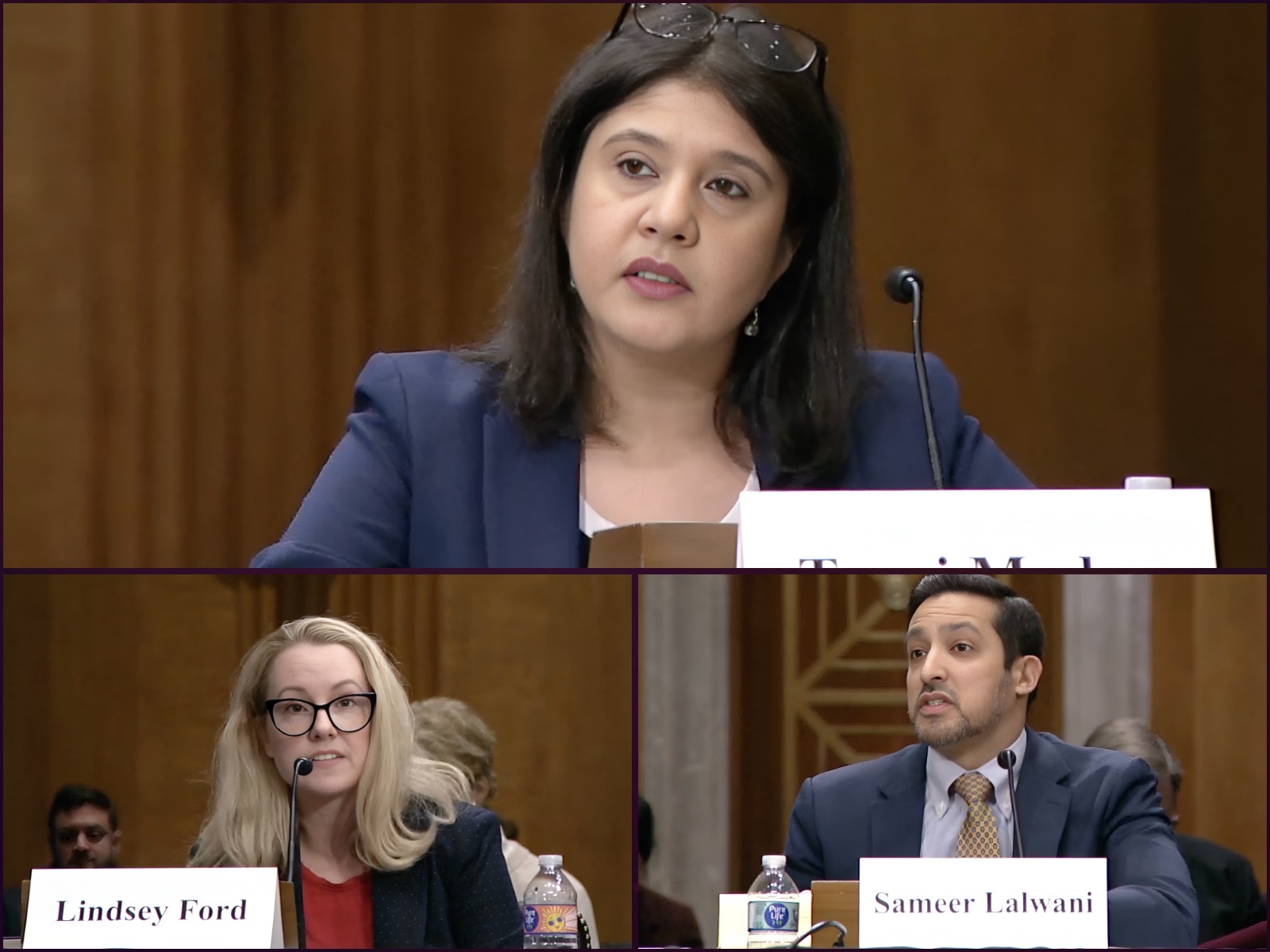
Senior experts told a U.S. congressional commission on February 17, that the United States and India increasingly view their partnership as critical to balancing China’s rise, despite recent diplomatic tensions that have exposed underlying strains in the relationship.
Testifying before the U.S.-China Economic and Security Review Commission, on “India, China, and the Balance of Power in the Indo-Pacific,” at the Dirksen Senate Office Building, in Washington DC, witnesses said both countries now consider their ties strategically indispensable, driven by shared concerns over China’s military expansion, industrial scale, and growing alignment with regional actors such as Pakistan.
Lindsey Ford, adjunct senior fellow at the Center for a New American Security, said the partnership is anchored in a mutual interest in ensuring the Indo-Pacific is not dominated by any single authoritarian power. She described India as uniquely positioned to help counterbalance China’s rise.
“At its best, the U.S.-India partnership has a nearly unparalleled capacity to deliver technological ingenuity, industrial capacity, and human capital resources for the benefit of both nations and for partners around the world,” Ford said.
She added that “India is the only large, like-minded military power that shares a land border on China’s western flank” and can “monitor maritime chokepoints or conduct sea denial activities in strategically vital sea lanes.”
Tanvi Madan, senior fellow at the Brookings Institution, said India’s strategic outlook toward China hardened significantly following the deadly 2020 border clash in the Galwan Valley, which marked a turning point in New Delhi’s internal debate.
“The crisis undermined the argument that border agreements and broader cooperation, especially economic engagement, would deter China or ease political tensions,” Madan said.
She characterized the current state of India-China relations as a “tactical thaw” rather than a “strategic reset,” noting that the prevailing attitude in New Delhi remains: “don’t trust; keep verifying.”
Security concerns featured prominently during the hearing, with experts warning that growing military coordination between China and Pakistan has altered the regional security landscape.
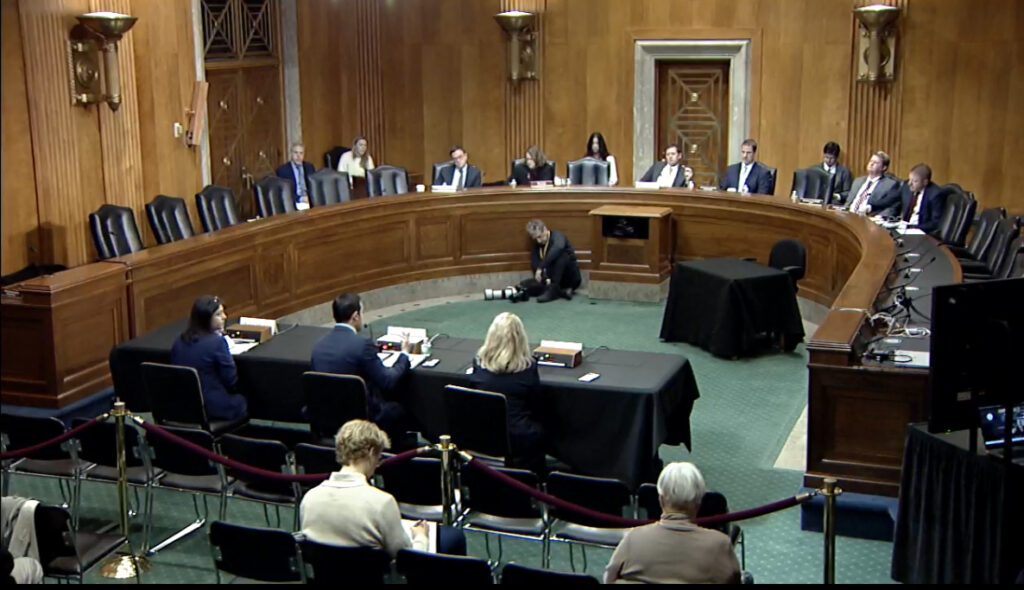
Sameer Lalwani, non-resident senior fellow at the German Marshall Fund, said recent developments have transformed what was once a theoretical threat into a “one-front reinforced” challenge for India.
“The Pakistani military was effectively receiving ‘live inputs’ from Beijing,” Lalwani said, referring to the May 2025 India-Pakistan conflict. He warned that such coordination could “fundamentally alter the regional balance of power.”
He added that “China may find it strategically useful to maintain this ‘noose’ around India’s neck,” trapping the country in “unsustainably costly deployments in brutal frontier terrain.”
Witnesses urged Washington to take concrete steps to strengthen defense and technology cooperation with India, including easing export restrictions and expanding joint investment.
Ford recommended negotiating a defense trade agreement that would establish a “white list” of pre-approved military technologies eligible for streamlined or license-free transfer, helping U.S. companies compete more effectively in India’s defense market.
Lalwani proposed creating a joint investment fund to support collaboration between U.S. and Indian firms in advanced and defense technologies, while other experts encouraged expanding military cooperation, including potential transfers of long-range strike systems and undersea capabilities.
Witnesses also highlighted the importance of expanding coordination through the Quadrilateral Security Dialogue, which includes the United States, India, Japan, and Australia, particularly in maritime surveillance and anti-submarine warfare.
Madan added that India is using the Quad, along with other partnerships with the U.S., Japan, and Australia, as part of its strategy to “maintain a favorable balance of power in the region.” She noted that the group is now an unspoken but critical coalition responding to Chinese behavior that challenges the rules-based order, calling for “bilateral or Quad consultations to coordinate ahead of key regional and global summits.”
The testimony comes as U.S. President Donald Trump and Indian Prime Minister Narendra Modi are both expected to engage with Chinese President Xi Jinping later this year, underscoring the complex strategic environment in the Indo-Pacific.
Despite longstanding differences, including India’s tradition of strategic autonomy and Washington’s historical security ties with Pakistan, experts said the U.S.-India partnership has demonstrated increasing resilience.
“Five or 10 years ago, is the resilience of the relationship, despite not just concerns in India, about can we trust the US in the US in the previous few years, about, well, can the US find India reliable?” Madan noted.
She highlighted that the relationship has remained resilient, with “functional cooperation, including defense and security cooperation, continue despite these economic concerns in the last few years.”
Related posts:
 India’s Expanding Defense Ties with Europe and Bangladesh’s Strategic Balancing in South Asia
 Experts at Capitol Hill Hearing Underscore India’s Importance in Staying Ahead of China in the Indo-Pacific
 Bipartisan House Panel Sees Stronger U.S.–India Ties as Strategic Imperative
 US State Department Officials Reaffirm Strategic and Humanitarian Commitment to South Asia at Indo-Pacific Conference