Join WhatsApp Channel

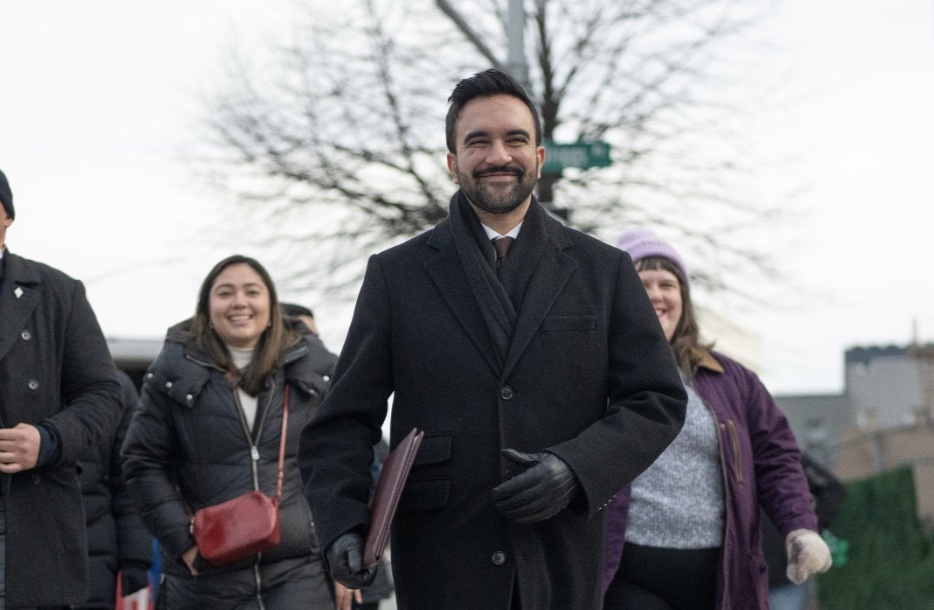
It has been just two weeks since Zohran Mamdani was sworn in as the Mayor of New York City. In that short time, Mamdani has delivered on his promises and advanced universal childcare initiatives, cracked down on subscription traps and junk fees, expanded the construction of public bathrooms across all five boroughs, and signed executive orders to expedite housing development.
Mamdani has also revived and strengthened the mayor’s office tasked with tenant protection, signaling a clear commitment to affordability and housing justice. While these early actions are significant on their own, Mamdani’s broader impact began long before his inauguration.
Only a year ago, Mamdani was a relatively little-known NY assemblyman representing Astoria. Today, his political rise has resonated far beyond New York City, inspiring communities across generations and borders. Born in Uganda and immigrating to the United States at the age of seven, Mamdani embodies a lived immigrant experience that mirrors that of millions of New Yorkers. His election as the city’s first South Asian and Muslim mayor marks a historic cultural and political milestone.
Mamdani is the son of acclaimed filmmaker Mira Nair—known for films such as Mississippi Masala and The Reluctant Fundamentalist—and renowned academic Mahmood Mamdani. Yet his political identity has never relied on lineage. Instead, he represents the tangible contributions of immigrants and South Asians to public life, civic engagement, and governance. His career in public service has consistently centered communities that are often sidelined or rendered politically invisible.
One of the most striking outcomes of Mamdani’s campaign was its effect on political participation. While the South Asian voter turnout in U.S. elections has historically been low, Mamdani’s campaign, reportedly increased voter turnout by 40 percent, signaling a shift in political engagement. Dora Pekec, a spokesperson for the campaign, said, “This campaign has awakened something powerful in New York’s South Asian and Muslim communities — a sense of visibility, pride, and political belonging that’s been denied for generations.”
Mamdani’s victory also symbolizes a broader opening of doors for marginalized groups, encouraging participation beyond traditional political gatekeepers. As artist Vishvajit Singh noted, his rise “may open more opportunities for South Asians (‘desis’) in U.S. governance.”
What sets Mamdani’s campaign apart is how far its influence has traveled beyond New York. Even before the election, South Asians across the United States—and globally—were closely watching the race. Asif Mahmoud, a Democratic bundler based in California, told ABC News, “I don’t know a single South Asian — and I know a lot of South Asians — who doesn’t know about this race going on.”
The campaign energized young South Asians to engage more seriously with politics, while also mobilizing New York’s own South Asian communities to organize in unprecedented ways. Groups such as “Hindus for Zohran,” “Punjabis for Zohran,” and “Sri Lankans for Zohran” emerged organically, reflecting the breadth of regional and cultural connection his campaign fostered.
Ultimately, Zohran Mamdani has become a form of cultural representation many South Asians have long hoped to see—visible, principled, and rooted in service. His political values of community care, solidarity, and collective responsibility resonate deeply within many South Asian households.
Yet perhaps the most compelling aspect of his rise is that he never framed his campaign around identity alone. Mamdani did not run as a South Asian candidate; he ran to make New York City better. He is not a South Asian mayor—but a mayor who just happens to be South Asian.
Disclaimer: The opinions and views expressed in this article/column are those of the author(s) and do not necessarily reflect the views or positions of South Asian Herald.
Related posts:
 An Unexpected Détente: Trump and Mamdani’s White House Rapprochement
 Zohran Mamdani Sworn in as New York City’s 112th Mayor, Pledges Inclusive and Expansive Governance
 Zohran Mamdani Makes History as New York City’s Next Mayor, Quotes India’s First PM Nehru in His Victory Speech
 President Trump and Mayor-elect Zohran Mamdani Pledge to Work Together on Affordability After “Productive” Oval Office Meeting