Join WhatsApp Channel

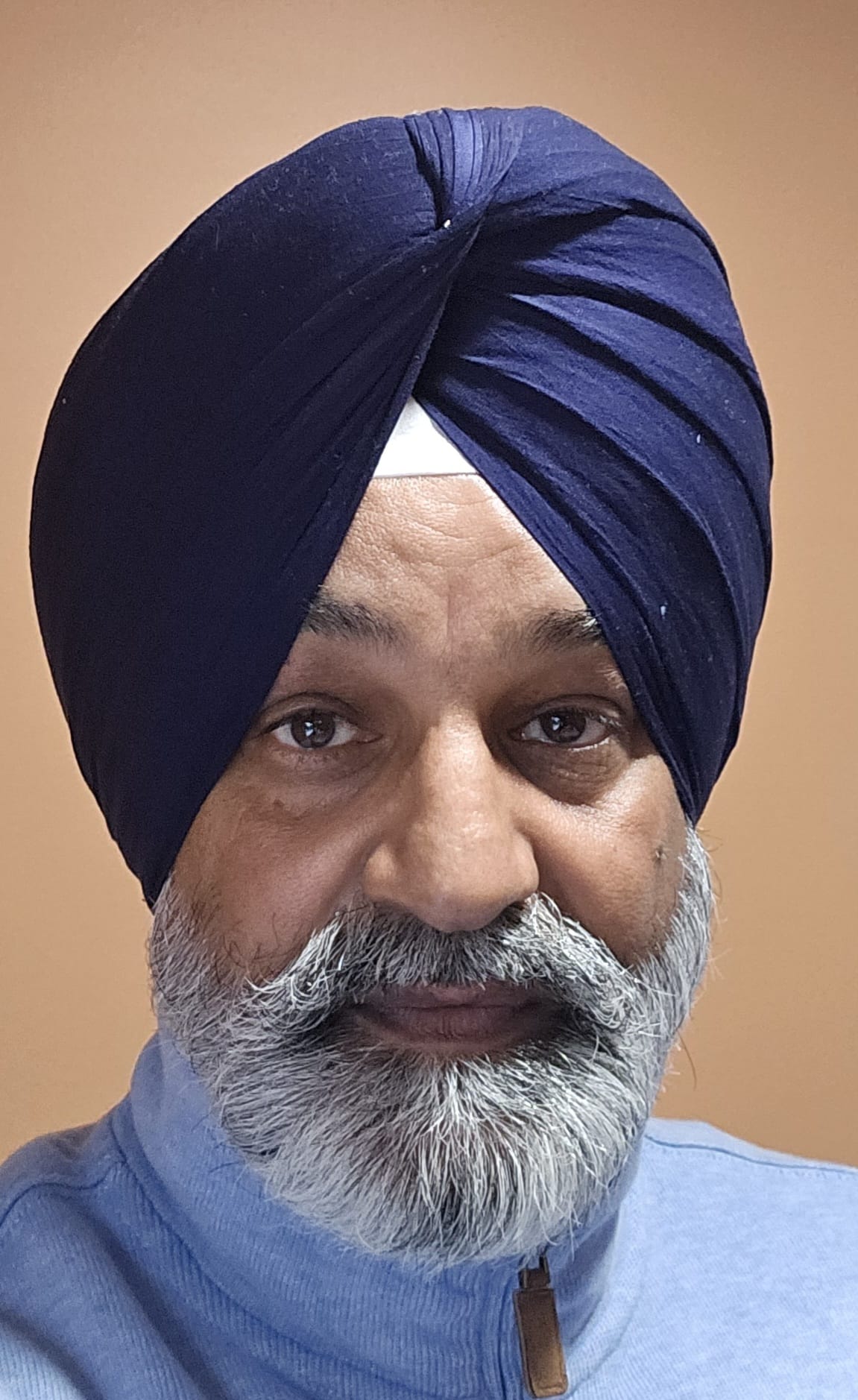
Tejinder Singh Aujla, a former national-level Indian hockey player who represented the Border Security Force in various national-level tournaments in India and attended several national camps, is a passionate teacher, coach, and historian of Indian hockey. He comes from Kukarpind, one of the villages in Jalandhar Cantonment that has long served as a nursery of hockey. Now settled in Surrey, British Columbia, Canada, Aujla is also credited with nurturing Canadian juniors during the Lucknow World Cup.
In 2028, when the Olympic Games return to Los Angeles for the third time, hockey will be the cynosure not only for the strong Indian diaspora in the United States and worldwide, but also for the global fraternity that witnessed the hockey competition at the 1932 Olympic Games conducted under unique conditions. There were only three teams in the fray. Besides the hosts, the United States, and Japan, the then defending champions India, comprising stalwarts like Dhyan Chand, his brother Rup Singh, and the first Singh from Sansarpur, Gurmit Singh, travelled several weeks by sea to reach Los Angeles, where the team won its second successive gold with fluent 11–1 and 24–1 wins over Japan and the USA, respectively.
In 1984, when the Olympic Games returned to Los Angeles for the second time, India was back again as defending champion after winning gold at the Moscow Olympic Games. The team featured players like Romeo James, Merwyn Fernandes, Mohammed Shahid, M M Somaya, Manohar Topno, Iqbaljit Singh, and Hardeep Grewal, with winger Zafar Iqbal in command. India lost only one match, a 2–4 defeat to Australia, and played a goalless draw against Germany to finish fifth. The campaign ended with a 5–2 win over the Netherlands.
Now, the Games are returning to Los Angeles for a record third time. Though it is too early to predict the teams that will qualify and compete in the Olympic hockey tournament, there are always certainties and a few teams on the edge, as the gap among the top 20 hockey-playing nations has gradually narrowed. In this exclusive interview, Aujla shares his insights into the Los Angeles Olympic Games.
Prabhjot Singh (PS): What are the chances of the Indian team playing its third consecutive Olympic Games in Los Angeles?
Tejinder Aujla (TA): “As the countdown to the Los Angeles 2028 Olympic Games begins, Indian men’s hockey faces a demanding and multi-layered qualification process. While India has consistently remained in the mid-pack of the world’s top hockey nations, Olympic qualification for LA 2028 will require strategic planning, sustained performance, and consistency against elite global opposition.
India has three clearly defined pathways to secure an Olympic berth: the FIH Pro League, the Asian Games, or a FIH Olympic Qualification Tournament. Each route presents distinct challenges with varying degrees of competitiveness and risk.
The FIH Pro League is perhaps the most demanding route. It is the most direct, but also the most challenging pathway to Olympic qualification. The winners of Pro League Season 7 (2025–26) and Season 8 (2026–27) will earn direct Olympic berths for LA 2028. If a single team wins both seasons, the Season 8 Olympic quota will be awarded to the runner-up. India will have two full seasons to attempt qualification through this route.
The second option is the Asian Games 2026. The stakes will be high, with no margin for error. The Games, scheduled to be held in Aichi–Nagoya, Japan, from September 19 to October 4, will offer a continental qualification opportunity. The gold medalist in men’s hockey will secure the Asian Olympic quota for LA 2028. Despite India’s strong continental record, the Asian Games allow no room for error, as a single off day can derail the qualification effort.
The third and final route will be the FIH Olympic Qualification Tournaments. If India fails to qualify through the first two options, these tournaments will serve as the last chance.
Two qualification tournaments for men will be held in early 2028. Each tournament will feature eight teams, with the two finalists earning Olympic berths. This pathway is widely regarded as the most unpredictable, involving high-pressure knockout matches against equally motivated and competitive teams.
PS: What do you think will be the best way for India to reserve its berth in the 2028 LA Olympic Games?
TA: “None will be easy. It is going to be a test of nerves, not a cakewalk.
India’s route to Los Angeles 2028 is clearly defined, but far from straightforward. Each qualification pathway demands mental resilience, squad depth, tactical discipline, and consistency at the highest level. A realistic assessment is essential when evaluating India’s prospects. Qualification cannot be taken for granted and will demand sustained excellence rather than sporadic success.
Let us discuss each option. In the FIH Pro League seasons of 2025–26 and 2026–27, India’s chances of qualifying appear to be around 60 per cent. This is one of the most direct and demanding pathways, but it is unforgiving. An objective analysis of India’s recent Pro League performances, consistency against top-tier opponents, and current world rankings suggests that winning either season will be a formidable challenge.
Given the depth and stability of rival teams such as the Netherlands, Belgium, Germany, and Australia, the probability of winning the Pro League at present stands at approximately 60–40 against India. In short, qualification via the Pro League is a steep uphill task. To achieve this, India must deliver sustained elite-level performances across entire seasons, not isolated victories.
Asian Games 2026 present a high probability, but with no safety net. On paper, India’s chances of qualifying through the Asian Games appear to be around 90 per cent. However, Asian dominance can no longer be taken for granted. Teams such as Japan and South Korea, along with improving sides like China and Pakistan, have significantly narrowed the tactical, physical, and conditioning gaps.
In the current environment, even a single substandard match can derail an entire Olympic cycle. Consequently, despite the high probability, qualification through the Asian Games demands maximum focus, depth, and execution from start to finish.
If the first two gateways fail, the FIH Olympic Qualification Tournaments may be the final opportunity. This pathway represents an intense pressure scenario, placing enormous psychological demands on athletes. Even lower-ranked teams often rise to the occasion, making this route highly unforgiving. However, given India’s current status, experience, and competitive level, this route appears favorable, with an estimated 95 per cent chance of qualification.”
PS: Will the back-to-back bronze medals at the Tokyo and Paris Olympic Games help boost the morale of the Indian team?
TA: Indian hockey enters the LA 2028 Olympic cycle at a critical stage. The question is no longer whether India belongs on the Olympic stage, but whether the system has the nerve, clarity, and execution to get there in an increasingly unforgiving global landscape.
On paper, India remains competitive, with an FIH world ranking around No. 7 and reigning Asian champion status, but also a bottom-table finish in the most recent Pro League. Rankings and medals can be deceptive. Against true Olympic heavyweights, warning signs are evident. Despite heavy investment in infrastructure, foreign coaching, sports science, and centralized planning, India has barely shifted the global needle over the past decade. Sustained dominance, confidence, and tactical authority, as seen in Belgium, Germany, Australia, and the Netherlands, remain aspirational rather than achieved.
PS: Can India rely on the core group that played key roles in the bronze medal triumphs of 2020 and 2024?
TA: India’s core group, forged through Tokyo 2020 and Paris 2024, is now at or past peak athletic age. Leadership largely sits in the late 20s to mid-30s bracket, while rivals increasingly field Olympic-ready squads aged 22 to 26. The Netherlands and Belgium refresh squads continuously through layered development. Spain and Germany maintain seamless junior-to-senior transitions backed by strong domestic leagues. Argentina and Australia field younger, fitter midfields with quicker defensive recoveries and superior pressing. India remains overly reliant on experience and struggles to prepare young talent capable of replacing senior players.
Recent Junior World Cups have shown flashes of promise, but also exposed shortcomings in physique, explosive speed, decision-making under pressure, and tactical discipline, all essential at the elite level.
Elite nations manage transition through rotational play, gradual exposure, and structured leadership development. India’s system has yet to ensure a smooth pipeline from juniors to senior stalwarts.
An eighth-place Pro League finish shows India closer to the chasing pack than the elite. Against top-five nations, India trails in win percentage, goal conversion under pressure, and defensive transitions. Olympic qualification now demands relentless consistency, not reputation. Asia no longer guarantees qualification, as Japan, South Korea, China, and Pakistan continue to close the gaps. A single off day can derail an Olympic cycle, as Paris 2024 demonstrated.
Qualification for LA 2028 will test nerve, discipline, and clarity. Every match must serve a defined purpose. Every selection must balance immediate results with future readiness. Every tournament must be treated as a qualification rehearsal. Long-term ideals cannot come at the cost of short-term outcomes. The approach must be pragmatic, ruthless, and unsentimental.
This Olympic cycle will test not talent, but honesty, about age profiles, development planning, and global standards. The road to Los Angeles is steep, narrow, and unforgiving. Reputation will not qualify India for LA 2028. Only nerve, renewal, and hard-earned results will.
PS: What do you have to say about the hockey administration in India?
TA: Another significant consideration is the operational role of the think tank within Indian hockey governance. During Narinder Dhruv Batra’s leadership, Hockey India experienced notable institutional and performance-related advancements, most prominently reflected in the attainment of two Olympic medals. His leadership emphasized long-term structural development, cultural consolidation, and the formation of teams compatible with modern international hockey systems.
However, persistent and largely unconstructive criticism from sections of the hockey intelligentsia may inadvertently impede the sustainability of this developmental trajectory.
Foreign coaches have played an outstanding role in helping India achieve significant success. India still requires time to develop its own internationally elite coaches. Yet a section driven by regional loyalties and social affiliations continues to criticize foreign coaches while advocating exclusively for Indian coaches, a stance that often appears unfair and illogical. Many former stalwarts aspired to occupy top positions after retirement, but their experience could be more effectively utilized in grassroots development. By nurturing young talent at the foundational level, they can help build a stronger pool for national programs.
While there is no harm in having native coaches, they must meet global elite standards. The need of the hour is to appoint a development minister for Indian hockey, someone with a broad vision, a statesmanlike approach, and a sincere, passionate commitment to the sport, driven by purpose rather than routine.
Related posts:
 Argentina Dominates Pan American Cup, Books Double Berth for 2026 Hockey World Cups
 India Clinches Asia Cup Hockey 2025, Secures Spot in FIH Hockey World Cup 2026
 FIH Junior World Cup Hockey: India to Play Pakistan on November 29
 Milano-Cortina 2026 Opens with Dual Cauldrons, Historic Venues, and a Global Call for Respect