Join WhatsApp Channel

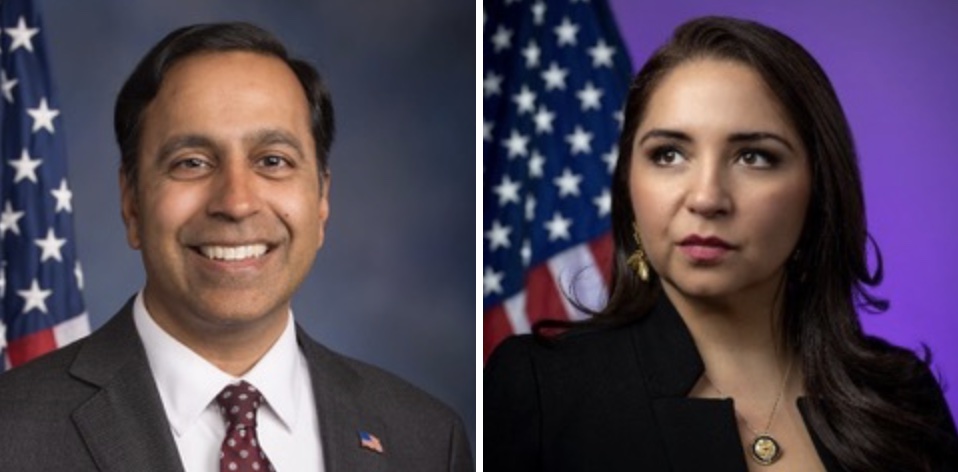
US Representatives Raja Krishnamoorthi and Delia Ramirez of Illinois have led a group of 12 House members in demanding clarity from the Departments of Veterans Affairs (VA) and Housing and Urban Development (HUD) regarding a Trump Administration budget proposal they warn could “destabilize core housing assistance programs that veterans rely on nationwide.”
In a December 1 statement, Rep. Krishnamoorthi’s office said the lawmakers sent a letter on November 25 expressing concern about the proposed Bridging Rental Assistance for Veteran Empowerment (BRAVE) program included in the fiscal year 2026 VA budget.
The letter notes that “according to President Trump’s FY 2026 Budget Request, BRAVE seemingly requires the reallocation of all resources from the Housing and Urban Development VA Supportive Housing (HUD-VASH) program – a total of 1.1 billion dollars in discretionary resources.” The lawmakers warn that shifting funds from HUD-VASH to BRAVE could jeopardize more than 112,000 housing vouchers dedicated to veterans.
They emphasize that HUD-VASH, a long-standing partnership between HUD and the VA, “combines rental assistance with case management and supportive services in order to help homeless veterans and their families obtain permanent housing and access the health care, mental health treatment, and other supports necessary to help them improve their quality of life and maintain housing over time.” Since 2008, the program has supported more than 175,000 veterans.
The lawmakers argue that replacing this established system with an undefined alternative is unwarranted. “Reallocating resources from HUD-VASH in order to establish a vague and ill-defined program is reckless and irresponsible,” they wrote, adding that the FY 2026 VA proposal offers only “10 lines” describing BRAVE and “provides no discernible administrative or organizational structure, distribution system, or performance guardrails.”
Their concerns are heightened by what they describe as “a 51 percent reduction in HUD’s budget” proposed by the Trump Administration. They contend the FY 2026 request does not explain how veterans who rely on HUD rental assistance programs, including those not in HUD-VASH, would be protected under such cuts.
The members warn that “there is no clear plan to ensure veterans’ housing stability if HUD-VASH or other housing assistance programs are abruptly defunded,” arguing that Congress cannot responsibly authorize a “significant reallocation of resources” without further information.
They stress that housing for veterans must not be placed at risk. “Veterans’ housing stability must never be subject to uncertainty due to reckless planning, indifference, or ill-advised experimentation,” the lawmakers wrote. “Our veterans have made extraordinary sacrifices in defense of our country. In return, we have a moral and civic obligation to provide them with consistent, reliable access to safe housing and essential support services.” Pursuing changes that could “put veteran housing at risk,” they argue, “would be a profound failure of leadership and governance.”
To safeguard current and future beneficiaries, the lawmakers have asked VA and HUD to provide detailed answers by December 12. Their questions seek information on the proposed BRAVE program’s structure, the fate of HUD-VASH’s existing operational framework, measures to prevent housing gaps during any transition, the number of veterans supported through HUD programs, and how accountability and congressional oversight would be ensured.
The letter was signed by Reps. Greg Casar, Herb Conaway Jr., Dwight Evans, Dan Goldman, Steven Horsford, Jonathan Jackson, Stephen Lynch, Sarah McBride, Chris Pappas, and Marilyn Strickland.
Related posts:
 New York Expands Job Access for Disabled Veterans as Governor Hochul Signs Assemblywoman Rajkumar’s Bill
 FIA New England Honors Veterans with Parade and Food Drive in Collaboration with American Legion and BC4T
 Rep. Raja Krishnamoorthi Warns DOJ Shift of FBI Agents to Immigration Enforcement Risks U.S. National Security
 From Gallipoli to Perth: Indian Veterans Draw Applause at ANZAC Day Parade