Join WhatsApp Channel

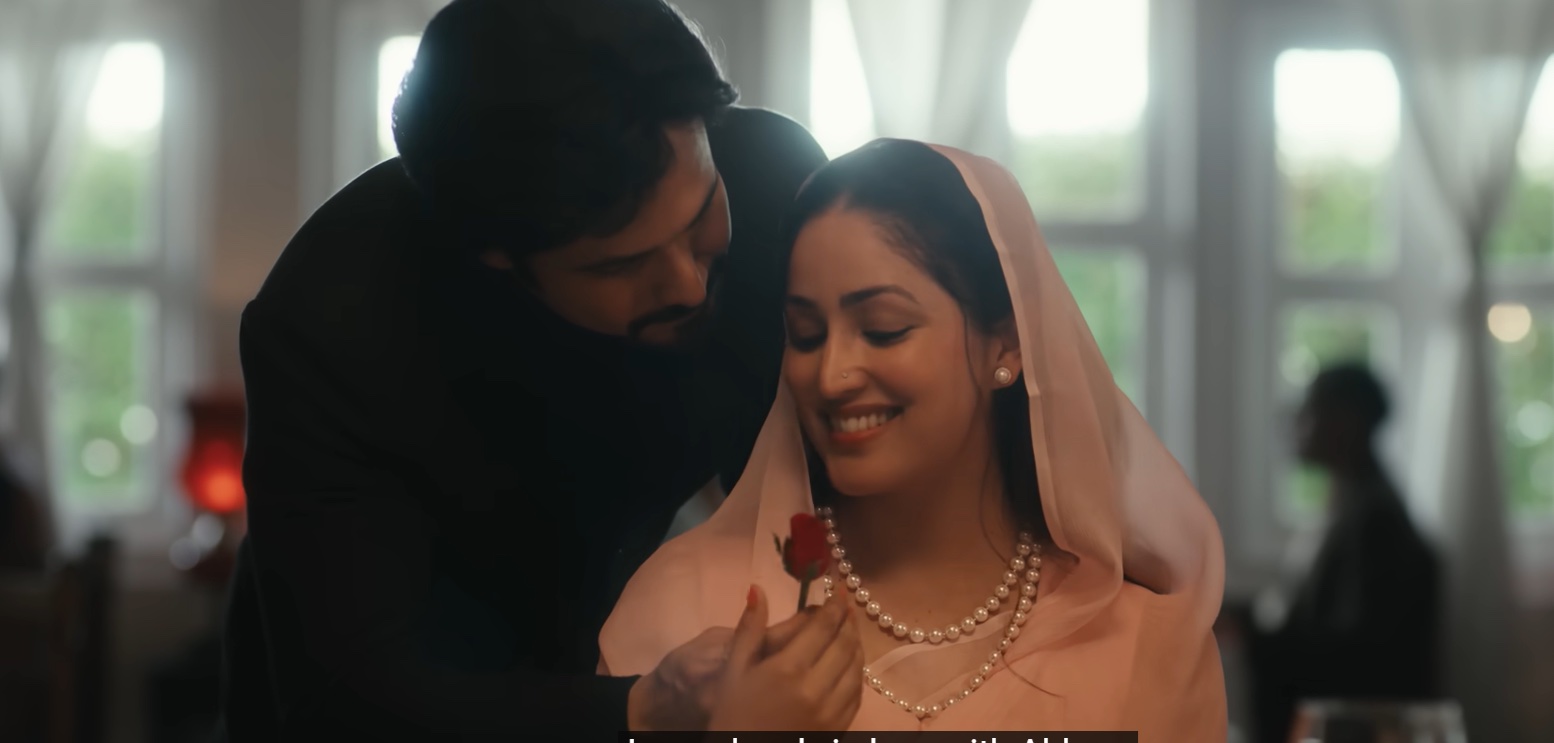
A small but relevant digression at the beginning: like filmmakers Nitesh Tiwari and his wife Ashwiny Iyer Tiwari, filmmaker Aditya Dhar and his star-wife Yami Gautam Dhar are a power-couple that makes marks together as well as individually in cinema.
Yami and Aditya first connected on URI—The Surgical Strike (which he also directed, and after which they got married) and then on Article 370 and Dhoom Dhaam. Individually, Yami is known for powerhouse performances, especially in the last few years, while Aditya has just produced and co-written Baramulla. Interestingly, in a single week, Yami has released Haq, and her husband has Baramulla on Netflix! And while this is a review of Haq, Baramulla (which I will review tomorrow) is a milestone in more than one sense!
Haq is a dramatized (and as usual for ‘legal’ safety touted as a ‘fictional adaptation’!) of the powerful Shah Bano case that shook the nation when it was fought by the passionately righteous Muslim lady from 1979 to 1985. It first put the spotlight on the abolition of Talaq Talaq Talaq (the way any Muslim can divorce his wife!) and made a case for a Uniform Civil Code.
The saga begins in 1967 when a woman named Shazia Bano (Yami Gautam Dhar) falls in love with advocate Abbas Khan (Emraan Hashmi). Theirs is a happy life, though Shazia sometimes feels neglected by the busy Abbas, by which time they are parents of two children and she is pregnant with a third. Abbas goes out of town purportedly on a case and returns after three weeks—with a new wife, Saira (Vartika Singh)!
Shazia is told that he had no option as Saira was a young widow and there were some family obligations as well. She is assured by Abbas that she will always be the loved first wife and Saira, who is accommodated in the outhouse, can even take care of her needs as she is pregnant.
However, things come to a head first when Shazia takes Saira shopping for some needs of her and the latter tells her that Abbas married her out of love—she was always his first objet d’amor but was married off to a man who ill-treated her. Abbas admits to this, but when he forgets their wedding anniversary and has no time to celebrate with her when reminded, Shazia leaves her home with her three children and goes to her parents’ home. Abbas then sends Rs. 400 a month for the kids, but when that money too stops coming, Shazia wants to know the reason.
Confronted, and in a spasm of anger, Abbas throws a bigger amount at her and recites the Islamic triple talaq, adding that she is now no longer connected to him and he has no obligation towards her kids or her. With her fiercely protective and progressive father, Liaqat (Danish Husain), they first approach the qazi who, instead, reprimands them. Left with no choice, Shazia files a case in the Sessions Court against Abbas and the judge wants that Shazia consult a qazi! He later suggests that she get a lawyer and does not fight her case herself. Bela Jain (Sheeba Chaddha) and Faraz Ansari (Aseem Hattangady) decide to take on the job by offering her their services.
In the long-drawn battle, Shazia faces a lot of hostility from her community, but is unfazed. Her father dies midway, but with steely determination, Shazia fights all the way to the Supreme Court, where after a final hearing, a landmark judgment is passed wherein the bench decrees that what is mentioned in the religious text (the Holy Quran) and the Indian law’s provisions are far from contradictory and Shazia deserves equal rights.
In the generally strong and engaging narrative, however, I did get the impression that the second half, which is mainly about the legal fight, could have been more hard-hitting, and this is where I felt that Reshu Nath’s screenplay could have been more incisive than it undoubtedly is. His dialogues, however, are realistic yet impactful.
However, a few sequences (unless they happened in real life) seem a shade incongruous. The stigma Shazia faces from the hardliners in her community strangely does not affect her Muslim lawyer, Faraaz Ansari (Aseem Hattangady). Abbas has earlier willed his property to Shazia and that issue is left hanging in the air, and Shazia only sketchily capitalizes on that.
On the other hand, the Saira-Shazia clash in the market, her volte-face later, and Shazia’s final outburst in the Supreme Court are powerfully written and executed sequences. The way Shazia comes to know the truth about her husband and his second wife is superbly done.
Suparn S. Varma, an ex-reporter who has evolved into a writer-director, has largely penned entertainers and this is his first foray into a serious genre. His work shines and he extracts good and better performances from almost all his actors.
If this film is made more watchable than it is as cinema, it is entirely due to yet another powerhouse performance in a row of them by Yami Gautam Dhar as Shazia. If the film shines overall, Yami dazzles. Most of her work recently has been in significant films with a social message (she recently told the media that this is one of those movies that “resonate” with her own beliefs), and with pitch-perfect expressions, tones and body language, she makes Shazia and the movie a very compelling watch.
Emraan Hashmi’s role is a shade one-dimensional, I felt, so his performance is also likewise, and quite tepid even in his outbursts. Danish Husain as Shazia’s father, Sheeba Chaddha as Bela Jain, and Aseem Hattangady as Faraz are well-written characters that stand out due to chiseled performances. Vartika Singh as Saira makes an impression with her limited role, while I also liked Smriti Mishra as Uzma, Aparna Ghoshal as the churlish Rukhsat and Piloo Vidyarthi as Shazia’s mother.
The film has decent but forgettable songs as far as the music goes and so the pithy lyrics by Kaushal Kishore are wasted. The background score (Sandeep Chowta) is alright. This is not a film in which the technical side needs to be prominent, and the DOP, editor and other crew do an apt job.
The film, overall, delivers despite some shortcomings, and its core and intention along with the execution (which will not at all offend the thinking Muslim), it deserves a watch.
Rating: ***1/2
Junglee Pictures’, Insomnia Films’ & Baweja Studios’ Haq Produced by: Vineet Jain, Harman Baweja, Vishal Gurnani & Juhi Parekh Mehta Directed by: Suparn S. Varma Written by: Jigna Vora & Reshu Nath Music: Vishal Mishra Starring: Emraan Hashmi, Yami Gautam Dhar, Vartika Singh, Danish Husain, Sheeba Chaddha, Aseem Hattangady, Smriti Mishra, Aparna Ghoshal, Nitin Mahesh Joshi, Rahul Mittra, Vijay Vikram Singh, Anang Desai, S. M. Zaheer, Renita V. Kapoor, Arun Marwah, Piloo Vidyarthi, Jaimini Pathak & others