In an age of algorithmic silos and political entrenchment, the most radical act is often the simplest: standing shoulder to shoulder with a stranger in a crowded street, sharing a sweet, a song, or a moment of wonder. India’s cultural festivals—from the thunderous drumbeats of Durga Puja to the whirling circles of Navratri and the flickering lamps of Diwali—are increasingly being recognized not merely as religious observances, but as vital laboratories for repairing the frayed fabric of civic trust. They are among the few remaining spaces where diverse demographics are compelled to inhabit the same public square, not as opponents in a debate, but as participants in a shared spectacle.
The architecture of polarization thrives on distance—the physical and psychological separation that allows caricature to replace acquaintance. Festivals dismantle that distance. When a city turns itself inside out for Durga Puja, as Kolkata does each autumn, the boundaries of neighborhood, class, and faith temporarily dissolve. The United Nations in India describes the festival as a “city-wide act of imagination” where “all kinds of divisions—class, caste, ethnicity—melt away” as millions wander through illuminated pandals. This is not a naïve claim of utopia, but a recognition of a rare civic condition: a shared public space where the act of looking, walking, and marveling is collective. In that collective gaze, the “other” becomes a fellow spectator, and the abstract category of “the Muslim” or “the Hindu” or “the rich” or “the poor” gives way to the concrete reality of a neighbor.
This dynamic is what social scientists call bridging social capital—the networks that connect people across different social identities. While bonding capital strengthens ties within homogeneous groups, bridging capital is the more fragile and politically potent resource. It is built through repeated, low-stakes interactions that generate familiarity and, eventually, trust. Festivals are uniquely efficient engines of bridging capital because they are recurring, ritualized, and spatially inclusive. They create what one analysis of community events describes as arenas that “bind loosely connected strangers” through shared civic norms.
The Indian context offers living proof that this is not a theoretical abstraction. In Ranchi’s Karbala Chowk, a Durga Puja pandal has been organized jointly by Hindus and Muslims for nearly three decades. Hindu residents perform the rituals; their Muslim neighbors manage decorations, crowd control, and safety. “This is not just about worship,” says the convenor of the organizing committee, “it is about showing how people can live and celebrate together… a platform to reinforce trust and friendship between communities.” The priest of the temple notes that the Hindu population in the area is limited to about 200 households, yet “we have not felt inferior ever.” This is civic trust made visible: the confidence that one’s safety and dignity are bound up with the goodwill of those who differ.
Advertisement
Similarly, in Ramanagar, a locality in Hubballi, Christians and Muslims have actively participated in Ganesh-utsav rituals and organization for years, reducing eleven separate pandals into one grand celebration under a Sarva Dharma Seva Samiti (all-religion service committee). “Ramanagar is a mini-India,” says a local official. “We celebrate all festivals together. That’s why there are no skirmishes over religion.” In Malerkotla, Punjab’s Muslim-majority town, Diwali is marked by the exchange of sweets and fireworks across Hindu, Sikh, and Muslim households; a local doctor observes that children growing up in diverse neighborhoods “naturally” participate in each other’s festivals, making syncretism a family tradition. And in Srinagar, the lighting of diyas at Lal Chowk—a square once synonymous with conflict—has become a “beacon of hope” where Hindus and Muslims converge in a “symphony of chants, laughter and shared sweets.”
These examples share a common grammar. They are not top-down exercises in tolerance but bottom-up practices of cooperation. The trust they build is procedural as much as emotional: it emerges from the shared labor of raising funds, decorating streets, managing crowds, and distributing food. When people work together on a task that is tangible and time-bound, they accumulate what the political theorist Robert Putnam called the “norms of reciprocity” on which civic life depends. They learn that the other is reliable, that cooperation is possible, and that the costs of exclusion are higher than the costs of collaboration.
Navratri’s Garba offers a particularly instructive case. UNESCO’s recognition of Garba highlights that the dance “fosters social equality by diluting socio-economic, gender and rigid sect structures” and remains “inclusive of diverse and marginalized communities.” The circular form itself is a quiet argument against hierarchy: there is no front or back, no privileged vantage point. In recent years, attempts by some groups to restrict non-Hindu participation have been met with robust counter-assertions from public figures and ordinary citizens that festivals are meant to be inclusive. The very controversy reveals the stakes: festivals are contested precisely because they are powerful sites of norm-setting. When the circle remains open, it broadcasts a civic message that participation, not purity, is the organizing principle of public life.
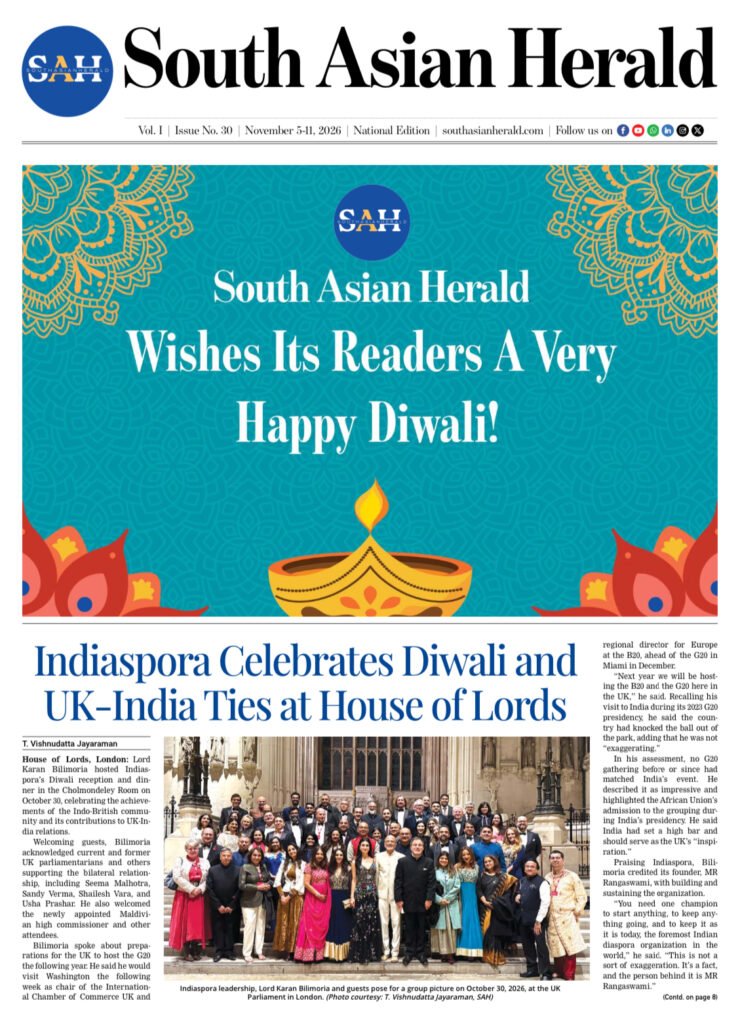
Diwali, too, carries this potential. UNESCO notes that the festival “strengthens social bonds, promotes inclusivity, and encourages values such as kindness, gratitude and hope.” The ritual of lighting lamps in shared spaces—courtyards, markets, streets—transforms private devotion into a public good. The light is not owned; it is experienced collectively. In a polarized landscape, this shared sensory experience can be a small but meaningful antidote to the atomization that fuels distrust.
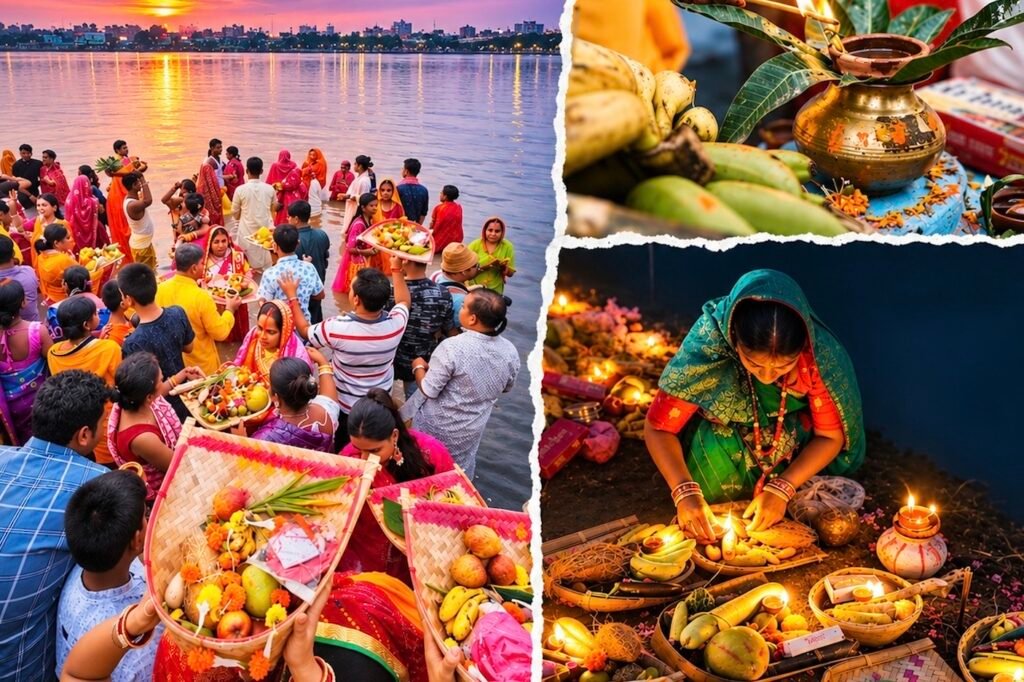
The same civic logic extends to festivals that are less frequently discussed in these terms. Chhath, observed with austere devotion across Bihar, Jharkhand, and the Purvanchal belt, brings families and neighbors to riverbanks and urban reservoirs at dawn and dusk. The ritual requires public space—ghats, ponds, rooftops—and in cities like Delhi and Mumbai, Chhath has become a remarkable exercise in negotiated coexistence, where resident welfare associations, municipal bodies, and communities of different faiths collaborate to prepare artificial ponds and maintain cleanliness. The festival’s discipline of shared waiting and collective offering creates a temporary common where the devotee and the bystander occupy the same ground.
Bhai Dooj, celebrated two days after Diwali, carries a quieter but equally significant social function. While its core ritual involves siblings, its broader practice—the exchange of sweets, the visiting of households, the extension of kinship language to neighbors and friends—reinforces what sociologists call “fictive kinship,” the deliberate widening of family boundaries to include those who are not blood relations. In diverse neighborhoods, Bhai Dooj has become an occasion for women to visit the homes of neighbors from different communities, carrying sweets and receiving them in return. These are small gestures, but they accumulate into a grammar of mutual recognition that survives the noise of electoral politics.
Govardhan Puja, observed in many parts of north and western India, offers another model. The festival commemorates the lifting of a mountain and the protection of a community by collective effort. In practice, it involves the preparation of Annakut—a mountain of food—which is then shared among all present, regardless of caste or creed. In places like Nathdwara and in the Pushtimarg communities of Gujarat and Rajasthan, the Annakut is a public feast, and the act of sharing food prepared in common is a powerful ritual of equality. The festival’s ecological dimension—the reverence for cattle, for the land, for the cycles of nature—also positions it as a site where civic and environmental concerns converge.
None of this is to deny that festivals can be weaponized, that processions can become shows of force, or that exclusionary impulses exist. But the positive cases are not anomalies; they are evidence of a deep civic resource that remains available even in difficult times. The task is to recognize, protect, and scale the mechanisms that make them work: open access to public space, shared organizational responsibility, and a normative commitment to the festival as a common good rather than a sectarian possession.
Civic trust is not rebuilt through exhortation or legislation alone. It is rebuilt through repeated, embodied experiences of shared life. A Muslim drummer in a Garba troupe, a Hindu priest welcoming Muslim volunteers at a Durga Puja, a Sikh family exchanging Diwali sweets with a Muslim neighbor, a neighbor joining the Chhath ghat cleanup, a woman receiving Bhai Dooj sweets from a friend of another faith, a community sharing Annakut on Govardhan Puja—these are the small, cumulative acts that restore the belief that public space belongs to everyone.
In an era that profits from division, the festival’s radical promise is its insistence that joy, too, can be a common project. The lantern lit at Lal Chowk, the circle drawn at Navratri, the lamps floating on Chhath waters, the sweets exchanged on Bhai Dooj, and the shared feast of Govardhan are not merely symbols of hope; they are working models of a more trustful India, one shared celebration at a time.
Disclaimer: The opinions and views expressed in this article/column are those of the author(s) and do not necessarily reflect the views or positions of South Asian Herald.