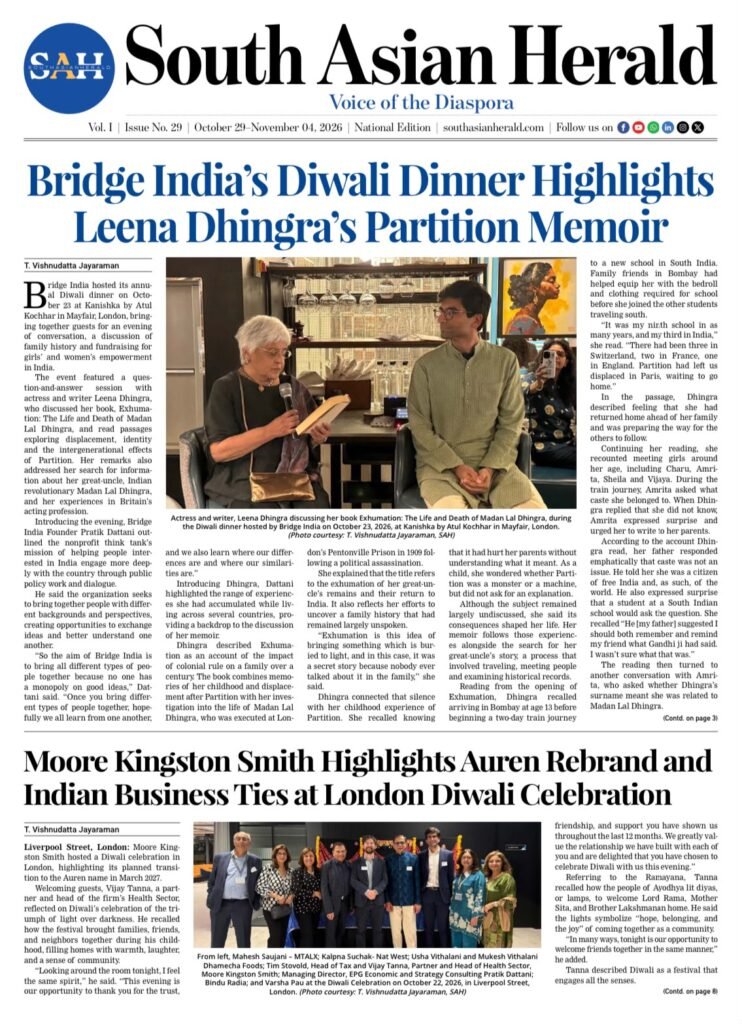
There is a moment at every great party when the evening takes on a life of its own. The music changes, conversations spill across tables, someone makes an entrance in an extraordinary outfit, and suddenly the atmosphere shifts. This Diwali, that feeling seems to be sweeping across continents. In New York, Indian couture has taken over the Metropolitan Museum of Art.
In London, historic private members’ clubs are welcoming contemporary Indian designers, while Harrods and Selfridges are dedicating showcases to some of the country’s most exciting fashion talent. From the ballrooms of Mayfair to Manhattan’s cultural landmarks, the Festival of Lights is becoming an increasingly prominent fixture on the international social calendar.
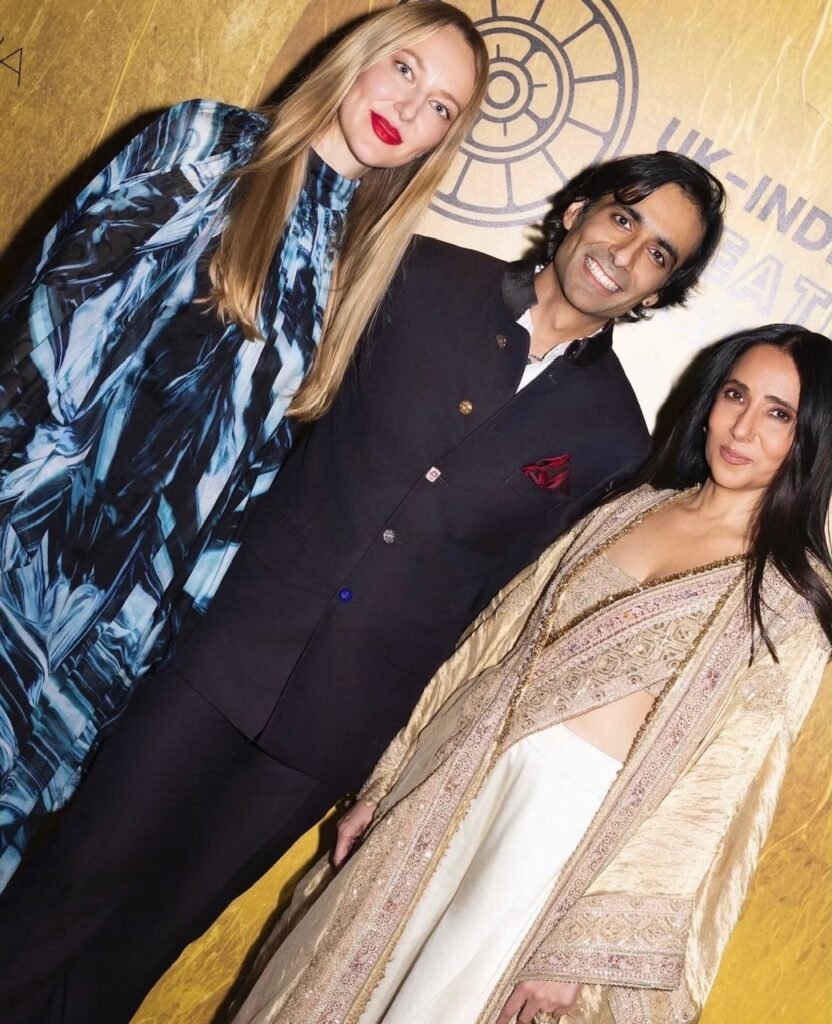
Celebrated on November 8 this year, Diwali remains a festival of light, renewal, generosity and togetherness. What is changing is its visibility. The celebrations now extend from family homes and temples to museums, fashion houses and cultural institutions, reflecting a growing appreciation of Indian artistry and heritage.
The Night Pall Mall Met Indian Couture
Advertisement
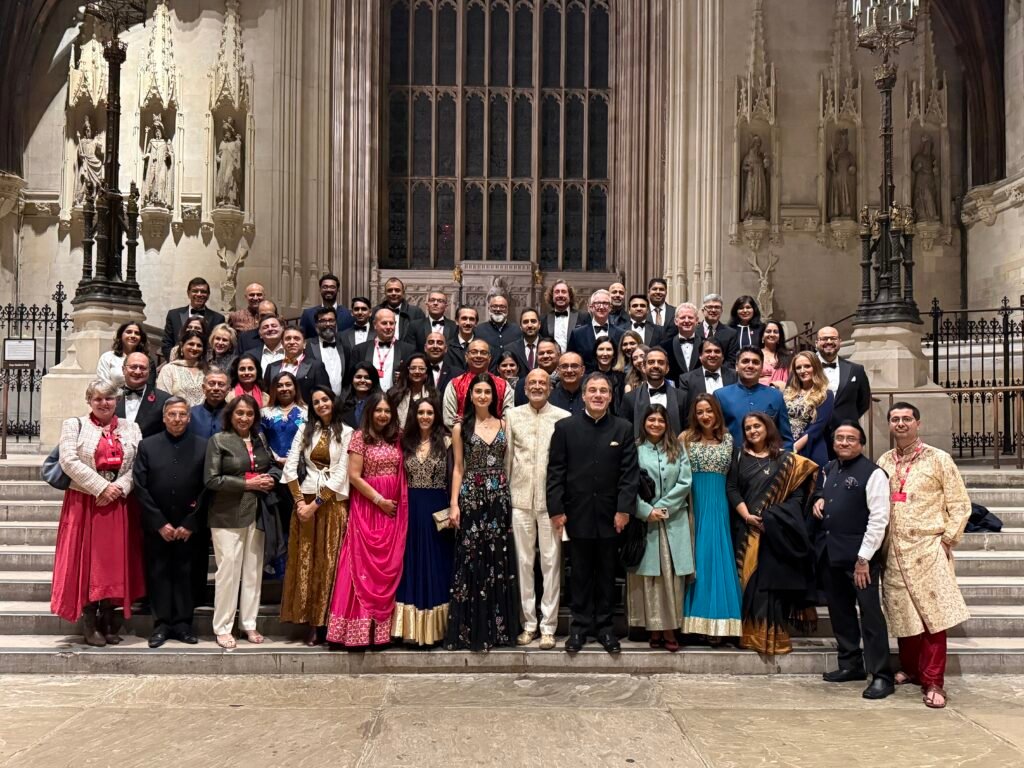
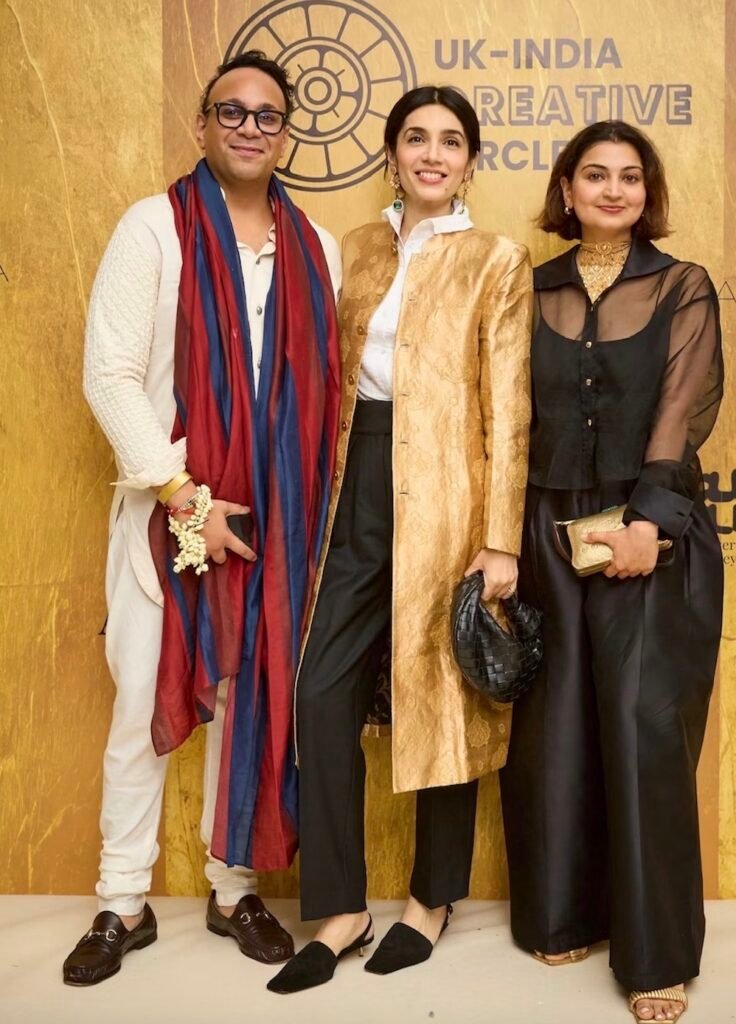
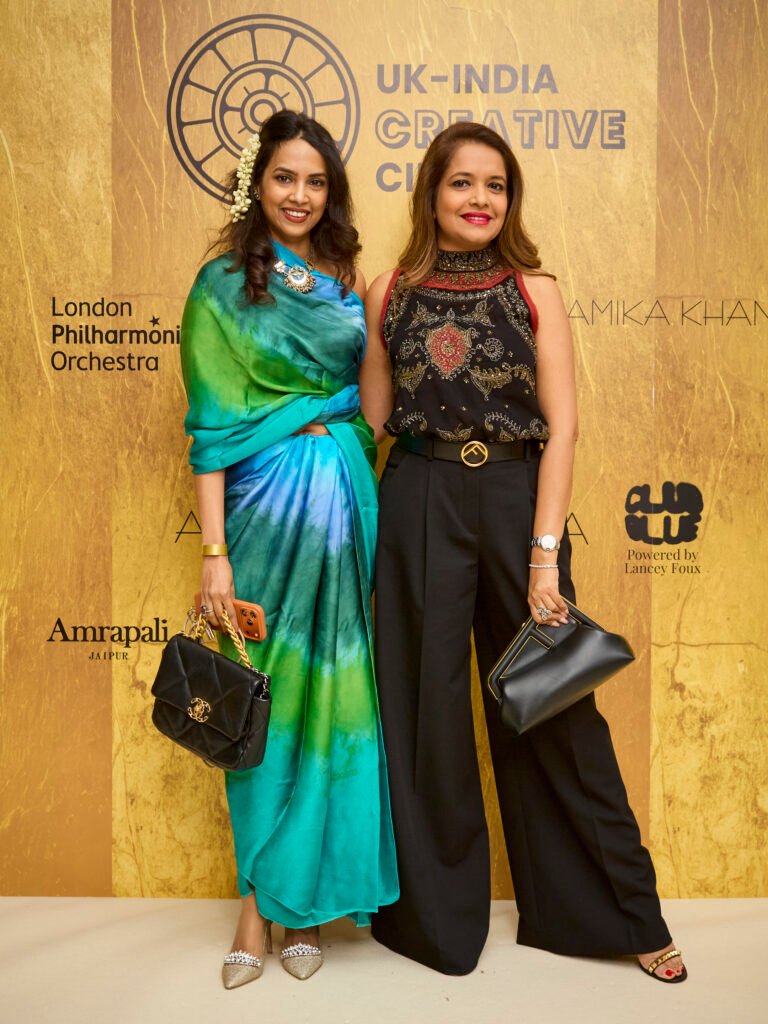
On the 30th of October, London’s Royal Automobile Club provided the setting for one of the season’s most distinctive celebrations. The UK–India Creative Circle (UKICC), founded by its Executive Chair, Dr R. Sri Ram, hosted its second Diwali gathering, bringing together leading figures from fashion, music, publishing, design and the arts. The Mayor of London, Sadiq Khan, attended as chief guest. For Dr. Sri Ram, also Founder and Managing Director of Supreme Creations Group, the Circle represents a wider ambition to strengthen creative relationships between Britain and India. Supported by the UK’s Department for Business and Trade, the initiative provides a platform for collaboration across disciplines, with Diwali offering an occasion to celebrate the artistic traditions and contemporary talent of both countries.
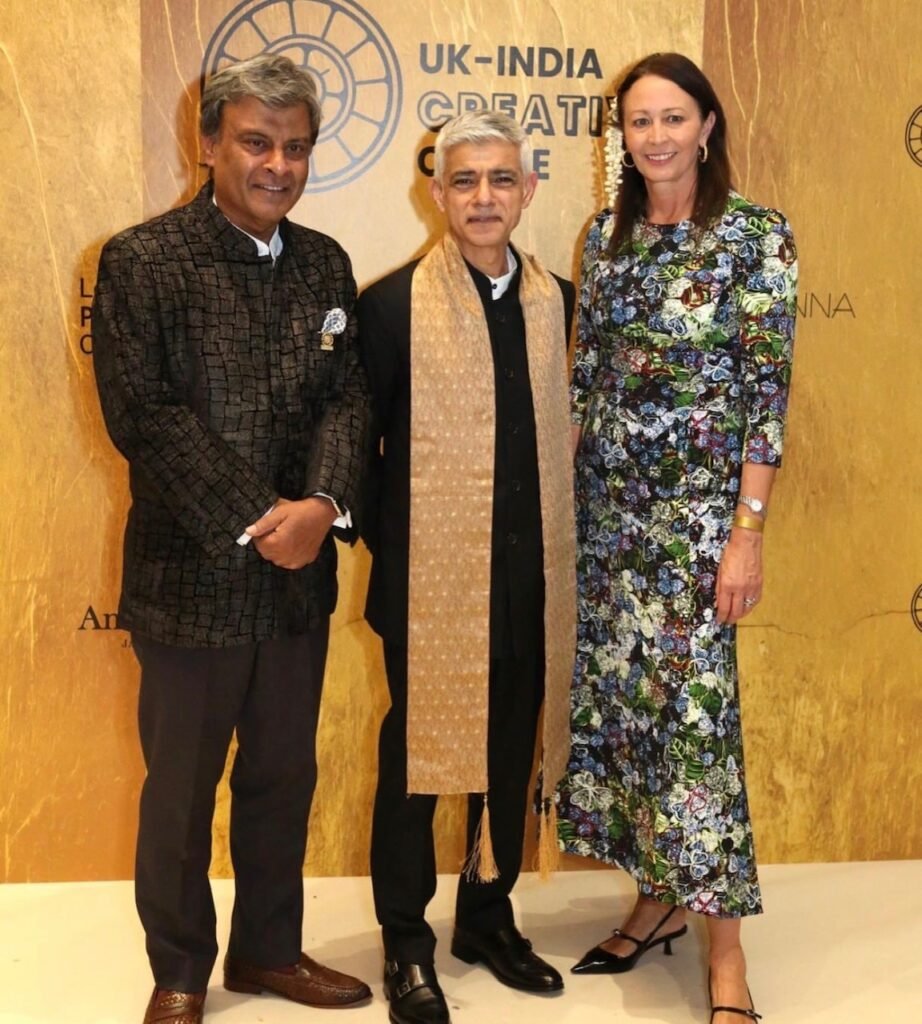
The evening’s six co-chairs reflected that vision. Caroline Rush CBE, former Chief Executive of the British Fashion Council, joined Lydia Slater, Editor-in-Chief of Harper’s Bazaar UK, and Divia Thani, Global Editorial Director of Condé Nast Traveller. Alongside them were Sujata Assomull, journalist, author and founding Editor-in-Chief of Harper’s Bazaar India; Lucy Cleland, Editorial Director and Co-Founder of Country & Town House; and Cora Delaney, Founder of EYC LTD.
Together, the six women brought perspectives spanning British and Indian fashion, international publishing and the creative industries. Broadcaster and author Babita Sharma guided proceedings as Master of Ceremonies. Yet it was the artistic programme that gave the evening its particular character.
Anamika Khanna, Amrapali And The Art Of Making An Entrance
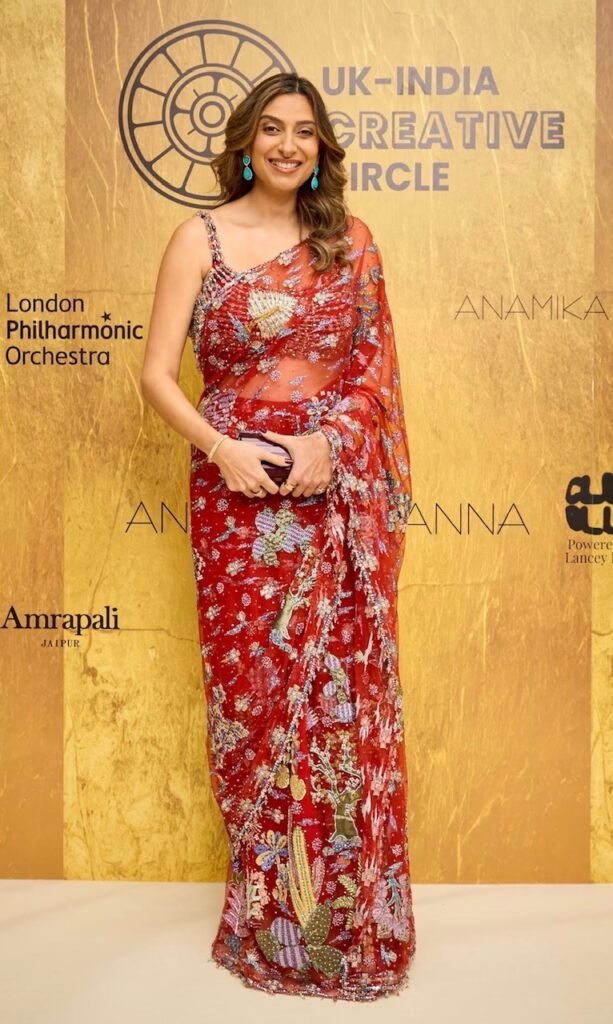
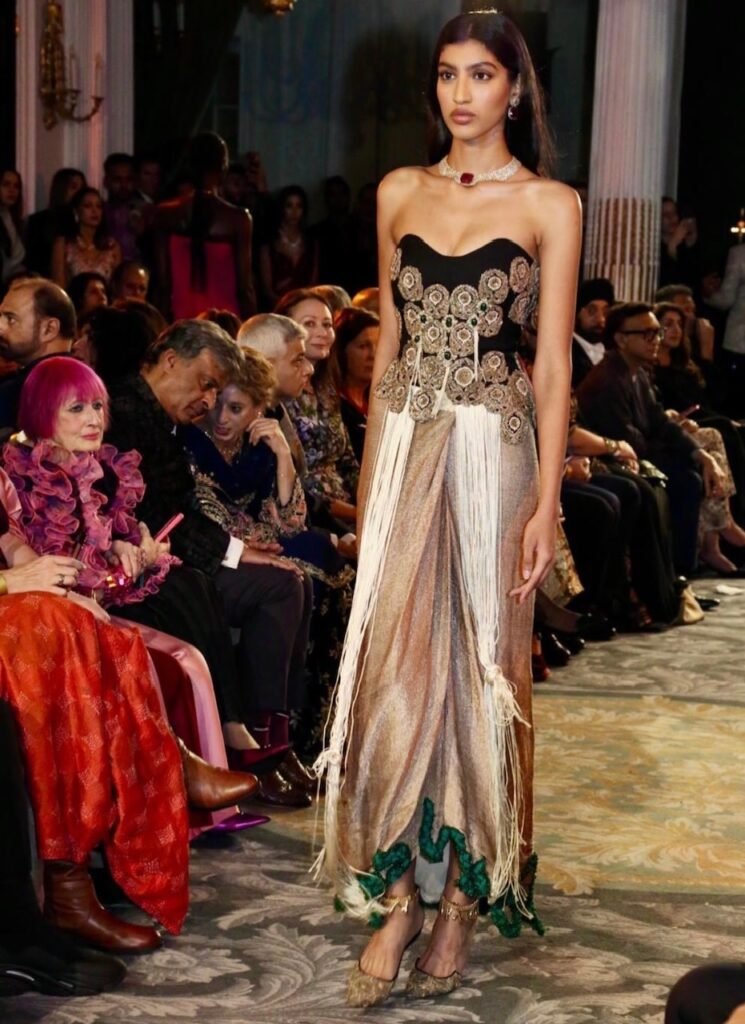
Fashion provided the visual centerpiece, with Anamika Khanna presenting her couture in collaboration with Amrapali Jewels, the Jaipur-founded jewelry house celebrated for its interpretations of India’s decorative heritage. Anamika has long occupied a distinctive position in Indian fashion. Her designs move between tradition and experimentation, transforming familiar silhouettes through inventive draping, unexpected proportions and intricate embellishment. The result is clothing that feels rooted in Indian craftsmanship yet entirely contemporary. Paired with Amrapali’s elaborate jewelry, the presentation brought together two creative approaches united by an appreciation of artistry and detail. It was a fitting collaboration for London, a city whose fashion identity has always been shaped by cultural exchange.
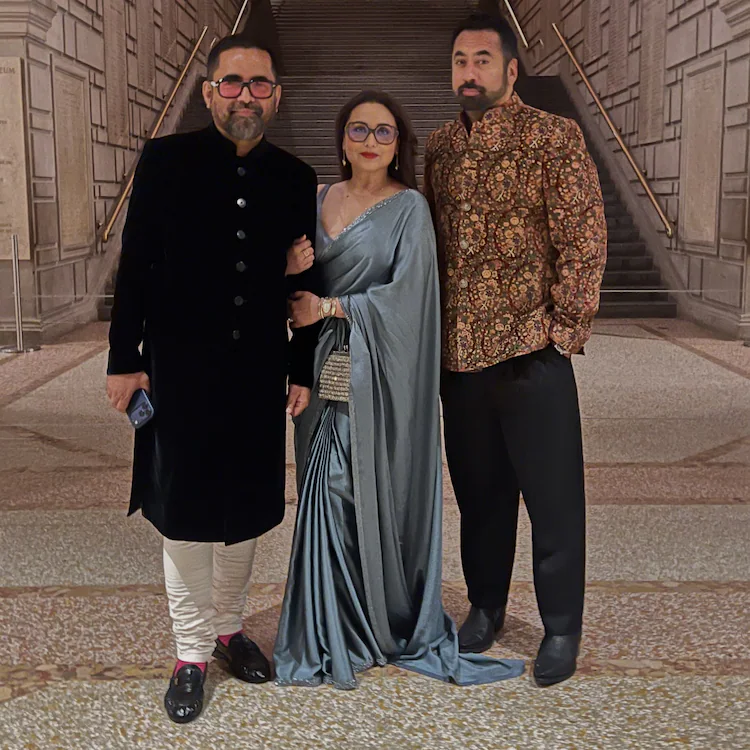
The musical programme was equally imaginative. Musicians from the London Philharmonic Orchestra performed classical arrangements alongside interpretations of compositions by A. R. Rahman, creating a dialogue between British orchestral tradition and Indian musical expression. Later, Club Blue, powered by British rapper and producer Lancey Foux, brought a different energy to the celebrations, with DJ Kizzi and DJ Amari taking over the music. British fashion personalities including Dame Zandra Rhodes and Julien Macdonald were also among the notable names associated with the evening’s creative gathering. From couture and fine jewelry to orchestral performance and contemporary music, the celebration captured the many ways in which Indian and British artistic traditions continue to influence one another.
New York’s All That Glitters Moment
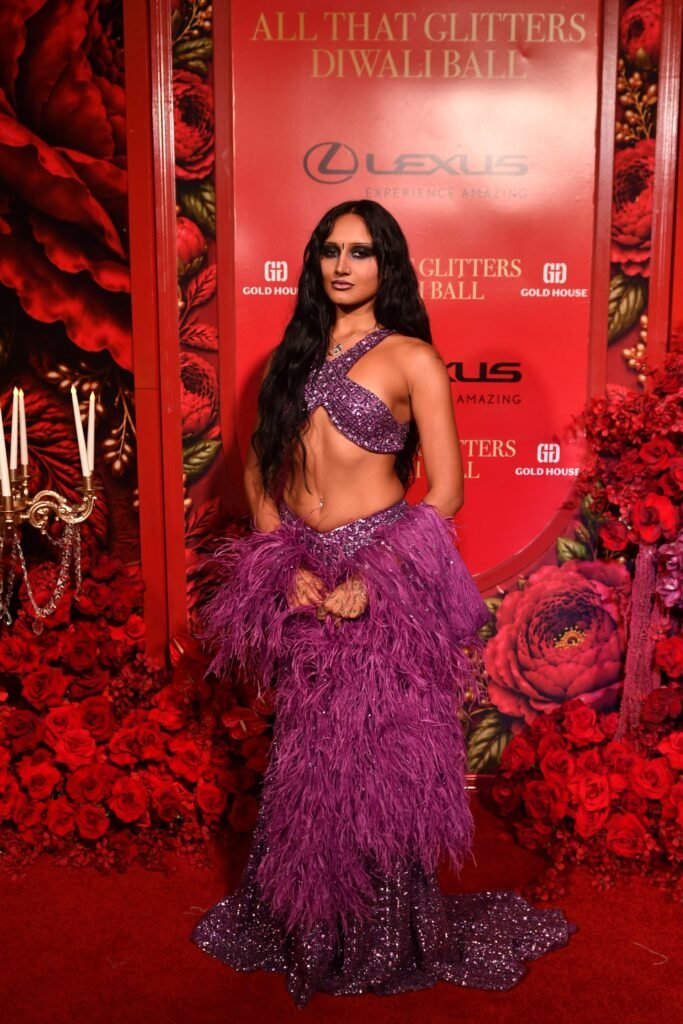
Across the Atlantic, New York has developed its own distinctive Diwali scene. At its center is Anjula Acharia, the entrepreneur and cultural connector who’s annual ‘All That Glitters Diwali Ball’ has become a vibrant celebration of South Asian talent in American entertainment and fashion. This year’s event at Ambassadors Clubhouse embraced the theme Diamonds & Light, with the red carpet providing plenty of memorable fashion moments.
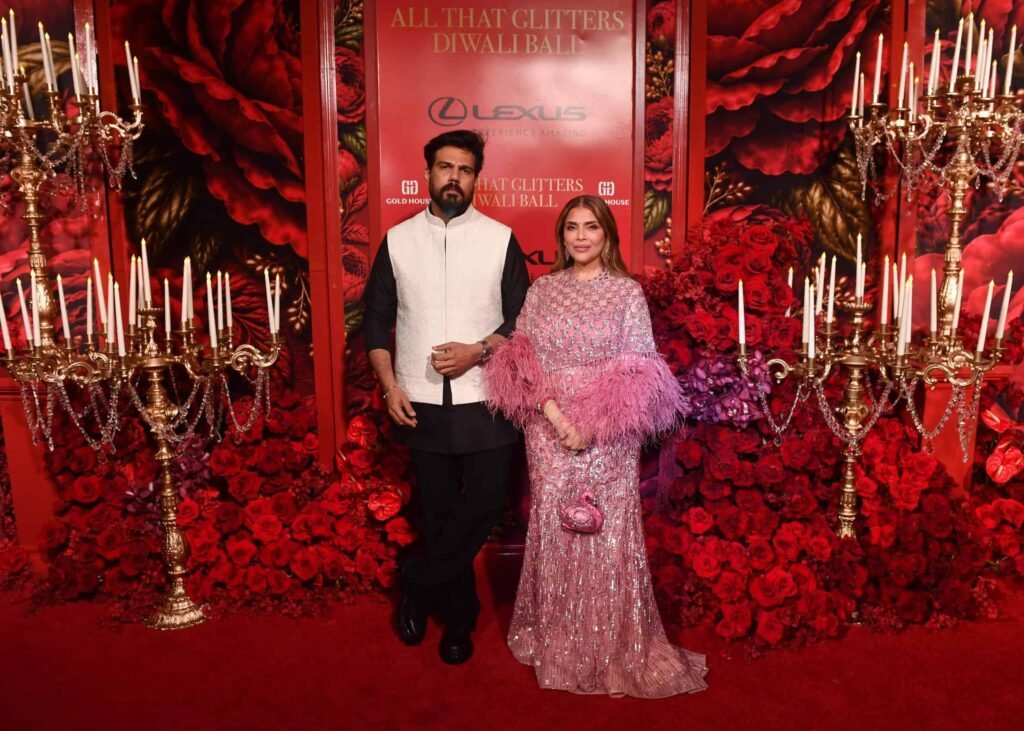
Anjula wore Falguni Shane Peacock, complete with feathered detailing and a sweeping train. Jessel Taank chose a Tarun Tahiliani creation with a striking maang tikka, while actress Poorna Jagannathan appeared in Rahul Mishra. Singer Rhea Raj also wore bespoke Falguni Shane Peacock. Guests included Jay Sean, Kal Penn and Avantika Vandanapu, reflecting the breadth of South Asian talent making its mark across American popular culture. Beyond the glamour, the evening supported South Asian Youth Action, an organization working with young people in New York. Elsewhere in Manhattan, Sabyasachi Mukherjee’s Diwali reception at the Metropolitan Museum of Art offered a different kind of spectacle.
The designer’s richly layered aesthetic, characterized by heritage textiles, intricate embroidery and dramatic jewelry, seemed perfectly suited to the museum’s grand surroundings. For Indian fashion, the setting carried particular significance. The Met, internationally associated with art, history and its celebrated annual fashion gala, became a stage for Indian design and cultural identity. Together, the two New York celebrations demonstrated the breadth of contemporary Diwali, from exuberant entertainment to the elegance of museum-hosted couture.
London’s Diwali Fashion Season
If New York has embraced the Diwali ball, London is turning the festival into a fashion season.
At Selfridges, Rahul Mishra is scheduled to present a Diwali-themed event on the November 3, bringing his extraordinary embroidery and nature-inspired designs to London audiences. At 40 Duke Street, the retailer’s exclusive private members’ space, Abu Jani Sandeep Khosla have already set the tone for Diwali with a showcase of their exuberant creations, renowned for exquisite craftsmanship, intricate mirror work and an unapologetically maximalist aesthetic. Meanwhile, Anamika Khanna’s appearance at the Royal Automobile Club is followed by a Harrods Penthouse trunk show with Amrapali, scheduled from November 2-5.
Gaurav Gupta, whose sculptural silhouettes have attracted international attention, is also part of Harrods’ festive programme, with a presentation scheduled for the 8th of November. Each designer brings a recognizable aesthetic, from Rahul Mishra’s poetic embroidery and Gaurav’s futuristic forms to Anamika’s experimental draping and Abu Jani Sandeep Khosla’s lavish ornamentation.
Harrods is extending the festivities beyond its fashion collections. Its Knightsbridge façade will feature a Diwali light display, while the store’s celebrations include festive food, beauty experiences and gifting.
The prominence of these designers in London’s leading luxury destinations reflects the growing international appreciation of Indian fashion, particularly its exceptional craftsmanship and ability to reinterpret traditional techniques for contemporary audiences.
The London Party Circuit
London’s Diwali party circuit is in full swing. Soho House kicked off the festivities with its celebration last week, while on November 4, the Sundaram Tagore Gallery in Pall Mall will host the Mayfair Times Diwali Party, co-hosted by the magazine’s Editor-in-Chief, Selma Day, and Farzana Baduel, Founder and CEO of Curzon PR. Aisha Bennett and journalist Katrina Mirpuri are bringing a more playful spirit to Soho Mews House on November 13, with a dress code that says it all; Desi, Drama, Disco.
Meanwhile, anticipation is building for one of the season’s most glamorous invitations, Divia Thani’s annual Condé Nast Traveller Diwali Ball in partnership with Cartier. From intimate gallery soirées to glittering celebrations, the Festival of Lights has become an unmissable fixture on London’s social calendar.
More Than A Moment
For all the spectacular fashion and beautifully staged evenings, Diwali’s growing international visibility tells a larger story. Across London, New York, Singapore, Colombo, Dubai and beyond, younger generations are finding new ways to celebrate traditions inherited from their families. A sari might be worn with contemporary tailoring. An heirloom necklace might accompany a sculptural gown. An evening might begin with prayers and end on a dance floor. The customs are not disappearing.
They are evolving with the people who celebrate them. And while international fashion houses and luxury retailers have increasingly recognized Diwali’s significance, the most compelling events remain those that connect the festival’s heritage with genuine creative expression.
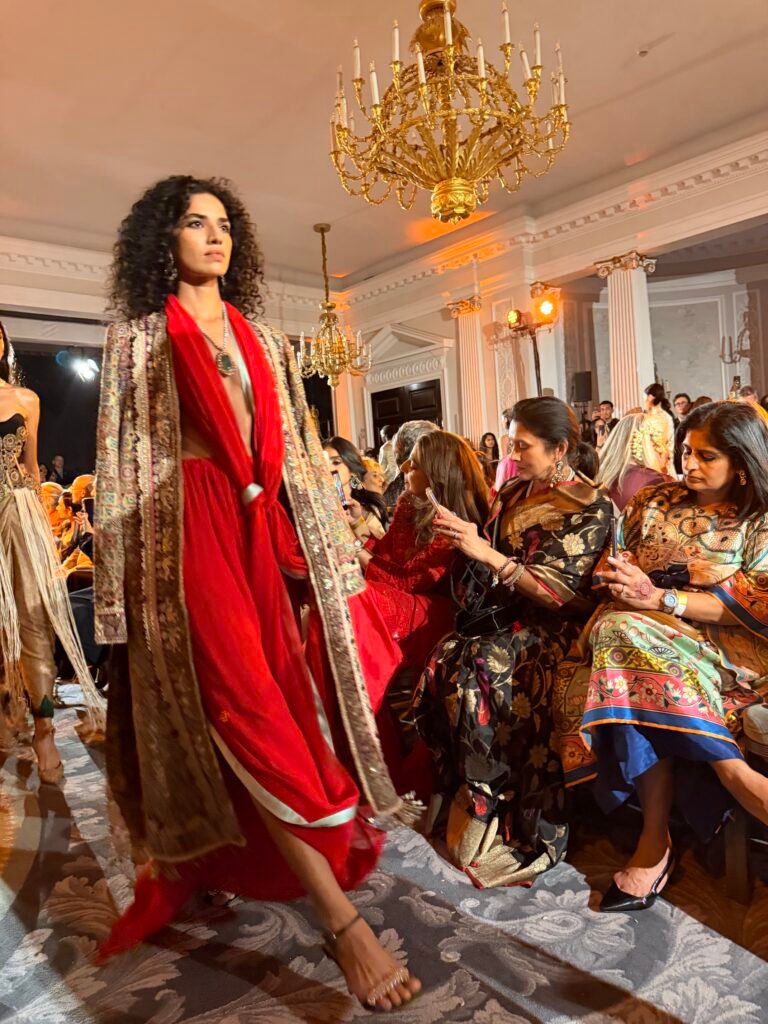
That was what made the UK–India Creative Circle’s evening at the Royal Automobile Club particularly resonant. Its combination of couture, jewelry, music and cultural exchange offered a thoughtful interpretation of what a contemporary Diwali celebration can be. There is something equally significant about the settings in which these gatherings now take place. The Royal Automobile Club, The Dorchester and the Metropolitan Museum of Art are institutions with distinct histories, yet each has become part of a wider celebration of Indian culture.
From Anamika Khanna’s couture in Pall Mall to Sabyasachi’s reception in Manhattan, these occasions reveal how confidently Indian creativity is moving across international boundaries. Diwali has always been about illumination, the triumph of light over darkness and the promise of renewal. Its expanding presence on the global cultural calendar feels like a natural extension of that spirit. From the intimate glow of a diya to the illuminated façade of Harrods, the settings may be different, but the sentiment remains. The Festival of Lights is not changing its identity to find a place on the world stage. It is bringing its traditions, imagination and extraordinary creative energy with it.