
This past week the US Labor Secretary Keith Sonderling announced a freeze on Green Card filings by eight firms — Cognizant, Infosys, Tata Consultancy Services, Wipro, HCL Technologies, Microsoft, Adobe and Capgemini. News reports in India say that the Trump administration has also opened probes into nine elite universities including Harvard, Yale, Stanford, Brown and the Massachusetts Institute of Technology for alleged misuse of exchange-visitor visas to undercut American wages.
The two moves together target the Permanent Labour Certification (PERM) programme and are part of a broader push to reduce numbers of foreign-born people in the US and curtail their pathway to residence and citizenship.
Indian IT firms did not appear unduly perturbed by the move. Major tech companies had already reduced their dependence on this route for employment given that they were aware of US President Donald Trump’s views on immigration and “Make America Great Again” policy.
What did seem to rile India, though, was the classification of Indian IT professionals and skilled workers as “indentured labor” in remarks by Vice President J.D. Vance. India’s Ministry of External Affairs slammed the comments as “unwarranted” and “deeply offensive.” The US move would not “advance the shared ambitions of both countries,” it said, indicating fresh trouble in what is becoming an increasingly beleaguered relationship. Such descriptions ignored the fact that Indian professionals in the US were highly educated and skilled contributors to the economy and innovation ecosystem, the Indian statement said.
Advertisement
Of course, one way to look at Vance’s comments is that they were catering to the domestic constituency ahead of crucial November mid-term polls. Given the way the Iran war is going, increasing fuel prices and the cost of living, voters’ disapproval of Trump’s handling of the economy, Republicans are not expected to fare well. The PERM move and Vance’s comments could be read as a message to the US voter that the Trump administration is serious about protecting jobs. From India’s point of view, it should be read as a warning to its IT companies to quickly look for newer export markets other than the US. India’s IT and EI enabled service exports are today heavily dependent on the US market; 54.1% of exports go to the US. High time thought of Indian companies de-risking?
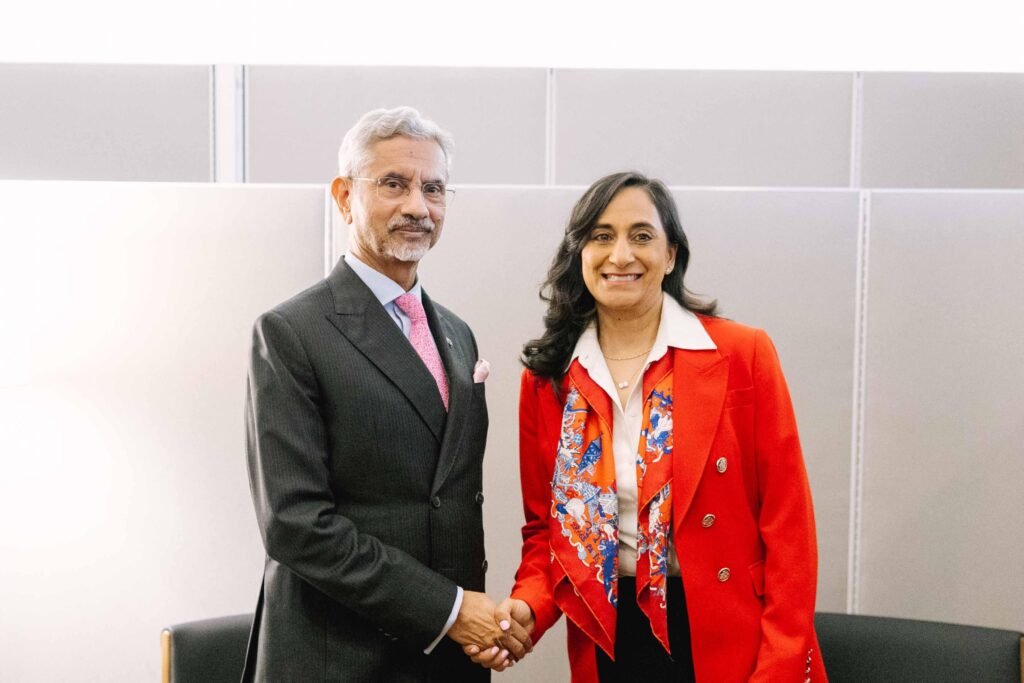
The latest developments also add another discussion item to the already packed agenda of Indian External Affairs Minister S Jaishankar and US Secretary of State Marco Rubio, who arrives in India later this month. This will be Rubio’s second visit to India this year; it comes after a meeting with Jaishankar on the sidelines of the UN General Assembly in New York last month. Speaking at an Asia Society event last month in New York, Jaishankar had spoken of issues with trade and Washington’s unsympathetic attitude to terrorism as causing problems in the relationship.
It is hoped that Rubio’s visit will steady US-India ties, once regarded as a consequential relationship by both sides. As things now stand, cracks have developed in this carefully nurtured 25-year-old partnership over trade, India’s tensions with Pakistan, India buying oil from Russia to name a few. Removal of all irritants right away would be an impossible ask. But the two sides should work out a way to better manage their differences.
Disclaimer: The opinions and views expressed in this article/column are those of the author(s) and do not necessarily reflect the views or positions of South Asian Herald.