US Secretary of State Marco Rubio on October 20 said India and the United States were close to concluding a long-pending trade agreement, expressing confidence that the remaining differences could be resolved shortly even as energy security, defense cooperation and wider strategic priorities dominated his discussions with Indian officials.
“We’re very, very close,” Rubio told reporters in Mumbai, adding that only a small number of issues remained before the agreement could be finalized. He said Washington hoped to announce positive developments soon, followed by the formal signing of the pact.
“We’re about as close as you can be without having executed the agreement,” Rubio said, indicating that the negotiations had entered an advanced stage but stopping short of declaring a breakthrough.
The comments offer a fresh indication of progress in negotiations that have faced differences over tariffs, market access and India’s energy purchases from Russia. However, the absence of a signed agreement or a published timetable means that the remaining obstacles, and the terms on which they might be resolved, remain unclear.
Advertisement
Rubio said the State Department was not directly responsible for negotiating trade agreements but remained involved in the process. His remarks nevertheless underline the political importance Washington attaches to securing a deal with India, a major market and an increasingly important strategic partner in the Indo-Pacific.
The agreement is a key test of whether the two countries can translate their expanding strategic relationship into more predictable commercial arrangements. A successful conclusion could improve market access and investment prospects, but unresolved tariff and trade-policy differences could continue to complicate the broader relationship.
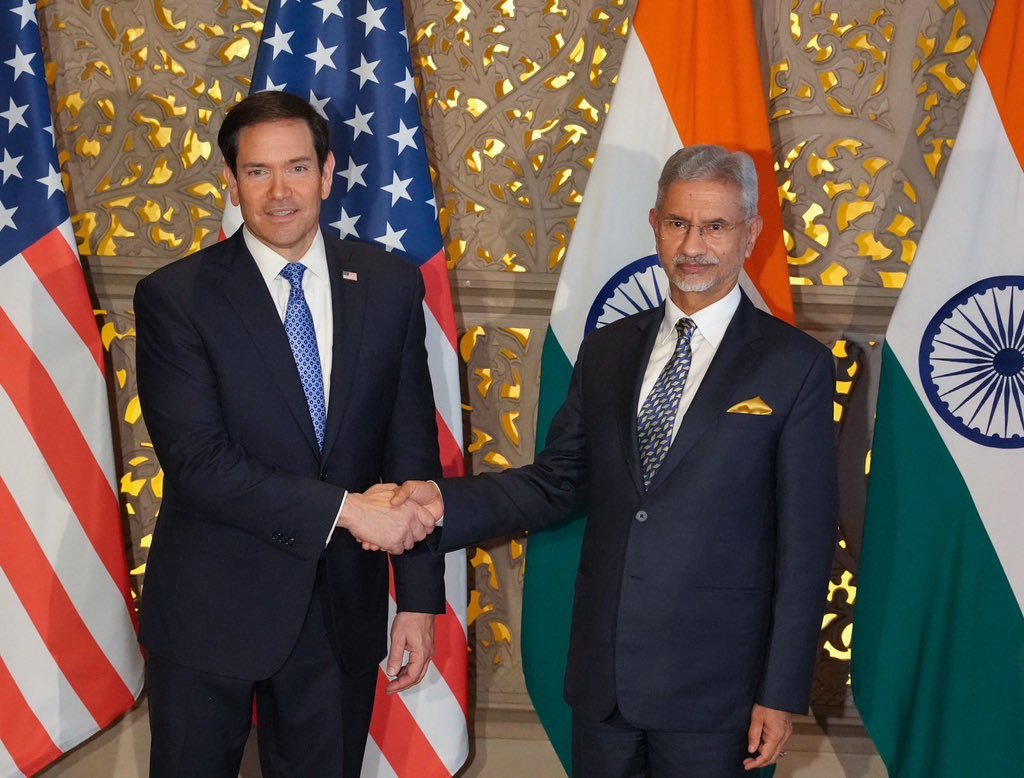
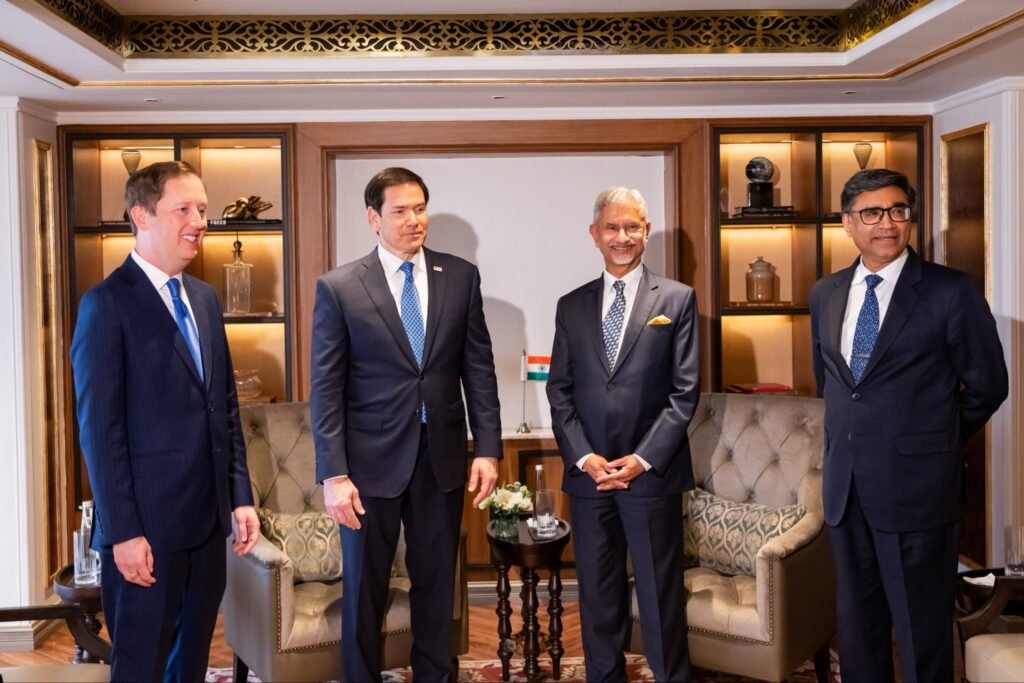
The trade negotiations were among the central issues in Rubio’s meeting with External Affairs Minister S. Jaishankar, as the two sides sought to restore momentum in a relationship strained by tariff threats, energy-related disagreements and differences over broader regional policy.
Jaishankar said the discussions covered trade, energy, technology, defense and people-to-people ties, as well as regional developments. US Ambassador to India Sergio Gor and Foreign Secretary Vikram Misri attended the meeting.
“Pleased to meet US Secretary of State Marco Rubio in Mumbai today. We shared views on further advancement of our ties,” Jaishankar said in a post on X.
Rubio separately said the discussions had covered energy security and defense cooperation, reaffirming the importance of advancing the strategic partnership. The emphasis on these areas reflects the effort by both governments to prevent commercial disputes from undermining cooperation in sectors considered important to their long-term strategic interests.
Energy security emerges as a central issue
Energy cooperation featured prominently in Rubio’s public remarks, particularly India’s efforts to diversify crude oil supplies after Washington raised concerns about New Delhi’s continued purchases of Russian oil.
Rubio said India had made “substantial progress” in diversifying its energy sources, describing the effort as a sensible response to the need for a broader and more resilient supply portfolio.
“I think what India has expressed repeatedly is its desire to diversify its energy portfolio, which is a smart thing to do,” he said, adding that Washington was willing to supply some of India’s energy requirements.
He acknowledged that shifting supply sources could not happen overnight and said the United States had discussed Venezuela and other countries as potential contributors to India’s energy mix.
“But in the end, it’s not just about Russian oil; it’s about India’s desire to diversify,” Rubio said, arguing that strong allies with diversified energy portfolios served US interests as well.
The comments point to a possible expansion of bilateral energy ties beyond conventional crude oil purchases, although the commercial viability of additional supplies will depend on prices, freight costs, refining requirements and the terms offered by competing producers.
For India, the challenge is to diversify without sacrificing the cost advantages that have shaped its energy procurement decisions. Russian crude has become an important component of the country’s import mix, while domestic refiners must balance supply security against price volatility and the requirements of different refinery configurations.
A closer energy relationship with Washington could widen India’s options, but it would not automatically eliminate the economic rationale for buying from Russia or other suppliers.
The immediate diplomatic context has also changed following US President Donald Trump’s decision to waive key Russia-related sanctions and tariff measures that threatened to expose Indian goods to additional duties. The move removed a potential obstacle to the trade negotiations, although the durability of the relief and the future treatment of Russian oil purchases remain important uncertainties.
Reliance, Venezuelan crude and the Jamnagar visit
Rubio’s planned visit to Jamnagar in Gujarat is expected to bring the energy discussions into sharper commercial focus, particularly through engagement with Reliance Industries, which operates the world’s largest refining complex.
Rubio said Washington would discuss with Reliance the possibility of refining more Venezuelan crude and exploring greater Indian participation in oil production in Venezuela.
The discussions could open opportunities for Indian refiners and energy companies, but any expansion would depend on the commercial terms, the availability of supplies and the regulatory and sanctions framework governing Venezuelan oil.
The proposed engagement also illustrates how energy cooperation could extend beyond purchases of US-produced crude to include refining, upstream investment and the development of alternative supply chains.
For Washington, encouraging India to source a larger share of its energy from countries with which the United States can cooperate would serve both commercial and strategic objectives. For New Delhi, the potential gains would lie in expanding supply options and strengthening the position of Indian companies in international energy markets.
The two governments would nevertheless need to demonstrate that any new arrangements are economically competitive rather than simply a consequence of diplomatic pressure.
India, US and UAE discuss regional energy security
Rubio also met Jaishankar and UAE Foreign Minister Sheikh Abdullah bin Zayed Al Nahyan in Mumbai to discuss regional energy security and shared economic priorities.
The three-way engagement brought together countries with important interests in energy supply, trade and regional connectivity. US Ambassador Sergio Gor said the countries had opportunities to advance cooperation in energy, trade, technology and regional links, with an emphasis on converting diplomatic ties into practical outcomes.
The meeting adds a regional dimension to the bilateral negotiations. Cooperation involving India, the United States and the UAE could potentially support investment, supply-chain resilience and commercial connectivity, although the precise initiatives agreed upon were not detailed in the statements released after the meeting.
The talks also come against the backdrop of instability in West Asia, where disruptions to energy supplies and shipping routes can have consequences for India’s fuel costs, trade flows and wider economic outlook.
Defense and technology remain strategic priorities
Beyond trade and energy, the discussions covered defense, critical and emerging technologies and regional security. These areas are central to a relationship in which the two countries have sought closer strategic coordination even when economic and diplomatic disagreements have complicated ties.
The two sides are also expected to exchange views on developments in Ukraine and West Asia, alongside wider international security concerns. Rubio’s public comments in Mumbai on nuclear arms control underscored Washington’s interest in maintaining dialogue among major powers, including Russia and China, although he questioned whether Beijing would be willing to participate in negotiations.
The broader agenda therefore extends beyond the immediate trade dispute to questions about the balance of power in Asia, energy security and the future of international cooperation.
Rubio’s visit is his second to India this year. He met Maharashtra Chief Minister Devendra Fadnavis earlier on Tuesday and was scheduled to attend the Freedom 250 reception at Mumbai’s Jio World Convention Centre, marking the 250th anniversary of American independence. He is also due to travel to Jamnagar for discussions on enhanced energy cooperation.
The immediate test for both governments, however, will be whether the renewed optimism over the trade agreement translates into a document that resolves the outstanding differences rather than merely postponing them.
A concluded pact could provide greater certainty for exporters and investors while reinforcing the economic foundations of the strategic partnership. But the negotiations’ wider significance lies in whether New Delhi and Washington can establish a more stable framework for managing disagreements over tariffs, energy procurement and market access.
Rubio’s assurance that the deal is close raises expectations of progress. Until the terms are published and the agreement formally concluded, however, the durability of that progress will remain an open question.