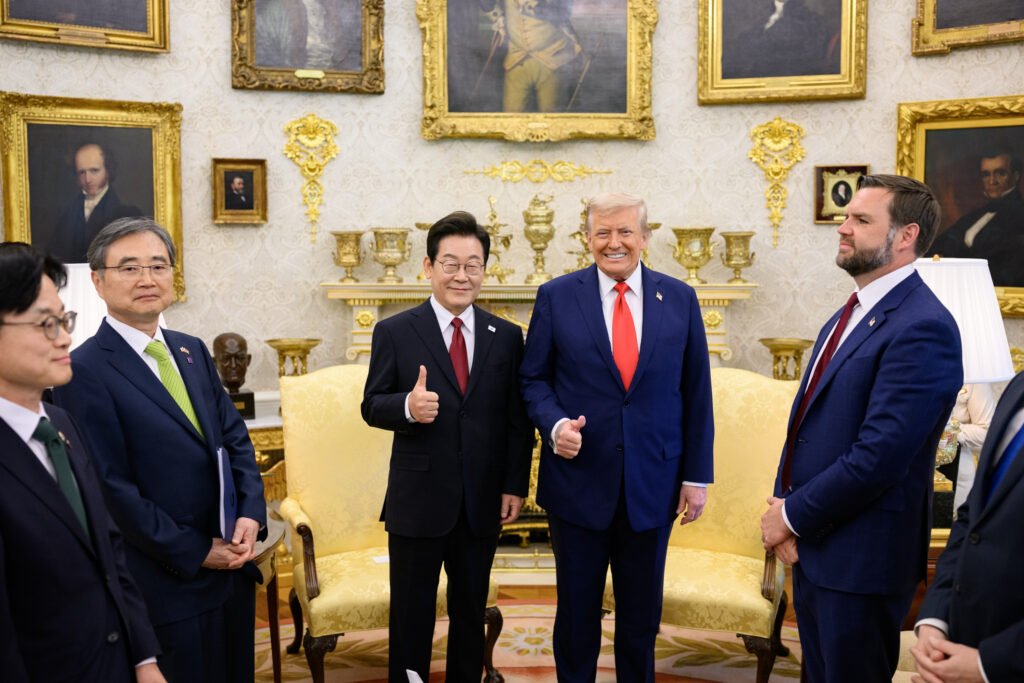
Officially there may be a sense of shock and disbelief that the United States is going to scale down its joint military exercises with South Korea. But America’s allies in Asia have been expecting this for quite some time now, not just in the context of joint operations that at times even third countries join. But the jolt in the Indo Pacific was nevertheless felt when President Donald Trump announced that he was ordering a sharp reduction in combined military drills. The official reason is that of high defense costs. But there is more to this than what meets the eye.
It is a well-known fact that President Trump’s ire against allies in general—European and Asian—goes beyond a sudden discovery of the cost factor in joint exercises. For quite some time President Trump has been floating the “Free Loader” thesis that somehow American allies are making U.S. taxpayers foot the entire bill for collective security. President Trump has sharply rebuked European nations in the North Atlantic Treaty Organisation (NATO), even threatening to walk out of an entity that has been around since the Second World War.
The call on scaling down the Ulchi Freedom Shield exercises with South Korea has not just raised larger questions of American commitment and credibility but also on the implications for regional security. And after Seoul, the next waiting target for many would be Japan that is already gearing up for American pressure on defense related issues. The Washington-Tokyo-Seoul trilateral framework is seen as seen as essential to check the growing pressure from China and North Korea; and the United States has long been pressuring Japan to up its ante on bilateral cost sharing. Japan has been facing this music not just from President Trump but from his predecessors as well, just that the pitch has changed to sharp and shrill notes.
For more than five decades Japan has been constrained by a Peace Constitution that tied policy makers’ hands on defense spending as well as offensive posturing for its Self Defense Forces. With great political difficulty law makers of the Liberal Democratic Party have managed to raise military spending to 2 percent of GDP from 1 percent and currently working on the operationalizing its armed forces given the current threat factor to Japan and regionally. Still Japan has been pointing out that under the Host Nation Support agreement, it has been spending close to US$ 2 billions annually for the upkeep of some 55,000 American military personnel and bases. And this money spent includes for facilities labor, improvement programs and for utilities. Add to this the money paid to local landowners by way of rent for the bases and facilities.
Advertisement
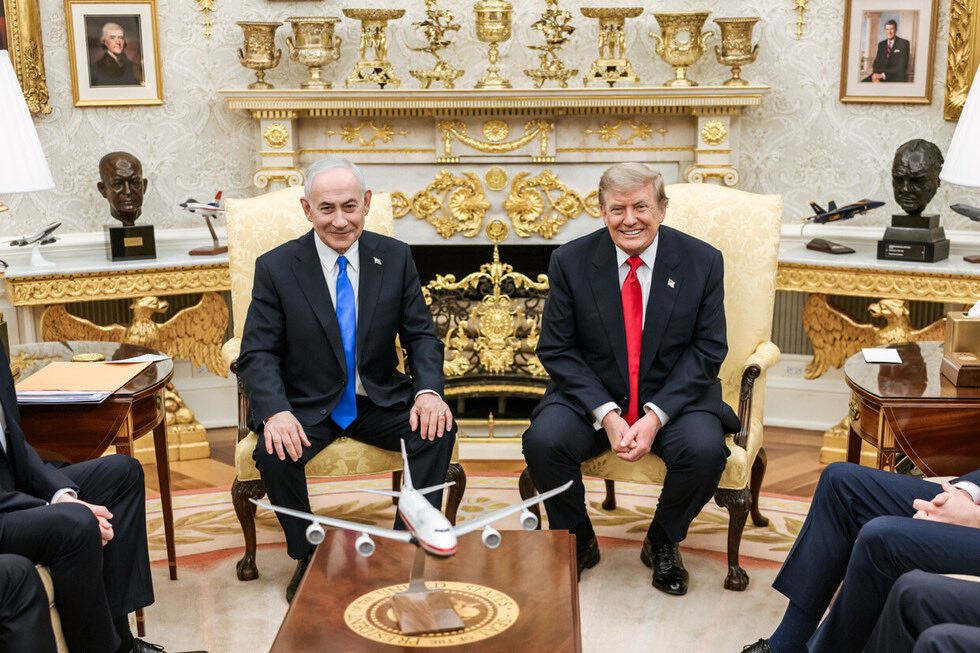
The latest pressure from President Trump on South Korea—with perhaps Japan next in line—may have less to do with costs of joint exercises and more to do with a war that is taking place some five thousand miles away in the Middle East. Washington is miffed that neither Seoul nor Tokyo have stepped up to the plate on Iran; what exactly the senior partner expects is unknown. “We can’t go around protecting all of these countries, especially when they are not there to protect us,” is all that President Trump has said.
The real zinger in the turn of events is not in the scaling down of joint military exercises with South Korea. It is in the Kim Jong Un and North Korea factor that President Trump has thrown at America’s oldest Asian allies: that it would be somehow “insulting” to Chairman Kim to go through with military drills. “I felt that to do a massive — war exercise… was very insulting to somebody that, frankly, has been, during my term at least, very well-behaved.” And at a time when Washington appears to be working overtime to knock down Iran’s nuclear program, President Trump appeared to give a pass on Pyongyang’s arsenal saying that it had 57 “very powerful” nuclear weapons. “The fact that I get along with him – that’s a good thing, not a bad thing. He has 57 very powerful nuclear weapons,” the President told reporters, a tally disputed by South Korea which believes Chairman Kim has between 80 and 120 weapons at his disposal.
The references to a “very well behaved” North Korean leader has set off two different lines of thinking— if President Trump is referring to Chairman Kim out of a pique at Seoul for staying out of the Iran war; or if there are plans for the American leader to have his fourth meeting with Chairman Kim and the first one of his second term. In the past, the two leaders have met min Singapore, Vietnam and on the De-Militarized Zone but nothing came out of meetings on the nuclear weapons program of North Korea. The thinking is that President Trump may work out a meeting with Chairman Kim in China in Mid-November at the Leaders’ Summit of the Asia Pacific Economic Cooperation (APEC) Forum.
On the one hand, the scaling back of joint military exercises with South Korea is supposedly done with the idea of giving Seoul more responsibility and heft in dealing with their own security and strategic matters. Yet on the other hand, it is yet another signal for American Asian allies to get going on their own without a heavy dependence on the United States. Not long ago, Taiwan got the message after President Trump’s summit with President Xi Jinping where even routine arms sales to Taipei were reduced to bargaining chips with China. Now the message to South Korea is also a signal to Japan where the leadership is already under no illusions.
The Indo Pacific is not in a dream world of Chairman Kim giving up his nuclear and missile arsenals. What the region would have to be worried is if South Korea, Japan and Taiwan decide to take out extra insurance.
Disclaimer: The opinions and views expressed in this article/column are those of the author(s) and do not necessarily reflect the views or positions of South Asian Herald.