Join WhatsApp Channel


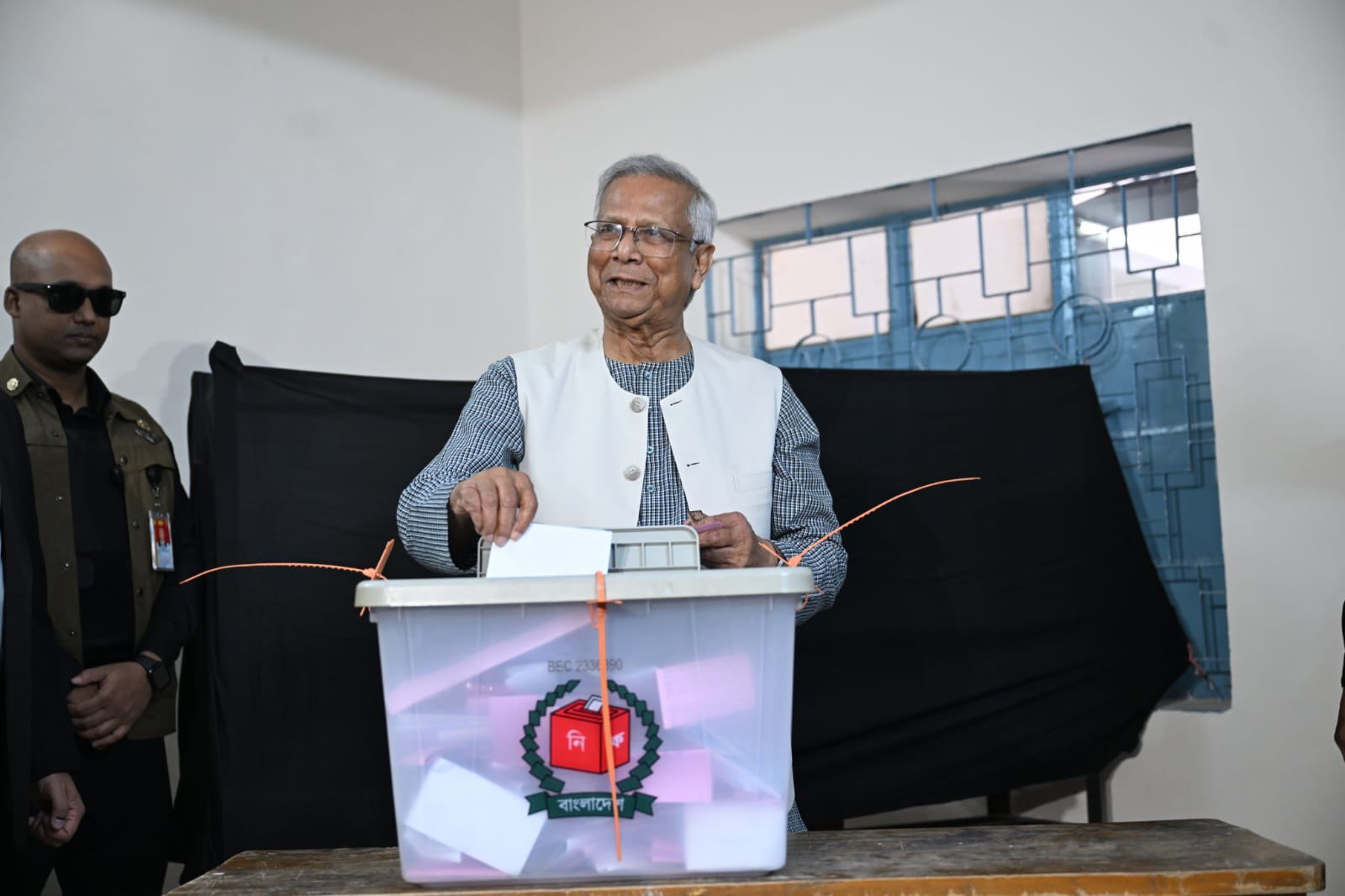
The past eighteen months have marked an unusual and politically sensitive chapter in Bangladesh’s democratic journey. The tenure of the interim government, led by Nobel Peace Prize laureate Professor Dr. Muhammad Yunus, emerged from a moment of institutional deadlock and political mistrust. As such, it deserves to be assessed not through partisan lenses, but through the analytical frameworks of political science focusing on legitimacy, constitutionalism, democratic consolidation, and state capacity.
Recent remarks by President Md. Shahabuddin, questioning whether the interim government adhered to constitutional provisions, have reignited debate over that period. Yet political analysis requires moving beyond individual statements to examine structures, constraints, outcomes, and broader democratic implications. Interim governments, by their nature, operate in grey zones expected to stabilize political systems while lacking the full democratic mandate of elected administrations. This paradox is not unique to Bangladesh; it is a recurring feature in transitional democracies across South Asia and beyond.
From a statecraft perspective, the core objective of Bangladesh’s interim government was crisis management rather than policy expansion. The administration sought to restore basic political order, maintain administrative continuity, and prepare conditions conducive to democratic transition. In political science terms, this reflects a classic “caretaker” or “transitional governance” model, where effectiveness is measured less by legislative productivity and more by restraint, neutrality, and conflict de-escalation.
Critics have argued that certain actions of the interim government stretched constitutional interpretations. Supporters counter that extraordinary circumstances often require flexible institutional responses to prevent systemic breakdown. Both views merit consideration. What is important, however, is that no credible evidence has emerged of an attempt to permanently restructure the state or entrench power an essential distinction between transitional governance and authoritarian drift. The absence of such entrenchment suggests that the interim authority largely remained within the political logic of temporariness.
Within this framework, the role of Professor Muhammad Yunus deserves particular attention. Domestically, his long-standing advocacy for inclusive development, social entrepreneurship, and poverty alleviation has shaped Bangladesh’s democratic discourse beyond electoral politics. Democracy, after all, is not sustained by ballots alone; it is strengthened by economic participation, social mobility, and institutional trust. Yunus’s life work especially through microfinance and social business has contributed to broadening that democratic foundation by empowering marginalized communities and fostering grassroots agency.
During the interim period, Yunus’s leadership style reflected technocratic restraint rather than political ambition. From a political science standpoint, this aligns with the concept of “non-partisan legitimacy,” where authority is derived from credibility, moral capital, and international respect rather than party alignment. Such legitimacy is particularly valuable in transitional contexts, where public trust in traditional political actors may be eroded.
On the international stage, the interim government period coincided with heightened global scrutiny of Bangladesh’s political trajectory. Here, Yunus’s presence carried symbolic and practical significance. As one of the most internationally respected Bangladeshi figures, his leadership helped reassure development partners, multilateral institutions, and foreign governments that Bangladesh remained committed to stability, reform, and democratic norms. This reputational capital is not easily quantifiable, but in international relations it functions as soft power shaping perceptions, reducing diplomatic friction, and sustaining economic confidence.
Bangladesh’s global image during this period did not experience the kind of sharp decline often associated with political uncertainty. On the contrary, continued engagement with international partners and the absence of major diplomatic isolation suggest that the interim arrangement, while imperfect, did not undermine the country’s standing. In South Asian politics, where transitions frequently invite external pressure or internal fragmentation, this relative stability is noteworthy.
That said, political neutrality also demands acknowledging institutional ambiguities. The relationship between the interim government and the presidency raised legitimate questions about checks and balances. In constitutional theory, silence or delayed intervention by oversight authorities can be as consequential as overreach by executives. If constitutional concerns existed during the interim period, their resolution through contemporaneous institutional mechanisms rather than retrospective commentary would have better served democratic accountability. This points not to individual failure alone, but to systemic weaknesses in crisis-time constitutional enforcement.
Ultimately, the eighteen-month interim period should be viewed as a stress test for Bangladesh’s democratic institutions. The test revealed vulnerabilities unclear boundaries of authority, reliance on personal credibility, and the absence of robust crisis protocols. At the same time, it demonstrated resilience: administrative continuity was maintained, large-scale political violence was avoided, and international confidence was largely preserved.
For Bangladesh’s democratic development, the most constructive lesson lies not in assigning blame, but in institutional learning. Clearer constitutional guidelines for interim governance, stronger mechanisms of real-time accountability, and a shared commitment to restraint among all constitutional actors are essential for the future.
Professor Muhammad Yunus’s contribution to this period and to Bangladesh more broadly should be understood within this larger narrative. His role was not that of a conventional political leader, but of a stabilizing figure whose moral authority and global stature helped navigate uncertainty. In doing so, he reinforced a broader truth central to democratic theory: that legitimacy can stem from service, integrity, and social impact as much as from electoral power.
As Bangladesh moves forward, democratic consolidation will depend less on exceptional individuals and more on strong institutions. Yet moments of transition inevitably call upon individuals who embody trust beyond politics. In that sense, the interim period stands as both a cautionary tale and a reminder of the enduring value of principled leadership in strengthening democracy and enhancing a nation’s standing in the world.
Disclaimer: The opinions and views expressed in this article/column are those of the author(s) and do not necessarily reflect the views or positions of South Asian Herald.