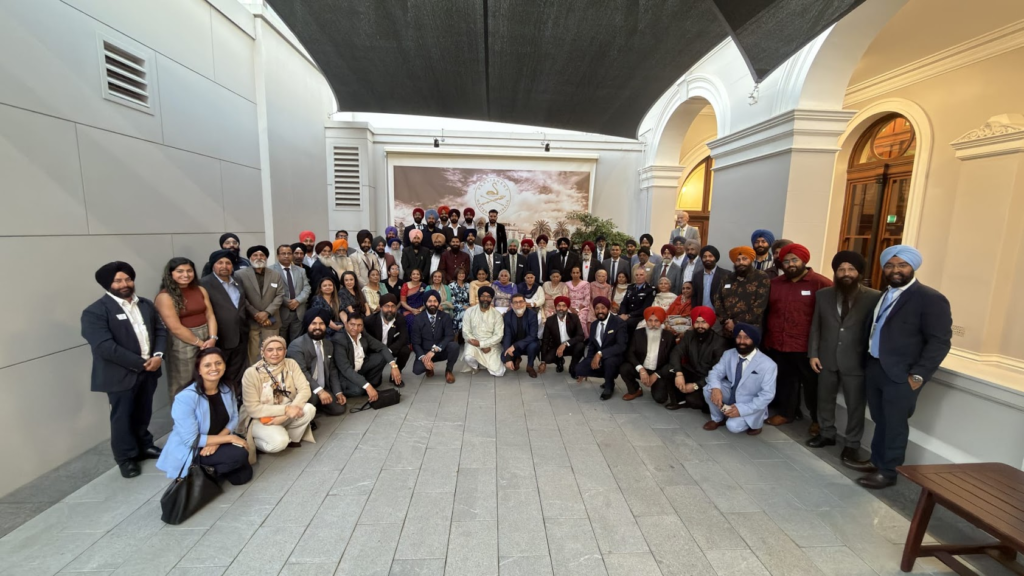
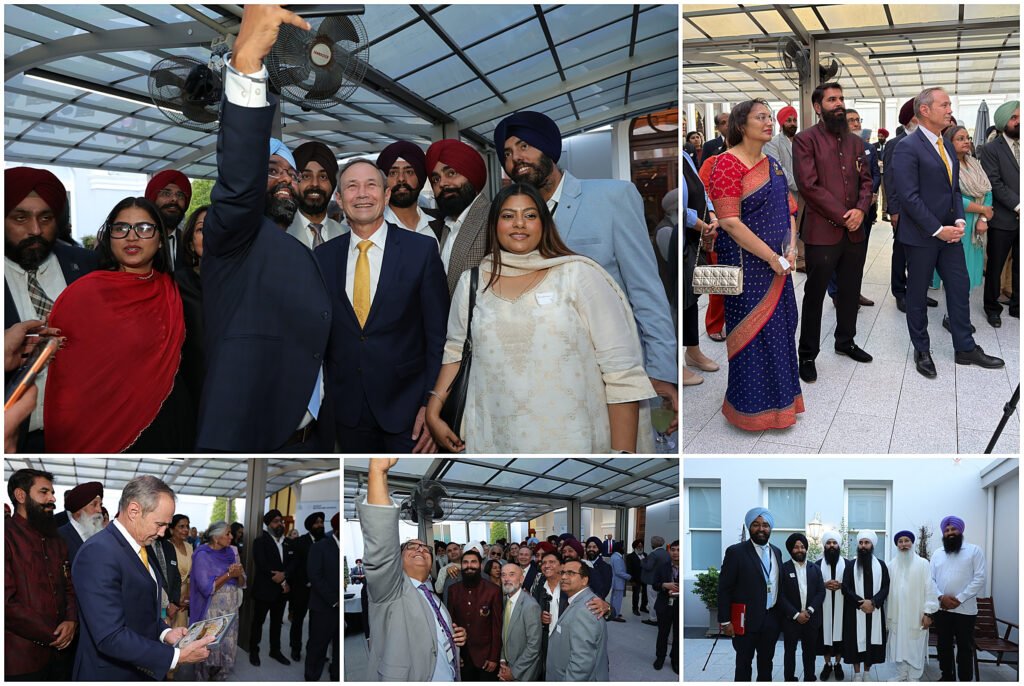
The Parliament of Western Australia celebrated the 557th birth anniversary of Guru Nanak, the first Guru and founder of Sikhism, at Parliament House in Perth on November 10, 2026, with Premier Roger Cook, Deputy Premier Rita Saffioti and Consul General of India in Perth Kajari Biswas among the speakers.
The evening was hosted by Multicultural Interests Minister Jessica Stojkovski with the Office of Multicultural Interests, together with the gurdwaras (Sikh temples) at Bennett Springs and Canning Vale. Prabhjot Singh, from Saffioti’s office, was master of ceremonies. Guests included members of parliament, among them Leader of the Opposition Basil Zempilas, as well as representatives of the Department of Home Affairs, the Australian Federal Police, the Western Australia Police Force and Sikh and Indian community organizations.
Event coordinator Balli Singh, a City of Gosnells councilor, told South Asian Herald that the two gurdwaras organized the celebration jointly with the Government of Western Australia, bringing together the Sikh community of the state, and said, “this was our honor.” He said holding the event at Parliament House was a way to show the wider community the importance of “serving humanity.”
A Message of Equality and Service
Advertisement
Opening the proceedings, Prabhjot Singh said Guru Nanak’s teachings of equality, compassion, honest living and selfless service “continue to inspire humanity.”
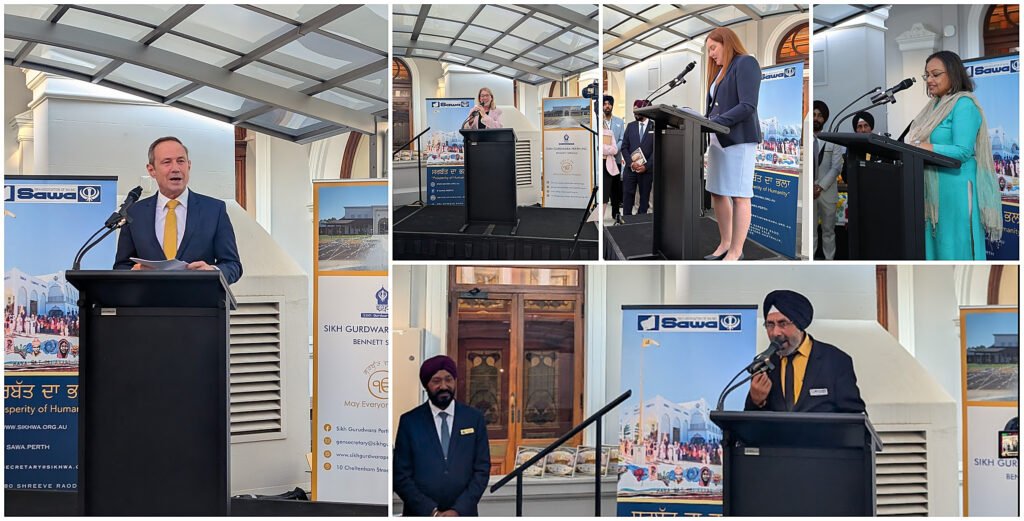
Sarabjit Singh, president of the Sikh Gurdwara Perth at Bennett Springs, said Guru Nanak’s message that humanity is one mattered more than ever in a world where people are divided by their background, appearance and belonging, saying it was important in today’s society to see everyone “as a human first.”
He outlined the three core Sikh principles of “naam japo,” meditating on God; “kirat karo,” earning an honest living; and “vand chhako,” sharing with those who have less, and said he saw the same values in Australian society. He said the gurdwara’s langar, free meals served to anyone at no cost, had continued for more than five and a half years since the COVID pandemic with the help of volunteers and government, and that marking such occasions at Parliament gave the community “a sense of belonging.”
Government Leaders Recognize Sikh Community Contribution
Cook said he would set aside his notes and instead asked guests to reflect on Sarabjit Singh’s words about Western Australia. He said everyone had a role in protecting a way of life in the state that was free of division and “free of fear and grievance,” where everyone feels safe, included and able to contribute. He said celebrating cultural milestones such as the anniversary reaffirmed the state’s commitment to its multicultural society and thanked the Sikh community for its contribution.
Saffioti, whose electorate of West Swan includes the Bennett Springs gurdwara, said she was invited when the gurdwara was established in 2015 and had watched the community “grow beautifully.” She said the gurdwara was built for about 500 visitors and now receives about 5,000, and that the government had been working to support that growth. She praised the community’s volunteers and its free meals, including during the pandemic, and said some of its events were “the best organized events ever.”
Stojkovski said the evening’s teachings about sharing resonated with her, recalling a value she cited in her inaugural speech to parliament: if you find yourself more fortunate than others, “you have to build a longer table, not a higher fence.” She described these as universal ideas regardless of culture or religion and thanked the gurdwaras for community service initiatives that she said assist those most in need and strengthen the wider community.
Consul General Traces Sikh History in Western Australia
Biswas described Guru Nanak as the founder of Sikhism and “one of India’s greatest spiritual teachers,” and thanked the Premier and members of parliament for hosting the Indian community for the occasion “for the last seven years.” She said his teachings of equality, compassion, humility and universal brotherhood transcend religious and cultural boundaries.
According to Biswas, Sikh pioneers arrived in the region in the late 19th century and worked as cameleers, hawkers, traders and harvesters, contributing to the development of regional Western Australia, and some served alongside Australian forces in World War I. She said the Sikh Association of Western Australia was established in 1975, and that her office works with the Canning Vale gurdwara to provide consular services to the community every November.
Langar as a Symbol of Equality
Amarjeet Singh, president of the Sikh Association of Western Australia, said Guru Nanak, born in 1469 in what is now Pakistan, taught that God is one and that all people are equal regardless of color or caste. He described langar, where people sit in a line and eat together, as a symbol of that equality, and urged guests to “respect all the human beings.” He also thanked the Western Australian Government, Biswas and Balli Singh for their support of the community.
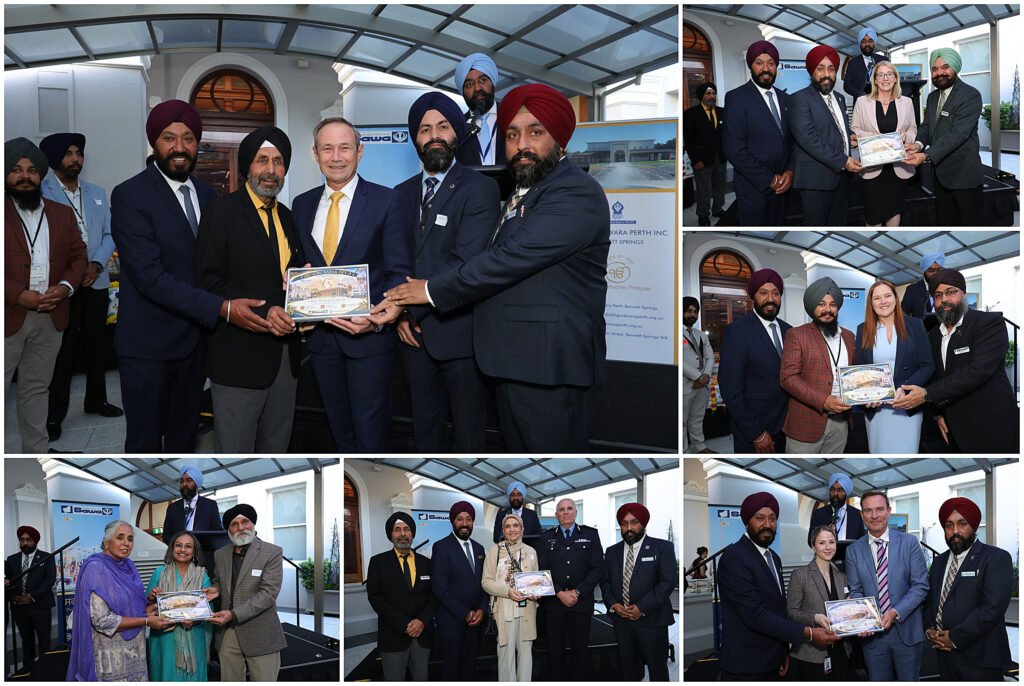
Closing the formal proceedings, Prabhjot Singh expressed hope that Guru Nanak’s message “of equality, humility, compassion, and service” would continue to guide the community toward a more harmonious and inclusive society. Sikh community organizations presented tokens of appreciation to the Premier, Deputy Premier, Consul General and representatives of the government agencies in attendance.