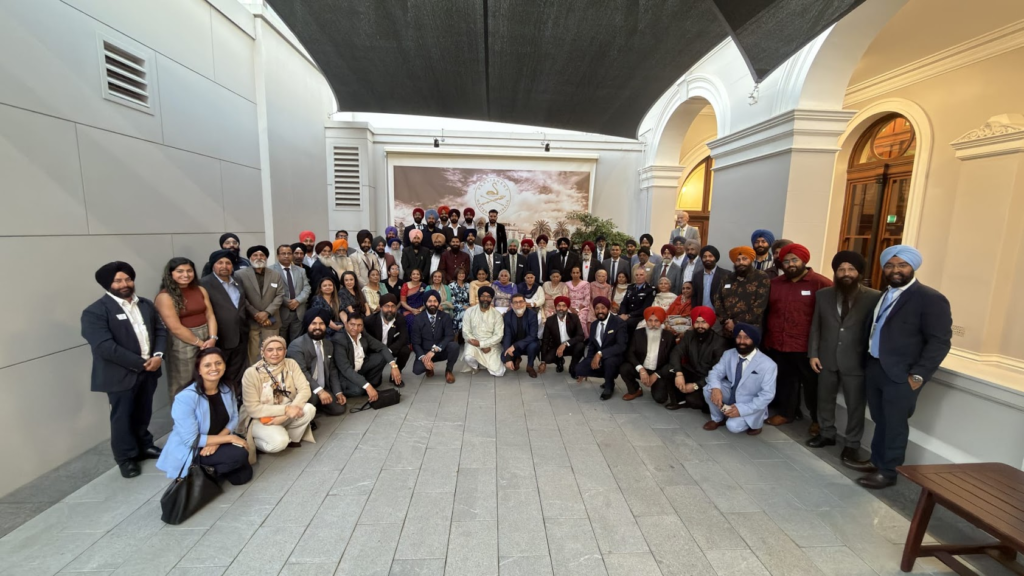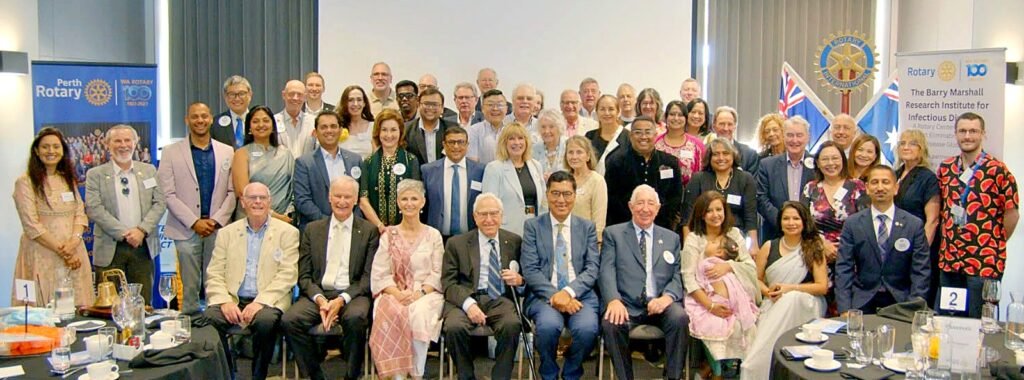
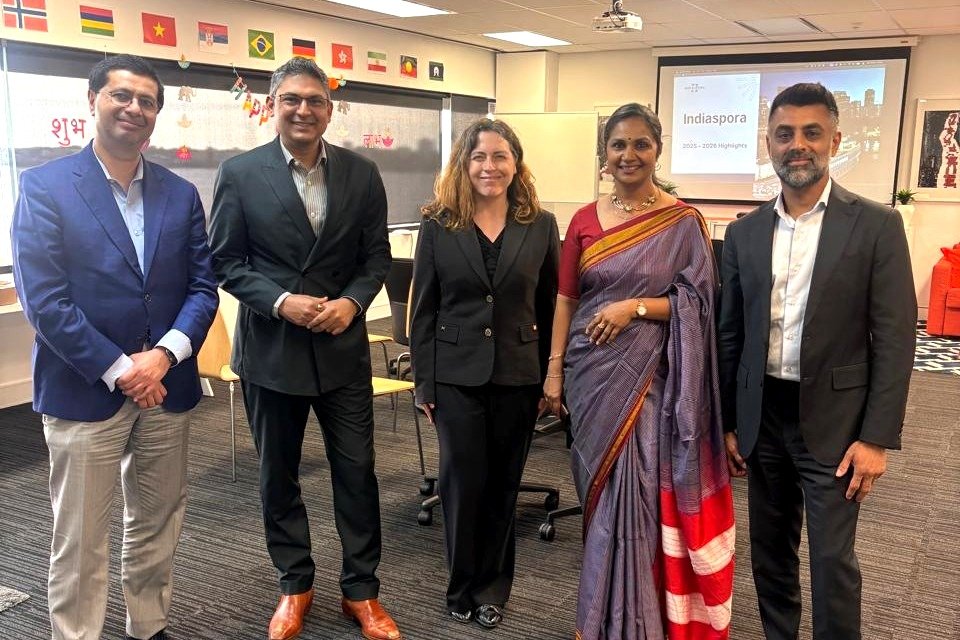
Indiaspora, a United States nonprofit that Executive Director Sanjeev Joshipura described as “not your typical nonprofit,” held its first official gathering in Western Australia in Perth on November 16, which Australia Country Head Jai Patel described as the organization’s “inaugural visit to the West Coast.”
Billed as “An Intimate Evening in Perth,” the gathering was hosted by Nilesh Makwana, CEO of Illuminance Solutions, at the company’s offices. Joshipura traveled from the United States with Patel, who is based in Sydney, and Senior Director of Community Relations and Development Nisha Nambiar. The delegation continues to Brisbane on November 18, Sydney from November 19 to 23 and Melbourne on November 24.
A Convener, Not a Charity
According to Joshipura, Indiaspora was founded in Silicon Valley 14 years ago by entrepreneur MR Rangaswami, with a mission to inspire the global Indian diaspora to be “a force for good” and to build bridges with leaders in India.
Advertisement
He said the organization does not deliver services itself, noting that “you will not hear of Indiaspora building a school,” and described it instead as a catalyst, convener and amplifier that helps organizations doing that work do it better.
Joshipura said Indiaspora’s roughly 400 members around the world, drawn mostly from business, are “carefully curated, invitation only,” chosen for their accomplishments and their connection to the organization’s work. He said Indiaspora also counts about 1,000 “prominent friends,” including diplomats, academics, scientists, journalists and artists, and that the mix is deliberate, so that a leading doctor may sit beside a politician, an architect and a sportsperson at an Indiaspora table.
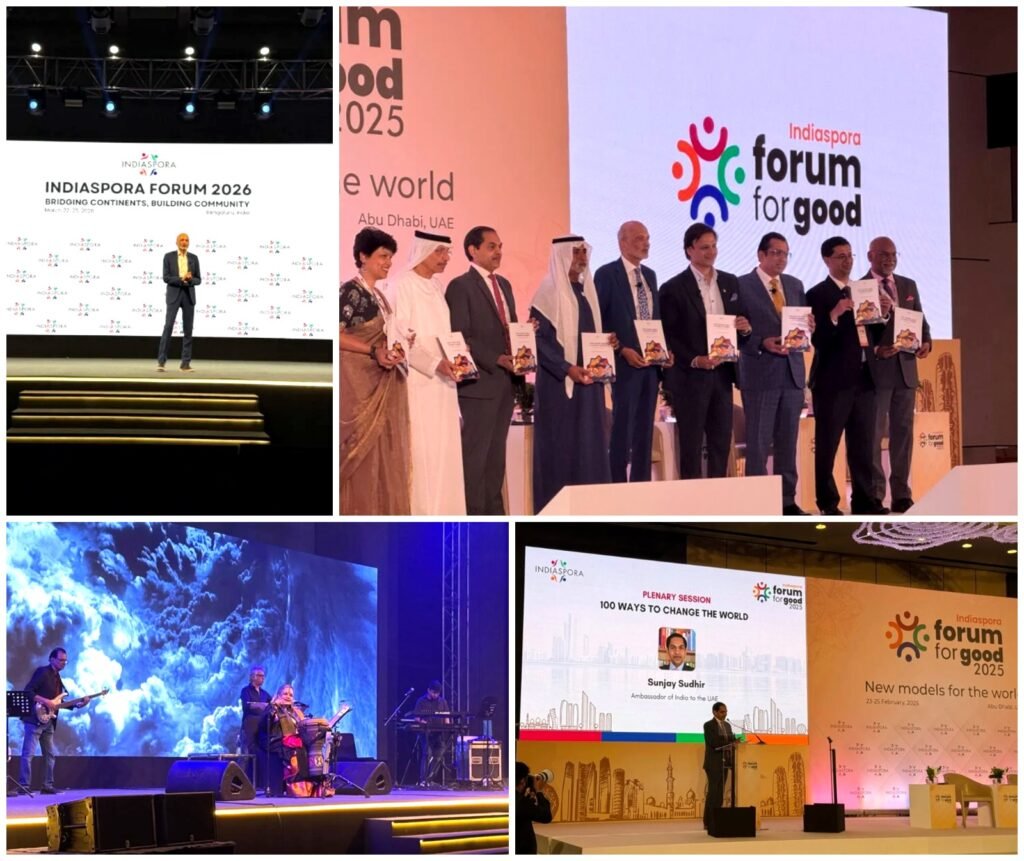
He said the organization works across five areas. Its philanthropy and social impact work covers giving to India and giving “where you live,” which he called mutually reinforcing. Its entrepreneurship and innovation work includes mentoring, investor matchmaking and AI summits. Through Diaspora Next, it engages the next generation, including a new program placing young people from overseas in two-month internships in India. Its thought leadership work includes research reports, produced with consulting firms, on diaspora philanthropy and the diaspora’s impact on host countries. Its global connections work includes regular programming in seven core countries, namely the US, Canada, the UK, the UAE, India, Singapore and Australia, with a second tier that includes New Zealand, Fiji, Mauritius and South Africa.
Joshipura said the organization held global forums in Delhi in 2023, when it was the diaspora partner for India’s G20 presidency, in Abu Dhabi and Dubai in 2025, and in Bengaluru in March this year, and that its 15th anniversary forum will be held in California’s Napa Valley next year.
An Australian Impact Report
Joshipura said Indiaspora’s Australian activity has so far centered on Sydney and Melbourne, through dinners and roundtables on the Australia-India relationship, and that the team is now looking at Perth and Brisbane. He said the team was discussing an Australia-focused diaspora impact report for next year, informed by new census data, to show what the diaspora can do with its influence for the benefit of both India and the country it calls home.
Three Themes
Joshipura put three themes to the room, drawn from a recent retreat of Indiaspora’s US members. The first was geopolitics, trade and investment, which he said is often the entry point for conversations with business, government and diplomatic leaders in a new country. The second was philanthropy, both toward India and in the countries where the diaspora lives. The third was race relations.
On race relations, he said Indiaspora is setting up an entity in the US to track anti-Indian hate and to educate both mainstream society and the diaspora itself, adding that the approach is not divisive because Indiaspora is “about multiplication, addition, not division and subtraction.”
Attendees discussed each theme in an open conversation that touched on philanthropy in Australia as well as toward India, belonging and inclusion in Western Australia, and unity across India’s diverse communities.
Joshipura said the Australian visit is about learning how Indiaspora can play a more active role in Australia.