Join WhatsApp Channel

India’s fourth-place finish at the Aichi-Nagoya Asian Games has highlighted the need for a comprehensive review of athlete performance, sports administration, and the country’s investment in training and infrastructure.
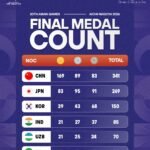
The contingent of more than 500 members finished with 85 medals, including 21 gold, 27 silver, and 37 bronze. India trailed China, Japan, and South Korea but finished ahead of other South Asian countries, including Pakistan, Sri Lanka, Bangladesh, and Nepal.
Team events contributed significantly to India’s gold medal tally. The country secured a rare “triple double,” winning both the men’s and women’s titles in cricket, hockey, and kabaddi. Together, those victories accounted for six of its 21 gold medals.
Of the remaining 15 gold medals, seven came in other team events and eight in individual competitions. Women won five of the individual gold medals, while men won three. The men’s individual champions were boxer Ankush and wrestlers Amit and Sujeet.
India’s only athletics gold came in a women’s relay event. Women also contributed more gold medals than men in team competitions, underscoring their role in the country’s overall performance.
The results warrant a closer examination by the Indian Olympic Association (IOA), National Sports Federations (NSFs), the Sports Authority of India (SAI), state governments, and State Sports Associations (SSAs). Such a review could assess the effectiveness of athlete development programs, coaching, competition exposure, and administrative support.
The limited number of individual gold medals among men raises questions about how effectively India is identifying and developing athletes capable of winning at the Asian level. The country’s sporting history includes athletes such as Milkha Singh, Praveen Kumar, Mohinder Singh Gill, Labh Singh, Neeraj Chopra, T. C. Yohannan, and shooter Jaspal Rana.
India’s position relative to China, Japan, and South Korea also deserves examination, particularly in light of its investment in sports infrastructure since hosting the Asian Games in 1982.
That infrastructure has enabled India to host major international competitions, including the 2010 Commonwealth Games and World Cups in cricket, hockey, and other sports. Its ambitions to host the Summer Olympics bring additional attention to whether investment in facilities is translating into sustained competitive success.
The Aichi-Nagoya results provide an opportunity to assess how resources are allocated across athlete preparation, administrative operations, and delegation support. The size and responsibilities of official delegations accompanying athletes to major competitions should also form part of that review.
Administrative disputes within the IOA and NSFs raise broader questions about governance and accountability. A review of the SAI’s role could examine whether its organizational structure effectively supports athletes and delivers measurable improvements in performance.
India’s achievements in hockey, cricket, kabaddi, and other events deserve recognition. At the same time, the results point to the importance of strengthening individual sports and ensuring that investment produces consistent gains across disciplines.
A comprehensive assessment would need to identify shortcomings, establish clear responsibilities, and set measurable goals for future competitions.
Preparations before the Games also raised logistical concerns. Days before departure, contingent members were instructed to collect their kitbags from a Delhi-based supplier. Some, including members of the accompanying media group, reportedly left without them after being told that supplies had run out.
The episode adds to the case for reviewing logistical planning alongside sporting performance and administration.