Join WhatsApp Channel


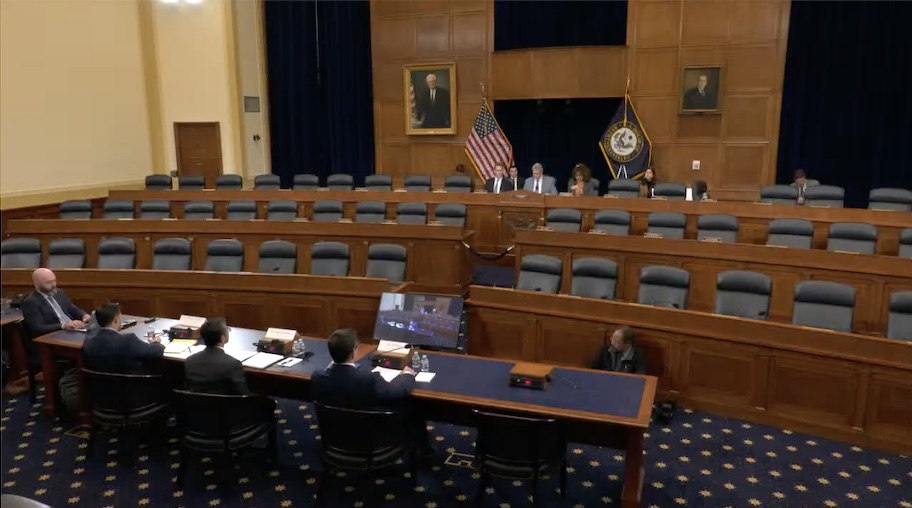
A key U.S. House subcommittee sent a clear and unusually unified message on December 10, 2025, that a stronger partnership with India is a strategic imperative for America’s security, economic resilience and competition with China.
Meeting under the title “The U.S.-India Strategic Partnership: Securing a Free and Open Indo-Pacific,” the House Foreign Affairs Committee’s Subcommittee on South and Central Asia emphasized that cooperation with India is central to countering China and securing supply chains in areas such as critical minerals, pharmaceuticals, and defense manufacturing.
A Strategic Partnership for the 21st Century
Subcommittee Chairman Bill Huizenga (R-MI) framed the partnership as essential to American leadership. “The US-India relationship is a defining relationship of the 21st century. If America wants a free Indo-Pacific, resilient supply chains, and a world where democracy, not authoritarianism, sets the rules, then our partnership with India is critical,” he said.
Huizenga warned of increasing Chinese militarization across the Indian Ocean and called Beijing’s ambitions “an overt attempt to encircle and control the Indian Ocean and its trade routes.” He stressed that India understands these risks firsthand and has responded firmly along its contested border with China.
The chairman also highlighted India’s growing economic power and strong people-to-people ties, from Indian Americans leading major US companies to growing collaboration in advanced technology and defense.
Bipartisan Alignment and a Call to Restore Momentum
Ranking Member Sydney Kamlager-Dove (D-CA) echoed his remarks. She called out the strategic importance of India, calling the relationship “defining for both countries” as they navigate a rapidly shifting world order. She said cooperation with India is “essential to sustain US leadership” in critical sectors including defense, climate, energy, AI, space, and emerging technologies.
While she criticized recent tariff escalations and interruptions in high-level engagement, she stressed that successive administrations had invested decades building trust with India. At the core, her message remained positive, and she stressed that the partnership is strategically sound and must continue to advance.
Security Cooperation and Indo-Pacific Stability
Representative Michael Baumgartner (R-WA) talked about the depth of US-India maritime and defense cooperation. He pointed to a new bipartisan House resolution on India and told the panel, “It is clear our interests, both our economic interests and our geopolitical strategic interests, point to a closer relationship to create an atmosphere of security, peace, and prosperity that I think both the Indian government and Indian people want, and that we also want.”
He noted that India’s naval role in the Indian Ocean strengthens shared interests in keeping sea lanes secure. Baumgartner called India a natural partner in ensuring security, peace, and prosperity in the Indo-Pacific and expressed confidence that the partnership would continue to expand.
Members of both parties pointed to India’s participation in the Quad and an expanding schedule of joint military exercises as clear indicators that the defense relationship is both strong and sustainable.
India’s Long-Term Orientation Toward the West
Representative Ami Bera (D-CA) said that India faces a complex geopolitical environment but remains aligned with US and Western interests over the long term. “India has to coexist with China, but they also understand a lot of their long-term interests lie with the West,” he said, acknowledging concerns raised by India’s recent diplomatic engagements but urging colleagues to keep sight of the bigger picture.
Bera also raised concerns about high-skilled visa fees and economic uncertainty. He argued that Indian professionals play a critical role in US competitiveness, particularly in sectors central to the strategic competition with China.
Tariffs, Trade, and Economic Interdependence
Representative Pramila Jayapal (D-WA), who has personal ties to India, drove home just how much trade issues affect both sides. She warned that tariffs “are damaging India’s economy and also hurting American businesses and consumers,” citing a century-old firm in her district now considering downsizing due to increased costs of Indian agricultural inputs.
Jayapal also stressed the importance of preserving legal immigration pathways and noted the critical contributions of Indian Americans in science, technology, and business.
A Strong Strategic Case from Witnesses
Witness testimony reinforced Congress’s positive tone. Jeff Smith of the Heritage Foundation delivered some of the clearest arguments for deepening cooperation, especially in reducing dependence on China for critical minerals and pharmaceutical ingredients. “India is at the top of the list if we want to get these supply chains off of China. We are not an independent and sovereign country if we are relying on our communist adversary for our key materials,” Smith said.
Smith pushed for more joint workforce training, targeted incentives, and expanded stockpiles of essential drug components. His testimony aligned closely with lawmakers’ concerns about vulnerabilities in pharmaceutical and critical mineral supply chains.
Adding to that picture, Dhruva Jaishankar from the Observer Research Foundation, America, noted that India is widening its presence in regions such as Latin America and working with the United States through platforms like the Minerals Security Partnership on critical minerals, while stressing that “there is a lot more that can be done in that area through joint investment.”
Other experts pointed to ongoing initiatives in defense technology and digital innovation, but the subcommittee kept its primary focus on the broader strategic direction set by members of Congress.
A Clear Path Forward
The hearing ended with a consistent message across the aisle. Members agreed that a stronger relationship with India is necessary for securing a free and open Indo-Pacific, maintaining American technology leadership, diversifying supply chains, and countering China in strategic sectors that will shape the global economy.
While challenges on tariffs and immigration remain, lawmakers across the political spectrum called for solutions that reinforce rather than hinder the partnership. Chairman Huizenga captured the forward-looking sentiment, urging the world’s largest economy and the soon-to-be third-largest to work together to meet shared challenges and advance shared interests.
Related posts:
 ‘We have entered an era of convergence in US-India ties’ says Deputy Secretary of State Richard Verma
 Landmark Critical Minerals Framework and AUKUS Commitments Anchor Albanese’s Visit to Washington
 Japan’s Consul-General in Perth Reaffirms Quad Vision: Friendship, Prosperity, and a Free Indo-Pacific
 Secretary Marco Rubio Welcomes Quad Foreign Ministers in DC for High-Level Diplomatic Talks