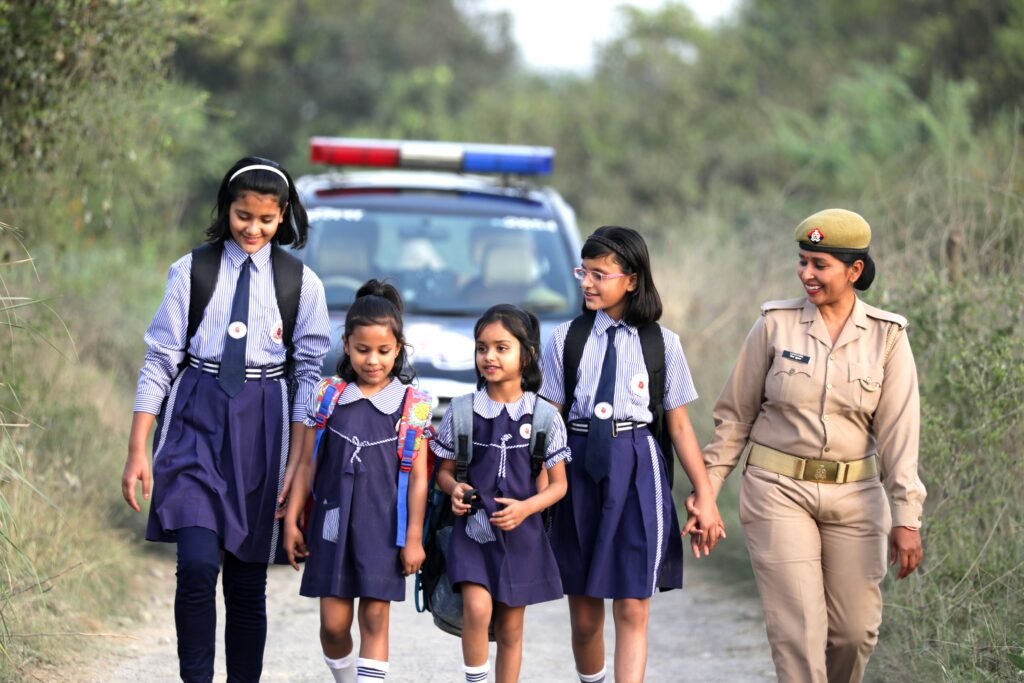
A school is one of the first places outside the family where children learn to negotiate relationships, deal with disagreements, make friends and understand boundaries. It is also where they begin to develop trust in adults beyond their homes. But what happens when the classroom itself becomes a place where children fear one another?
The alleged assault of a six-year-old girl by an eight-year-old boy inside a government school in Panchkula, Haryana, has brought this uncomfortable question to the forefront. Reportedly taking place in an empty classroom, the incident has raised serious concerns about supervision and the ability of schools to protect young children.
This is not an isolated regional concern. In January 2026, a ninth-grade student in Charsadda, Pakistan, was allegedly shot dead by a fellow student inside a private school following a dispute reportedly linked tocomments on TikTok. In October 2025, a 16-year-old student in Chattogram, Bangladesh, was allegedly killed by a group of teenagers following a dispute between students. In Sri Lanka, a 15-year-old student diedin June 2024 following an assault by another student at a tuition class in Hambantota.
These incidents differ in their circumstances and cannot be attributed to a single cause. Yet, they raise a common question: are our schools adequately equipped to recognize, prevent and respond to violence involving children?
Advertisement
Child safety is a right, not a privilege
The United Nations Convention on the Rights of the Child provides an important framework for this discussion. Article 19 recognizes every child’s right to protection from physical and mental violence, abuse and neglect. Article 28 recognizes the right to education, while also requiring school discipline to respect children’s human dignity.
These rights are interconnected. A child cannot fully exercise the right to education if attending school means being exposed to violence, intimidation or humiliation.
Yet, school safety is often understood narrowly. We associate it with boundary walls, security guards, CCTV cameras and visitor registers. While these measures have their place, they do not address everything that happens between children. Bullying, intimidation, exclusion and physical aggression can develop during ordinary classroom interactions, lunch breaks and school activities.
A camera may record an incident, but it cannot build a relationship in which a child feels comfortable reporting that something is wrong.
What are we missing in our classrooms?
Children do not automatically know how to manage anger, disagreement, rejection or frustration. These are skills that develop over time and require guidance.
A disagreement over a game, friendship or social media post may appear insignificant to an adult. For a child, however, it can become a source of considerable distress. When children lack the ability to communicate their feelings, negotiate disagreements or walk away from conflict, ordinary differences can escalate.
Teachers need to pay attention not only to academic progress but also to how children interact with one another. A child who repeatedly intimidates classmates, another who becomes increasingly withdrawn, or a student suddenly reluctant to attend school may be communicating something that deserves attention.
This does not mean labelling children as violent or difficult. Children who display aggression also need care, assessment and guidance. Exposure to violence, family difficulties, bullying and emotional distress may influence behavior. Understanding these circumstances does not excuse harm; it helps schools intervene more meaningfully.
Teachers need more than a child-protection circular
Schools often have written rules against bullying and misconduct. But do teachers know what to do when a child reports being threatened? Are they trained to recognize signs of distress? Is there a clear process for reporting and following up on concerns?
Child protection cannot depend entirely on an individual teacher’s experience or intuition.
Regular professional development should include child development, positive discipline, conflict resolution and responding to disclosures of harm. Teachers should know when to involve school leadership, counsellors, parents and child-protection authorities.
Schools also need clear supervision arrangements. Adults should be assigned responsibility for corridors, playgrounds, washrooms and other less-frequented spaces. Children should not be left unsupervised in isolated areas. Adequate staffing is essential, particularly in government schools where teachers may already be managing multiple grades and administrative responsibilities.
Teaching children to understand boundaries
An important part of prevention lies in what happens inside the classroom every day.
Children need age-appropriate conversations about personal space, bodily autonomy, consent and respect. They should understand that they have the right to say no when something makes them uncomfortable and that they can approach a trusted adult without fear of being blamed.
Teachers can introduce these conversations through stories, discussions, role-play and everyday situations. Children should also learn how to disagree without humiliating or hurting another person, and how to seek help when a conflict escalates.
Digital behavior needs similar attention. Social media disagreements, online humiliation and threats do not necessarily remain confined to children’s phones. They can spill into friendships and school environments. Digital citizenship and responsible online behavior therefore deserve a place in school education.
Schools must be equipped to respond
Every school needs a clearly communicated child-protection policy, a designated person responsible for safeguarding concerns and a confidential mechanism through which children can seek help.
Access to trained counsellors is equally important. Where individual schools cannot employ full-time professionals, district-level counselling teams could provide support across institutions.
When an incident occurs, the immediate priority must be the affected child’s safety, medical care and psychological recovery. Children who witness violence may also need reassurance and counselling. At the same time, children responsible for causing harm must be dealt with through age-appropriate and rehabilitative processes. Protecting one child and supporting another are not competing responsibilities.
The responsibility we cannot postpone
South Asia has made significant commitments to expanding access to education. But access alone is not enough. Enrolling a child in school is only the beginning of the responsibility we assume towards that child.
We need to move beyond asking whether schools have safety policies and examine whether those policies work. Are teachers prepared? Are children heard? Are warning signs noticed? Do parents know where to turn?
We cannot expect children to learn empathy, respect and peaceful coexistence if schools do not actively create opportunities to practice these values.
A safe school is not simply one where children attend classes and return home. It is one where every child can learn, form friendships, express discomfort and grow without fearing the people with whom they share aclassroom. That is not an additional responsibility of education. It is the very foundation of it.
Disclaimer: The opinions and views expressed in this article/column are those of the author(s) and do not necessarily reflect the views or positions of South Asian Herald.