Join WhatsApp Channel

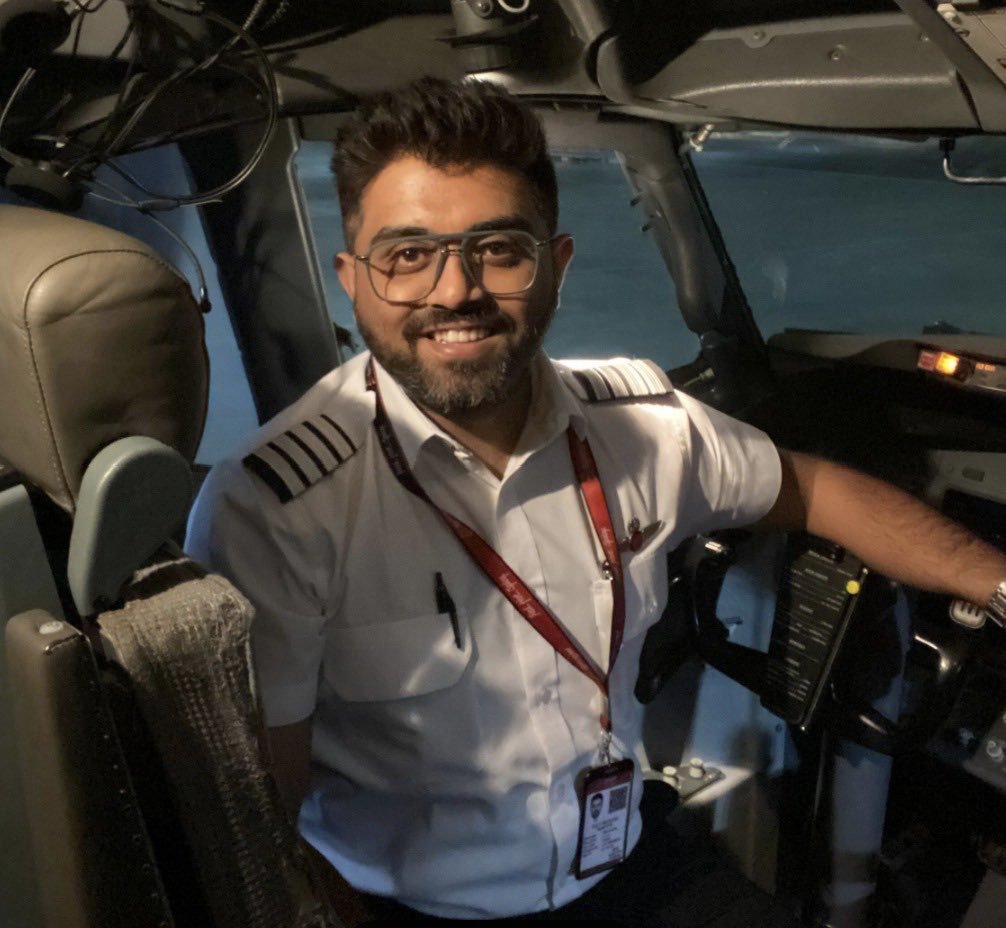
India is today part of international news headlines. Not because of the economy doing well – no. It’s because of the tremendous bravery and grit shown by Captain Smit Machchhar, pilot of flydubai’s FZ1073 flight from Dubai to Tel Aviv. Details emerging almost daily are shedding more light on the mid-air crisis that unfolded on September 30.
News reports say the co-pilot who attacked pilot Machchhar was an Omani national. His weapon of choice was a cockpit axe, a standard emergency tool stored on commercial aircraft to fight hidden fires or break through structure during a crash. His aim seems to have been to incapacitate the pilot and crash the Boeing 737 with 174 people including children. Most of the passengers were Israeli nationals. “Investigations into the incident involving flydubai flight FZ1073 found that the co-pilot had attempted to carry out a terrorist attack,” Prosecutor General Hamad Saif Al Shamsi said in a statement carried by the UAE’s state news agency. For now, it seems the co-pilot was acting on his own.
Machchhar’s heroic save of the FZ1073 along with some passengers is earning him worldwide praise, including from US President Donald Trump. Prime Minister Narendra Modi and Israeli Prime Minister Benjamin Netanyahu spoke to Machchhar as he was recuperating in hospital. The Crown Prince of Dubai, Sheikh Hamdan bin Mohammed bin Rashid Al Maktoum, who visited the Indian pilot in an Abu Dhabi hospital, later posted a message on X.com. “From us, and from the leadership of the nation, he has our full appreciation and praise. We are proud that he is part of our team… part of the story of our nation… and part of what the UAE stands for… a nation of compassion… a nation of peace… and a nation of life,” he wrote on X. The prince was seen in photos speaking with Machchhar and embracing him.
The FZ1073 crisis has inevitably drawn comparisons between Machchhar and Chesley “Sully” Sullenberger, the pilot of US Airways Flight 1549 who safely landed the Airbus A320 on the Hudson River after double engine failure. Then there is the story of Neerja Bhanot, who was senior flight purser aboard Pan Am Flight 73. The flight was on its journey from Mumbai to New York via Frankfurt in September 1986 when it was hijacked by four-armed men. Bhanot alerted the cockpit crew using the hijack code, allowing the pilots to escape and preventing the hijackers from forcing the aircraft, with 350 on board, to take off. Bhanot, 22, was shot while shielding three children during a rescue operation.
The Indian professionals, working abroad, have largely been noticed for their dedication, professionalism, embrace of the society they are part of and law-abiding nature that make them model citizenry in the countries they live in. India is the largest recipient of overseas remittances with inflows amounting to more than $135 billion in 2025. Just to compare, foreign direct investment into India in 2025 was a little more than $94 billion. The US and the UAE are the top two sources of foreign remittances into India. In this context, stories like that of Machchhar (and Bhanot) burnish the image of Indians now part of the global workforce and will hopefully help the case of Indians looking for positions abroad, not just in the global aviation industry. At a time when the world is increasingly looking inward and closing avenues for mobility and migration, Machchhar’s story is a shining example of Indian work ethics and culture.
Disclaimer: The opinions and views expressed in this article/column are those of the author(s) and do not necessarily reflect the views or positions of South Asian Herald.