Join WhatsApp Channel

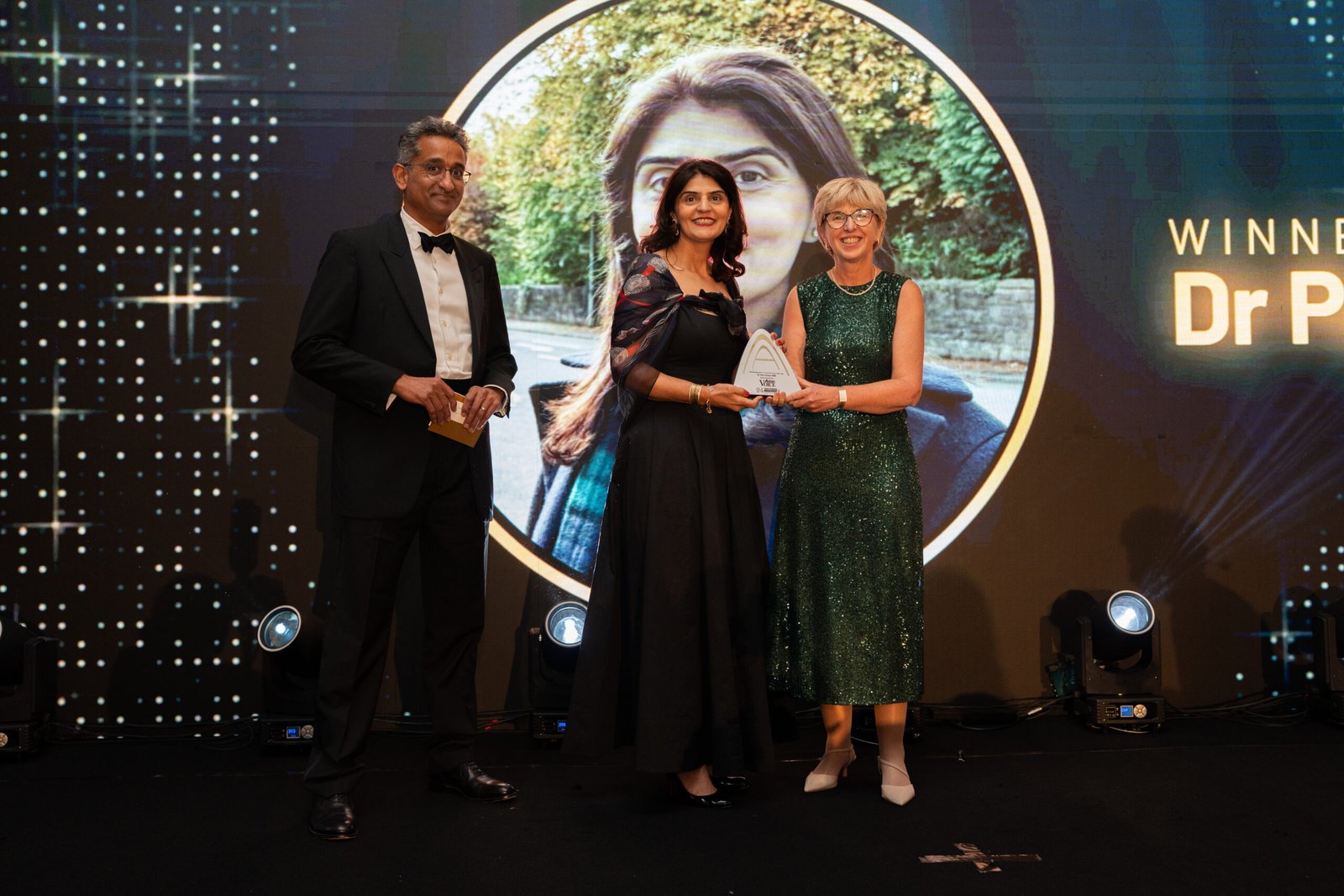
The 24th annual edition of the Asian Achievers Awards, one of the United Kingdom’s most prominent and longstanding celebrations of British Asian achievement in business and society, brought together business leaders, celebrities and sports personalities in London a few weeks ago. One of the unique aspects of the awards is its longevity, in unearthing British Asian talent across society, for more than two decades.
Pam Gosal, a former Member of the Scottish Parliament (MSP) for West Scotland, who won the Achievement in Community Service award spoke to South Asian Herald about her journey in an exclusive interview. Through a Motion by Russell Findlay MSP from the Scottish Conservative and Unionist Party, the Scottish Parliament officially congratulated Pam on the achievement a few days after the win.
You lost your father and sister in your teenage years, left school without qualifications and went directly into a male-dominated property business. Tell us about those early years and how they led to your interest in politics and social justice.
My early years shaped me profoundly. I lost two of the most important people in my life at a very young age and, without formal qualifications, I entered a male-dominated business and had to grow up quickly.
I had no safety net, so I learned an important lesson early in life: if you are drowning, you have to learn to swim. I was determined not simply to survive, but to succeed – and to prove through my actions, rather than my words, that the circumstances of your upbringing do not have to define your future.
There were people who wrote me off as a failure in those early years, but rather than allowing that to define me, it gave me even greater determination to succeed. I wanted to become the role model I had never had growing up, particularly for women and girls who might be facing their own barriers.
I wanted them to know that they were not alone, that adversity does not have to determine your destiny and that, with determination and opportunity, it is possible to change the direction of your life. That belief is also why mentoring remains so important to me today.
You became the first Indian Sikh woman ever elected to Holyrood, Scotland’s devolved Parliament. Did you always know you wanted to enter Parliament?
No. In my early years, I did not know I wanted to enter Parliament because, quite simply, you cannot always aspire to what you do not know is possible. Growing up, I did not see anyone who looked like me whom I could regard as a role model in public life.
What I did know was that I wanted to challenge barriers and break glass ceilings. Earlier in my career, I became the first woman of color in Trading Standards, the UK public service responsible for enforcing laws that protect consumers and regulate businesses.
I have always believed, however, that being the first is not the achievement in itself. What matters is what you do with the opportunity and whether you use it to create opportunities for others.
In my mid-thirties, I realized I could do more to support people and businesses. During the 2008 financial crisis, I was recruited to lead on economic development and inward investment. That experience gave me a deeper understanding of the skills I could bring to public life and ultimately helped lead me towards politics.
I was fortunate that my skills were recognized and that I was given the opportunity to stand for election. Once elected, I never wanted to waste a day. I wanted to use every day to make a positive difference for my constituents and for the wider community.
As a Member of the Scottish Parliament, or MSP, you opposed the Gender Recognition Reform Bill and introduced the Prevention of Domestic Abuse (Scotland) Bill, proposing a Domestic Abuse Register. Why were these causes important to you, and how did you build support?
Protecting women and girls has been central to my public life. I believe women deserve safety, dignity and privacy, and I have always been prepared to speak up on issues I believe are important, even when the conversations are difficult.
Coalition-building was particularly important when I introduced my Prevention of Domestic Abuse (Scotland) Bill. I worked with colleagues across Parliament to build support and demonstrate that issues such as domestic abuse can and should transcend party politics.
The debates around gender recognition were challenging, but they reinforced my belief that it is important to participate constructively in difficult conversations. Politics is ultimately about representing people and ensuring that different perspectives are heard.
Not every campaign achieves everything it initially sets out to achieve. However, bringing an issue into the public conversation can create awareness, encourage debate and, importantly, give people who may previously have been afraid to speak the confidence to make their voices heard.
You sponsored* some of the first Eid, Diwali and Vaisakhi events in the Scottish Parliament. Why was that important?
Representation matters. Bringing celebrations such as Eid, Diwali and Vaisakhi into Parliament was important to me because it gave parliamentarians an opportunity to learn more about Scotland’s diverse communities, cultures, faiths and traditions.
Education is one of the most powerful tools we have to tackle racism and misunderstanding. If we do not share our traditions and explain why they matter, how can we expect wider society to understand them?
These events were about much more than celebration. They created opportunities for people to come together, learn from one another and build understanding. I wanted parliamentarians to have a better appreciation of the communities they represent and for those communities to feel that their culture and traditions had a place within the heart of Scotland’s democratic institutions.
Outside politics, what are the main challenges facing your business?
One of the biggest challenges is taxation. I do not object to paying taxes to support good public services, but businesses can understandably question the wider growth environment when taxation is high and public services do not always meet expectations.
Red tape is another challenge, particularly around planning and regulation. Businesses need certainty and the ability to make decisions, invest and grow without unnecessary barriers.
Governments do not create business growth directly. They create the environment in which businesses can innovate, invest, employ people and grow. Ultimately, businesses need the freedom and confidence to get on with that job.
How do you avoid sleepless nights and stay on the right track?
I believe strongly in self-education, resilience and maintaining a positive mindset. I also believe in positive karma, what you put out into the world comes back to you.
When I feel anxious or uncertain, I remind myself of how far I have already come. Looking back at the challenges I have overcome gives me perspective and renewed determination.
Life will always present obstacles, but challenges are temporary. The lessons they teach us can last a lifetime. I try to focus on what I can control, learn from setbacks and keep moving forward.
What’s next for you?
I will continue supporting causes relating to women and girls, mentoring others and striving every day to become the best version of myself.
I genuinely believe the world is my oyster and that I still have so much more to give. I want to continue using my experience to create opportunities for others, particularly those who may not yet believe that their own ambitions are possible.
There are still plenty of chapters to write, so, in the meantime, watch this space.
Is there anything we haven’t discussed that you’d like to share with our readers?
I believe a positive mental attitude can take you a long way. You do not need to wait for validation or acceptance from others. When you believe in yourself, dream big and are prepared to work hard, you can surprise yourself with what you are capable of.
Learn to love yourself first and understand your worth. When you do, you are better placed to appreciate others, build meaningful relationships and overcome the hurdles that life puts in your path.
I speak from experience. I lost loved ones at a young age, left school without qualifications and faced significant challenges in my personal, professional and community life. Yet I was able to turn my life around, achieve educational accolades up to Doctorate level, build businesses and pursue an extraordinary career journey that ultimately led me into politics.
I have also been humbled to have that work recognized, including through receiving an MBE and other awards, most recently the Asian Achievers Award for Community Service.
One phrase I have always believed in is: “Lift as you climb.” To me, that means that when you achieve something, you should not forget the people coming behind you. You should reach back, offer a hand and help others find their own path.
Passing the baton is the true meaning of helping others. It is how we create opportunities, build confidence and ultimately leave a legacy that is bigger than ourselves.