Join WhatsApp Channel

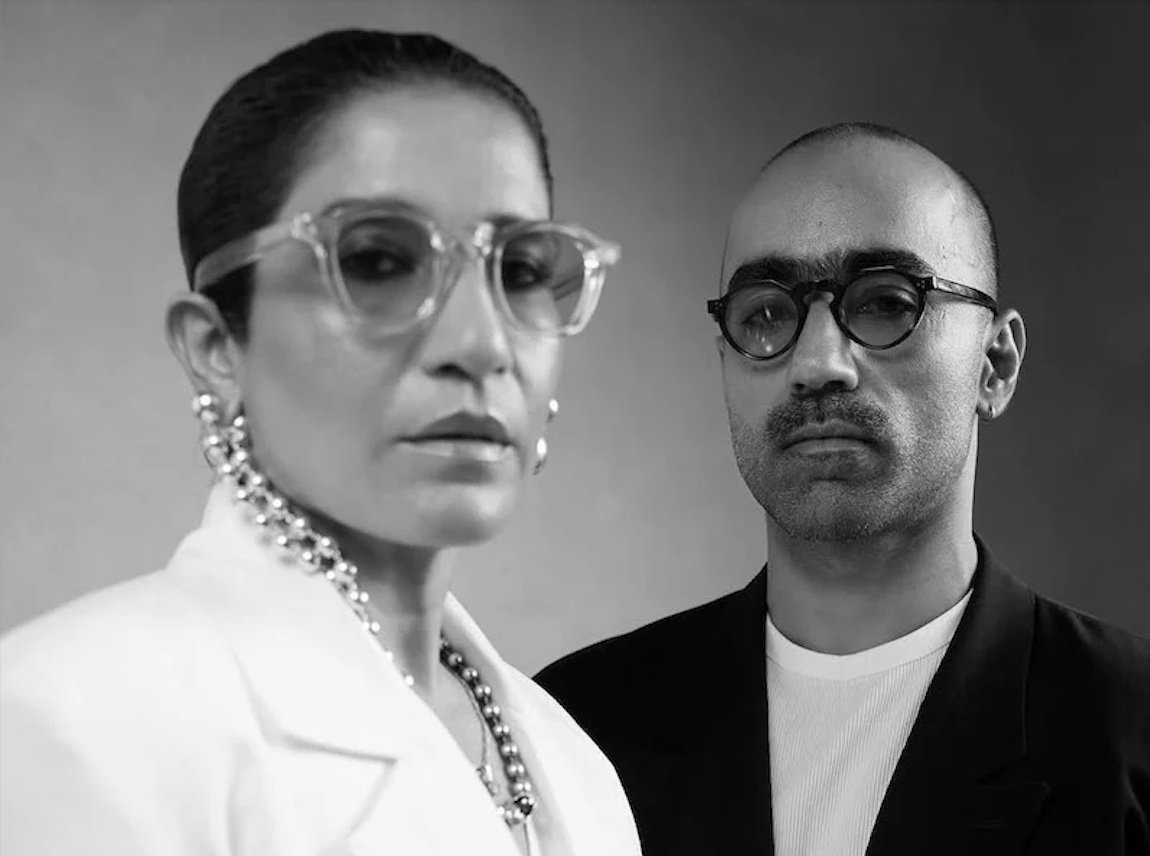
I first encountered Lovebirds earlier this year through Amrita Khanna and Gursi Singh’s remarkable presentation at Lunuganga in Sri Lanka. Geoffrey Bawa’s celebrated garden became more than a backdrop; it became part of the story they were telling. The husband-and-wife designers have spent more than a decade quietly shaping Lovebirds into one of India’s most distinctive contemporary labels, creating clothes defined by restraint, proportion, color and an instinctive understanding of place.
Their work feels deeply Indian without needing to announce itself as such. That confidence perhaps explains why the label has always seemed capable of moving beyond borders on its own terms. I later met Amrita and Gursi for the first time in London at their debut London Fashion Week presentation, an important moment for a brand whose international presence has developed with the same considered ease as its clothes.
Nonita Kalra introduced us. Now Chief Creative Officer, Luxury, Fashion and Lifestyle at Bennett, Coleman & Co. Ltd. (The Times Group), and formerly Editor-in-Chief of Harper’s Bazaar India and founding Editor-in-Chief of ELLE India, Nonita has an extraordinary instinct for bringing people together. A longstanding advocate for Indian creativity and talent across South Asia, she has become a quiet bridge between the region and the West, particularly the UK, where she now lives.
Lovebirds began almost accidentally, as two people in love wanting to create something together. More than a decade later, when did you first realize it had grown into something much bigger than the two of you?
Amrita: I don’t think there was one particular moment. It happened gradually. In the beginning, Lovebirds was very instinctive. It was really about the two of us wanting to make something that felt like us. Over time, when we started seeing people connect with the clothes in ways we hadn’t anticipated, and when the brand began travelling beyond us and beyond India, we realized it had developed a life of its own. Today, Lovebirds feels less like something we own and more like something we are constantly in conversation with.
You’ve often described Lovebirds as deeply Indian without relying on the obvious visual codes of “Indian fashion.” Did you ever feel the need to explain or defend what Indian design could look like to an international audience?
Gursi: In the beginning, perhaps there was an expectation that if you were an Indian brand, there had to be something immediately recognizable as Indian. But that was never particularly interesting to us. India is so much more than its obvious visual references. There is restraint, geometry, color, proportion, architecture, everyday objects, cinema, streets and memory.
You often speak about “less” as a form of luxury. In an industry that constantly demands more collections, more content and more newness, how do you protect that philosophy?
Amrita: By constantly reminding ourselves why we started. We’ve never been interested in making something simply because there is a demand for more. There has to be a reason for something to exist.
Gursi: For us, “less” isn’t about minimalism for the sake of minimalism. It’s about editing. Knowing what to leave out can be as important as knowing what to add. We want the clothes to have enough space to breathe, and for people to live with them rather than feel that they need to constantly replace them.
You work together, run a business together and have built Lovebirds together. After all these years, where do you still fundamentally disagree creatively, and who usually wins?
Amrita: We disagree all the time. But I think that’s also why it works.
Gursi: We come at things from very different places, which can create friction but also makes the work stronger. There isn’t really one person who always wins. Sometimes one of us is more convinced, sometimes the other. And sometimes we disagree for so long that the final thing becomes something neither of us initially imagined.

Amrita: The important thing is that the disagreement is always in service of the work.
Amrita, you’ve often been described as the Lovebirds woman. Has your idea of that woman changed as you have changed? Is there something you wear today that the Amrita who started Lovebirds would never have considered?
Amrita: Definitely. I think the Lovebirds woman has grown up and so have I. What I wear has become more intuitive. I think with time you become less interested in proving something through what you wear and more interested in what genuinely feels like you.
Gursi, when you see Amrita wearing something during the design process, what tells you that a garment has finally become “Lovebirds?”
Gursi: There has to be a certain ease to it. It can’t feel overly designed. Even when there is a lot of thought behind something, the final result should feel effortless. That tension between intention and ease is very important to Lovebirds.
Sri Lanka has an unusual place in the Lovebirds story. You were backpacking here when responses to your first collection began coming in, and a decade later you returned to stage one of your most important shows at Lunuganga. Does Sri Lanka feel like a kind of lucky place for Lovebirds?
Amrita: It does feel quite special to us. The connection was there very early, almost before we knew what Lovebirds would become. Being here when the first responses to the collection were coming in made Sri Lanka part of that early memory.
Gursi: And then to return years later and show at Lunuganga felt almost circular. I don’t know if we would call it luck exactly, but there is definitely an emotional connection to the place.
What did Sri Lanka give you creatively that you couldn’t have found in India, Paris or London?
Gursi: It gave us a different kind of pace. There is an incredible relationship here between architecture, landscape, light and everyday life. You can’t separate one from the other.
Amrita: And perhaps because we weren’t looking at it through the same lens we use in India, we noticed different things. It allowed us to step outside our own visual vocabulary and then come back to it with a slightly different perspective.
Geoffrey Bawa created something profoundly Sri Lankan that nevertheless became part of a global design language. Is that what you identify with most in his work, the ability to be intensely local without becoming insular?
Gursi: Very much so. What is remarkable about Bawa is that the work is deeply rooted in its place, but it doesn’t feel like it is trying to announce where it comes from. It becomes universal precisely because it is so specific.
Amrita: That resonates with us. We’ve always believed that you don’t have to dilute where you come from in order to speak to the world. In fact, the more honestly you respond to your own surroundings, the more universal the result can become.
Fashion shows often try to dominate their locations, but Lunuganga is almost impossible to dominate. Did designing a show within Bawa’s landscape change the way you thought about restraint, space and presentation?
Gursi: Absolutely. Lunuganga already had such a strong language that the instinct could not be to compete with it.
Amrita: We had to listen to the space rather than impose ourselves on it. That made us think differently about what a fashion show needs to be. Sometimes the most powerful thing you can do is actually remove something.
The collection brought Sri Lankan references into the Lovebirds vocabulary: batik, the sarong, Bawa’s circles, black and white, architectural volumes. How did you approach these references without reducing Sri Lankan culture to an aesthetic?
Amrita: Research and respect are important, but so is knowing where you are coming from. We weren’t trying to recreate Sri Lankan clothing or create a collection that said, “This is Sri Lanka.” We were responding to what we experienced here.
Gursi: The references became part of the Lovebirds vocabulary rather than being treated as decoration. We were interested in the ideas behind them, proportion, repetition, geometry, movement, texture, and in how those ideas could have a genuine conversation with our own language.
After spending so much time here, what is something about Sri Lankan style or the way Sri Lankans dress that you think the international fashion world overlooks?
Amrita: There is an ease to it that I find very interesting. There is a relationship between dressing, climate and place that doesn’t feel overly constructed.
Gursi: I also think there is a subtlety that can be missed when fashion looks at Sri Lanka only through its more recognizable visual references. There is so much more in the everyday, the way people combine things, the relationship with color and the informality of it.
You’re about to step onto the London Fashion Week schedule. Does that feel like a culmination of the last decade, or does it feel like starting again in front of a completely new audience?
Amrita: Both. It’s impossible not to look back and recognize how much has happened over the last decade.
Gursi: And that’s exciting. We don’t want to arrive in London carrying the expectation that everyone already understands us. There is something quite refreshing about introducing Lovebirds again, but on our own terms.
Amrita, London is particularly personal for you after having lived there for a decade. What does showing there mean to you emotionally, beyond what it means strategically for the business?
Amrita: It feels incredibly personal. London was a very formative part of my life, so coming back with something that Gursi and I have built together over all these years is quite emotional. It’s not just about showing a collection in a city. It’s about returning to a place that shaped me, but returning as a very different person, with a completely different life and body of work.
After the intimacy and extraordinary setting of Lunuganga, London Fashion Week is a very different stage. When someone encounters Lovebirds for the first time in London, what do you hope they understand about the brand within those first few minutes?
Gursi: I hope they understand that there is a very strong point of view underneath the apparent simplicity.
Amrita: And that Lovebirds comes from India but isn’t trying to perform India. We want the clothes to communicate something about where we come from through their attitude, proportion, color and construction rather than through obvious symbols.
There is enormous international interest in India right now, across its culture, craft, economy and fashion. Do you think about the risk of Indian fashion being treated as a “moment” rather than as a permanent part of the global fashion conversation?
Amrita: Of course. But India has existed for a very long time, so we don’t necessarily think of ourselves as participating in a moment.
Gursi: Trends come and go. What matters is whether the work has enough depth to exist beyond the moment. We hope that Indian design can be part of the global conversation without constantly having to be introduced as something new or exotic.
You’re now stocked internationally, from Harvey Nichols in Britain and Neiman Marcus in the US to Beams in Japan and David Jones in Australia. Which market has surprised you most in the way it has responded to Lovebirds? And do you see different versions of the Lovebirds woman emerging across markets?
Amrita: Every market reveals something slightly different about the clothes, which is fascinating. A garment can be interpreted completely differently depending on where it is being worn.
Gursi: But there are also commonalities. The Lovebirds woman, wherever she is, tends to respond to the same things: ease, quality, proportion and a certain quietness. The styling might change, but the underlying attraction feels surprisingly universal.
There’s often a tension for an independent designer between becoming globally successful and retaining the intimacy that made people fall in love with the brand in the first place. How big do you actually want Lovebirds to become?
Amrita: We want it to grow, but not at the expense of what makes it Lovebirds. Growth for us isn’t simply about becoming bigger. It’s about being able to reach more people while still having a very clear point of view.
Gursi: We’ve never wanted to build something enormous just for the sake of scale. We want Lovebirds to have longevity. If it becomes bigger while retaining its intimacy, its curiosity and its integrity, then that is the kind of growth we want.
If we removed fashion from the equation for a moment, what is feeding you creatively right now: an architect, an artist, a building, a book, a city, a piece of music, or even an everyday object?
Gursi: Architecture is always something we return to. The relationship between structure and space, and the way people inhabit a space, is endlessly interesting.
Amrita: And everyday life. We are constantly collecting things without necessarily realizing it: an old photograph, a color combination on the street, a piece of furniture, a film, a particular kind of light. Often those things sit somewhere in your memory and emerge much later in the work.
Ten years from now, if people no longer describe Lovebirds simply as a fashion label, what would you like the word “Lovebirds” to represent?
Amrita: I would like it to represent a way of seeing. Something that feels thoughtful, contemporary and deeply connected to where it comes from.
Gursi: And hopefully something that has made people feel something. We don’t necessarily need Lovebirds to be defined by one particular category. If the word comes to represent a certain sensibility, a way of looking at India, design, clothing and culture, that would mean more to us than simply being known as a fashion label.