Join WhatsApp Channel

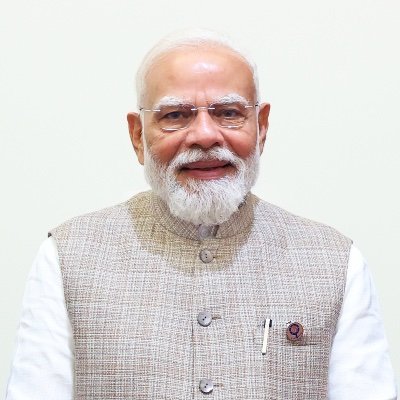
Viksit Bharat@2047 began as a political vision under Prime Minister Narendra Modi. But its ultimate test will come long after the political careers of today’s leaders have ended.
India’s centenary of independence will belong to another generation.
The question is therefore not simply what Narendra Modi wants India to become. It is whether successive governments — regardless of political party — can convert the vision of a developed India into institutions and economic capabilities that survive changes of government.
That is particularly important because India is competing against a China that began its economic transformation much earlier.
Deng Xiaoping’s reforms after 1978 launched China towards market-oriented growth, foreign investment and export-led industrialization. Four decades later China possesses an economic scale India has yet to approach.
The World Bank estimates China’s 2025 nominal GDP at $19.5 trillion, compared with India’s $3.96 trillion. The United States stood at $30.77 trillion and the European Union at about $21.24 trillion.
India’s often-repeated “$5 trillion economy” is therefore better understood as a milestone on the road rather than its present position.
But GDP alone does not settle the India-China contest.
The more interesting contest is demographic.
The United Nations projects much faster ageing in China. By 2040, China’s population aged 65 and above could exceed those below 25. India, meanwhile, is expected to retain a larger working-age population through mid-century.
That gives India an opportunity China will find increasingly difficult to reproduce.
But a demographic dividend exists only when people have productive work.
India’s 65% under-35 population can become an extraordinary economic asset — or an enormous employment challenge.
That makes employment the central economic question of Viksit Bharat.
India needs more manufacturing, not less.
Its IT-services companies have created a globally recognized export industry. TCS, Infosys, Wipro, HCLTech and hundreds of smaller firms have demonstrated India’s ability to sell intellectual labor worldwide.
But software services cannot alone employ India’s enormous workforce.
The next phase therefore has to combine services with manufacturing: electronics, semiconductors, electric vehicles, batteries, pharmaceuticals, aerospace, defense production, robotics, renewable energy and precision engineering.
Government policy is already putting manufacturing, innovation, semiconductors and advanced technology at the center of the Viksit Bharat agenda.
Then comes artificial intelligence.
AI could transform India’s existing services model. Instead of merely providing engineers to global companies, Indian firms could provide AI systems, specialized models, cybersecurity, automation and industry-specific intelligence.
The government’s own technology policy is urging the IT industry to move from “Software as a Service” towards “AI as a Service”.
The bigger opportunity may be using AI inside India.
AI could improve agricultural productivity, healthcare delivery, education, logistics, manufacturing and public administration.
Digital public infrastructure could provide the rails.
But there is a warning.
Technology does not automatically create inclusive growth. NITI Aayog has identified about 490 million informal workers and has specifically warned that AI will require investment, skilling and institutional support if it is to raise their productivity.
The same principle applies to women.
World Bank data put female labor-force participation at 32.4% in 2025.
A substantially larger female workforce could transform India’s growth trajectory without requiring a larger population.
Then comes the more uncomfortable question: who owns the growth?
India has created enormous private wealth and some globally competitive corporations. But a developed economy also needs competitive markets and institutions capable of preventing excessive concentration of economic power.
The danger is not the existence of billionaires.
It is a system in which access to government, infrastructure, finance or natural resources becomes more important than productivity and competition.
If Viksit Bharat is to survive successive governments, it needs institutional foundations: transparent procurement, independent regulation, predictable taxation, competitive markets, faster justice, better education and strong research institutions.
That is also where India and China may follow very different paths.
China’s official strategy calls for basic socialist modernization by 2035 and a modern socialist country by the middle of the century, accompanied by greater technological self-reliance and global influence.
China is already moving beyond low-cost manufacturing. An IMF analysis notes that China’s high-tech trade grew strongly in 2025 and that electric vehicles, batteries, solar products and chemicals are becoming increasingly important in its global trade.
India therefore cannot assume that demographic advantage will automatically close the gap.
Imagine, instead, a 2076 thought experiment.
India has reached $15 trillion. China is somewhere around $40–45 trillion. America is approximately $45 trillion and the EU around $30 trillion.
India would still be smaller than China.
But it could nevertheless be a major technological, manufacturing, financial, military and diplomatic power.
The decisive measurement would not be the number of Indian billionaires or the size of the Sensex.
It would be the Indian household.
Does a young person find meaningful work?
Does manufacturing absorb millions?
Does India’s service economy move from labor arbitrage to intellectual property?
Does AI raise productivity rather than simply eliminate jobs?
Do Indian women participate fully in the economy?
Does a child in a small town have access to world-class education?
Does an entrepreneur need political connections to compete with a large conglomerate?
Those are the questions that will determine whether Viksit Bharat has succeeded.
And this is why the most important part of Viksit Bharat may be what happens after Modi.
A national development strategy that depends on one prime minister cannot last until 2047.
A development strategy embedded in institutions can.
The BJP may eventually give way to another political formation. The next government may alter priorities, programmes and rhetoric. That is normal in a democracy.
But India’s long-term objectives — jobs, education, infrastructure, manufacturing, technology, healthcare, scientific research, competitive markets and rising living standards — should transcend electoral cycles.
China will enter its 2049 centenary with a radically transformed economy and a formidable technological base.
India will enter its 2047 centenary with something China will increasingly lack: a comparatively younger population.
Neither advantage is sufficient by itself.
China must convert technological and industrial strength into sustained prosperity while managing demographic ageing.
India must convert demographic scale into human capital, jobs and productivity.
The race, therefore, is not simply between Modi and Xi Jinping, or between BJP and Communist Party rule.
It is between two different models of national transformation.
And the final verdict will not be delivered in 2047 by today’s politicians.
It will be delivered by the Indians who are children today.
They will decide, through the quality of their lives, whether Viksit Bharat was a slogan, a political programme — or the beginning of India’s transformation into a genuinely developed society.
Disclaimer: The opinions and views expressed in this article/column are those of the author(s) and do not necessarily reflect the views or positions of South Asian Herald.
Related posts:
 Viksit Bharat 2047: A Roadmap to Become a Developed Nation
 Viksit Bharat Run 2025 Unites Global Indian Diaspora from Perth to Washington and Beyond
 IMF Country Focus: Business Growth and Innovation Can Boost India’s Productivity
 Modi-Xi in New Delhi: BRICS Creates a New Opening for India-China Relations