Join WhatsApp Channel

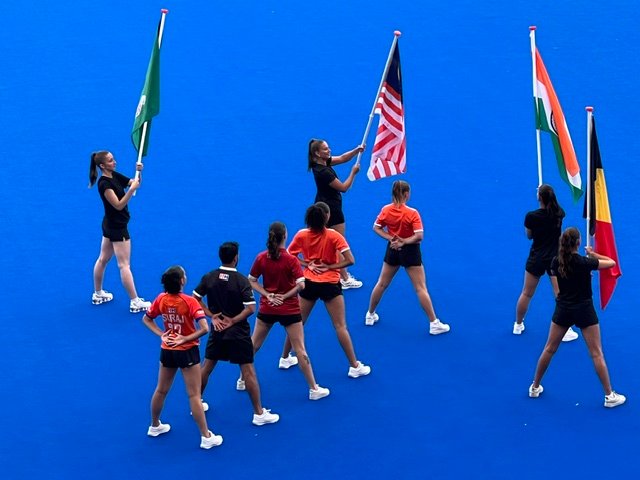
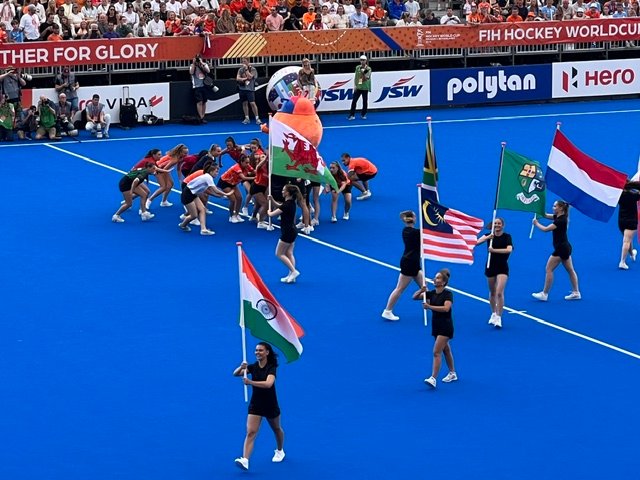
The FIH Hockey World Cups for men and women, getting underway in the Netherlands and Belgium, bring together 16 teams in each competition for 16 days of international hockey, with established powers and emerging contenders setting their sights on the sport’s biggest prize.
The optimism surrounding the tournament is reflected in comments from captains and coaches, who have highlighted months of preparation, tactical development and the challenges of competing against the world’s leading teams. For some, the World Cup represents an opportunity to defend their standing among the elite, while others see it as a chance to make history on the global stage.
Men’s World Cup
India enters the tournament with an added historical motivation, marking 50 years since its World Cup triumph. Head Coach Craig Fulton said the anniversary has provided inspiration as the team focuses on consistency and decision-making under pressure.
“This is a special year for us, 50 years since India’s World Cup triumph, and that history gives real motivation to this campaign,” Fulton said. He added that the players have shown strong commitment and are focused on taking the tournament one match at a time while honoring India’s legacy.
Argentina Head Coach Lucas Rey said his team had a strong preparation period following the FIH Pro League, with an emphasis on integrating the technical, tactical, physical and emotional aspects of the game.
“We always aim to develop the technical, tactical, physical, and emotional sides of the game,” Rey said, adding that the focus now shifts to translating that preparation into performance on the field.
Australia Head Coach Mark Hager emphasized the balance between experience and emerging talent in his squad. He said the Pro League provided valuable opportunities to compete against top international opposition and helped Australia develop ahead of the World Cup.
Hager said the squad has demonstrated the commitment, resilience and quality required at the highest level, adding that the players are “hungry” and ready to represent Australia with pride.
For Belgium, playing on home soil adds another dimension. Head Coach Shane McLeod said the team enjoyed its success in the Hockey Pro League but recognizes that the World Cup presents a different challenge.
“Having this challenge in our home country is a motivating factor,” McLeod said, adding that Belgium intends to display the qualities its supporters expect from the Red Lions.
England Head Coach Zak Jones pointed to a squad that combines World Cup experience with newcomers. Five players will compete in their third World Cup, while another five will make their tournament debuts. Jones said England hopes to carry its consistency from the Pro League into the World Cup.
Spain Head Coach Max Caldas said his team has developed not only in terms of players but also as individuals and leaders. He said he wants to see the squad compete at a level that will make Spain proud.
France Head Coach John-John Dohmen said his side continues to improve with each tournament. The Nations Cup winners face a demanding group that includes Germany, Malaysia and Belgium.
Dohmen described Germany as the reigning world and European champions, Malaysia as unpredictable and talented, and Belgium as the world’s top-ranked side. The match against Belgium will carry additional significance for Dohmen and his players, many of whom compete in the Belgian league.
Germany Head Coach André Henning said competition for places in his squad was intense. With an average age of just over 25, Germany will field one of the tournament’s younger teams, including five players appearing in their first major international tournament.
At the same time, Henning said 14 members of the squad have already won titles for Germany, giving the team what he described as a combination of ambition and experience.
Ireland is preparing for only its fourth FIH Hockey World Cup. Head Coach Mark Tumilty described qualification as a special moment for Irish hockey and said his players are eager to test themselves against the world’s strongest teams.
“We know what lies ahead will be a tough challenge, and we have great respect for every team in the competition,” Tumilty said.
Japan Captain Reiki Fujishima said his team hopes to showcase its speed and collective spirit while demonstrating that Japanese hockey can compete with the best teams in the world. He emphasized hard work, resilience and teamwork as central to Japan’s approach.
Malaysia Head Coach Brendon Carolan rejected the characterization of his team’s pool as a “group of death,” instead describing it as a “group of opportunity.” With the Asian Games also a major target, Carolan said Malaysia needs to demonstrate that it can defeat top-eight teams if it hopes to qualify for the Olympic Games.
For the Netherlands, home support could prove significant. Dutch player Lars Balk said playing before packed stands is one of the aspects he is most anticipating.
“There are so many hockey fans here, and they always support us,” Balk said, adding that he is looking forward to playing before Dutch supporters dressed in orange.
New Zealand Captain Sam Lane said opening the tournament against the Netherlands on Dutch soil will immediately provide a high-intensity test. Lane recalled watching New Zealand face the Dutch at the 2014 World Cup and hoping that he would one day have the opportunity to experience such an occasion himself.
Pakistan Captain Abu Bakar Mehmood said his team’s path to the World Cup has required sacrifice, discipline and resilience.
“Now it’s time to embrace the challenge and show the world the spirit of Pakistan hockey,” Mehmood said, pledging that his team will play with passion, courage and heart.

Wales, meanwhile, is appearing in its second consecutive World Cup. Head Coach Danny Newcombe said qualification reflects the commitment and quality of the squad.
“We’re proud to be here, and our focus is simple: to compete with the best teams in the world,” Newcombe said.
Women’s World Cup
India Captain Salima Tete said the team’s preparation has extended beyond physical training and has centered on continuous improvement.
“Preparing for the World Cup is not just about sweating it out on the field; it is a continuous process of improving ourselves every day,” Tete said, adding that discipline, hard work and unity have prepared India for the tournament.
Argentina Captain Majo Granatto said the strength of her team extends beyond its performances on the field. She credited extensive preparation and the relationships within the squad for creating confidence heading into the World Cup.
“Today, we are truly a team,” Granatto said, expressing confidence that Argentina has done everything possible to arrive at the tournament in strong form.
Australia Head Coach Rhett Halkett described World Cup selection as difficult because of the competition within the Hockeyroos squad. He said the final group combines experience with emerging talent and has continued to develop through competition against the world’s best teams.
Halkett identified the players’ willingness to adapt as one of the squad’s strengths. Despite challenges, he said they have remained connected and committed to developing the style of hockey Australia wants to showcase internationally.
Belgium Head Coach Adam Commens expressed confidence in a squad he said possesses quality throughout the lineup, along with speed and ambition. Belgium will also have the advantage of playing in front of its home supporters.
Chile Captain Manuela Urroz said excitement is building ahead of her country’s World Cup debut.
“Representing our country on the world stage is an honor, and every match is a chance to show what Chilean hockey is made of,” Urroz said.
China arrives with the experience of winning an Olympic silver medal, but Captain Li Hong said the team is focused on what comes next rather than past achievements. She said the Olympic result is a source of motivation as China seeks further success at the World Cup.
“The Olympic silver medal is already behind us; it belongs to the past,” Li said. “What drives us now is the ambition to create more results like that one.”
England Head Coach David Ralph said his squad features a combination of players with World Cup and Olympic experience and others making their debuts at a tournament of this scale. He said the experience of senior players and the energy of younger members create an encouraging balance.
Spain Head Coach Carlos Garcia Cuenca described the competition as particularly challenging and said his team’s realistic initial objective is to finish among the world’s top six. From there, he believes Spain can consider competing for a medal.
Cuenca said Spain has sought to develop a distinctive approach that makes it difficult for opponents, particularly through a defensive model he believes has reached a high level of execution.
Germany Head Coach Janneke Schopman said selecting the World Cup squad was extremely difficult because of the development and performances shown by players during the Pro League. She described the final squad as young and energetic and said recent results have reinforced Germany’s belief that it can compete against any opponent.
Ireland Head Coach Gareth Grundie said the World Cup holds special significance for his players and gives the current squad an opportunity to create its own legacy.
Recent qualifiers and Pro League competition have allowed Ireland to test itself against leading international teams, Grundie said, giving the squad confidence that it can compete at that level during the World Cup.
Japan Head Coach Akira Takahashi said Sakura Japan will emphasize unity, resilience and determination throughout the tournament.
“Inspired by the support of our fans and carrying the pride of Japan, we will give everything we have in every match and compete together as one team,” Takahashi said.
Netherlands Head Coach Raoul Ehren said hosting the World Cup offers his players a rare opportunity to compete before home supporters. He said anticipation surrounding the tournament has been steadily increasing.
“There’s nothing better than playing in a packed stadium filled with fans dressed in orange,” Ehren said.
New Zealand faces an immediate challenge against host Belgium. Head Coach Phil Burrows said the opening match will provide an important test, while Ireland and Spain will also present formidable opposition in the pool.
“Being up against all European and Pro League teams presents a consistent, high-level challenge, which is exactly what you want at a World Cup,” Burrows said.
Scotland Captain Sarah Robertson described the World Cup as the highest level available to players representing her country. She said the squad has worked extensively both to qualify and to raise its level ahead of the competition.
“We have a great culture in this team, and we are going to enjoy every minute together creating history,” Robertson said.
USA Captain Meredith Sholder said the American team is focused on trusting its preparation and delivering in decisive moments. While acknowledging the strength of the opposition, she expressed confidence in the squad’s ability to compete.
“We know the level of competition we will face will be fierce, but we believe in this group, and we are excited for the opportunity to represent the United States on the world stage,” Sholder said.
Across both competitions, the comments from coaches and captains reflect a common theme: preparation is complete, expectations are high and the focus has shifted to execution. For established contenders, the World Cup offers another opportunity to reinforce their standing at the top of international hockey. For emerging teams and tournament newcomers, it provides a stage to challenge that hierarchy and potentially create new chapters in their countries’ hockey histories.
Related posts:
 Argentina Dominates Pan American Cup, Books Double Berth for 2026 Hockey World Cups
 India Clinches Asia Cup Hockey 2025, Secures Spot in FIH Hockey World Cup 2026
 Canada Names 26-Player FIFA World Cup 2026 Squad as Soccer Fever Sweeps North America
 Indian Hockey’s Road to LA 2028: Tejinder Singh Aujla on Qualification Challenges, Transition, and Governance