 Join WhatsApp Channel

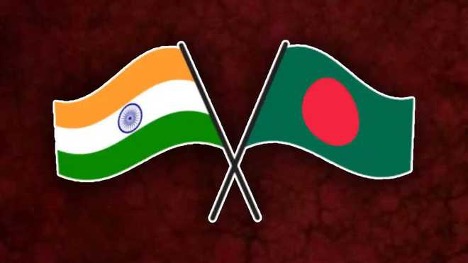
A Bangladeshi delegation flew into the city on May 20 for a meeting of the Joint Rivers Commission and a visit to the Farakka barrage where the flow of the Ganges is measured as it bifurcates into the Bhagirathi-Hooghly to meander towards Kolkata.
The meeting, just months ahead of the expiry of the 30-year Ganges Water Sharing Treaty in December this year, assumes significance as the political discourse in Dhaka over water sharing with India has taken a stormy turn.
Earlier this week, the ruling BNP’s Secretary General Mirza Fakhrul Islam Alamgir warned that the future of India-Bangladesh relations would depend significantly on the outcome of Ganges negotiations, reflecting his party’s “expectations and needs.”
“India and Bangladesh usually jointly measure water flows at the outset of the dry season. Its an ongoing process. However, what is worrying is this tendency of Bangladeshi leaders to take strong pre-decided stands even before real talks begin on renewing the treaty. It defeats the purpose of negotiations if you start taking rigid postures,” Veena Sikri, former High Commissioner to Bangladesh, told UNI.
The Bangladeshi delegation is being led by Joint Rivers Commission member Md Anwar Kadir and includes senior representatives from Bangladesh’s Water Resources Ministry, Foreign Ministry and hydrological agencies, underlining the importance Dhaka attaches to the upcoming discussions.
While officially the meetings are routine technical consultations, they come at a strategically delicate moment. Officials on both sides have already begun preliminary discussions on renewal. However, analysts suggest that a comprehensive renegotiation may prove difficult under current political circumstances, making a temporary extension a more likely short-term outcome.
Sikri pointed out that the Ganges water treaty “could not be viewed in isolation” and a host of treaties and relations including connectivity and trade needed to be considered in tandem. Indian officials also believe that the Ganges treaty which shared the flow at Farakka headwaters on a 50:50 basis, needs an overhaul as the glacial melt which gives Ganges its waters has reduced even as downstream demand for water has shot up with population exploding on both sides of th border.
Complicating the talks over water are Bangladesh’s growing relationship with China and Pakistan. Even before Alamgir warned India on the Ganges water treaty, Bangladesh’s Foreign Minister Khalilur Rahman met his Chinese counterpart Wang Yi in Beijing to formally seek China’s involvement in the Teesta River Comprehensive Management and Restoration Project, oblivious of Indian sensitivities on handling over such a project just across the border from India’s Siliguri corridor, a narrow strip of Indian land which separates China from Bangladesh.
About a week back, a high-level Pakistan Air Force team visited Dhaka to finalize training of Bangladeshi pilots in Islamabad. This comes on top of reports that suggest Bangladesh is keen on buying Pakistan’s JF-17 Thunder fighter jets, which are produced under license from China at Kamra in Pakistan’s Punjab.
Pakistan’s military intelligence wing – ISI – is also believed to have expanded its presence in Dhaka, according to sources. ISI has long been suspected of being involved in earlier decades in shipping arms to India’s northeast rebels, and in training and funding Islamist militants in Bangladesh who were then sent to other parts of the South Asian sub-continent.
In the last two decades, intelligence reports linked an attack in 2002 on the American Center in Kolkata to both Pakistan-based Lashkar-e-Taiba and Bangladesh-based Harkat-ul-Jihad al-Islami (HuJI-B), which are known to have links with ISI and a terror bombing with IED explosives at Bodh Gaya ahead of a visit by the Tibetan spiritual leader Dalai Lama in 2018. (UNI)
Related posts:
 The Indus Waters Treaty Part II: Obstruction, Exploitation and the Long-Overdue Reckoning
 As India Sends New Envoy, Bangladesh’s Anti-India Chorus Grows Louder
 Bengal’s BJP Surge Reshapes India-Bangladesh Equation
The Indus Waters Treaty Part I: The Architecture of Inequity — How India’s Goodwill Was Codified into Concession
Bengal’s BJP Surge Reshapes India-Bangladesh Equation
The Indus Waters Treaty Part I: The Architecture of Inequity — How India’s Goodwill Was Codified into Concession
