Join WhatsApp Channel


Wars are often described in maps and missile counts. But this one is being lived through WhatsApp voice notes, flickering airport screens, and whispered prayers in student hostels.
When U.S. and Israeli forces struck Iran in the early hours of February 28 under Operation Epic Fury, the shock was immediate. By morning, Iranian authorities confirmed that Ayatollah Ali Khamenei had been killed in the attacks — a moment that shattered assumptions about red lines in the Middle East and set off a chain reaction still unfolding.
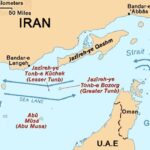
Iran’s retaliation was swift. Missiles and drones targeted Israel and U.S.-linked installations across the Gulf. Airspace snapped shut. Oil shipping slowed near the Strait of Hormuz. Flights vanished from departure boards. And suddenly, tens of thousands of South Asians — students, workers, athletes, families — found themselves stuck inside a conflict they had only ever watched on television.
“This is honestly terrifying,” wrote Indian badminton star PV Sindhu, stranded at Dubai airport while transiting to Europe. “Hearing interceptions overhead, seeing how quickly everything has escalated… moments like these remind you how fragile normal life really is.”
Her words struck a chord because they echoed what millions were feeling — the sense that normality had cracked, without warning.
Inside Iran: ‘We don’t know what will happen next’
For Indian medical students in Iran, the war has been anything but abstract.
In cities like Tehran and Urmia, over a thousand students remain stranded. Many recorded desperate video appeals as explosions echoed in the background.
“We really don’t know what’s going to happen next,” said one student, her voice trembling as sirens wailed behind her. “Please don’t wait for the situation to get worse. Just help us get out.”
Others spoke of missiles overhead, internet blackouts, and universities shutting down indefinitely. Some said they had earlier been advised not to leave to avoid jeopardizing exams — a decision now overshadowed by fear. Families back in India refresh their phones endlessly, clinging to each short message as proof that their children are still safe.
The students’ fear is not just of bombs, but of being forgotten as diplomacy drags on.
Airports Turned Waiting Rooms
If Iran feels like a battlefield, the Gulf feels like limbo.
Across Dubai, Abu Dhabi, Doha, and Manama, airports have become holding pens for stranded travelers. Families sleep on floors. Children cry from exhaustion. Departure boards flicker, then go blank.
Sindhu’s posts captured that suspended reality with unusual clarity. “The airport is chaotic,” she wrote, describing families stuck for hours, watching news of the war on overhead screens while waiting for instructions that never seem to come.
In a later update, she revealed just how close the danger felt: an explosion near the airport area sent smoke into the air, forcing her team to relocate quickly. “An extremely tense and scary moment,” she wrote, thanking airport authorities and the Indian High Commission for moving them to a safer location.
For migrant workers from Pakistan and Bangladesh, the situation is quieter but heavier. Missed shifts mean missed pay. Uncertainty stretches day by day. Many say they are less afraid of the explosions than of being stuck indefinitely, far from families who depend on them.
Governments Under Pressure
South Asian governments have moved cautiously, their statements measured but their consular lines buzzing.
India has urged restraint while quietly working evacuation options — a difficult balancing act given its ties with the U.S., Israel, and Iran. Pakistan has condemned the strikes and called for de-escalation, while advising citizens to avoid travel to Iran. Bangladesh and others have focused almost entirely on citizen safety, issuing alerts and coordinating with missions across the Gulf.
Behind the scenes, officials are racing against geography and geopolitics: closed airspace, limited land routes, and a conflict that shows no sign of cooling.
Streets Fill With Grief and Anger
Far from the Gulf and Iran, the war has spilled onto the streets of South Asia.
In Kashmir, protests and mourning gatherings have drawn thousands, with Iranian flags and portraits of Khamenei held aloft. In Pakistan, demonstrations have been larger and more volatile, driven by grief, religious sentiment, and fury at the U.S. and Israel.
Authorities across the region are trying to prevent escalation at home even as the situation abroad worsens — a reminder that this conflict is testing internal stability as much as foreign policy.
What Comes Next
Economists warn that prolonged disruption near the Strait of Hormuz could push fuel prices sharply higher, squeezing South Asian economies already under strain. Remittances from Gulf workers — vital for Pakistan and Bangladesh — could dip if instability deepens.
But for now, those forecasts feel distant compared to the immediate questions echoing across phones and terminals:
Will evacuation flights come? Will the fighting spread? How long can we wait?
Sindhu ended one of her posts with a simple line: “Trying to get some rest and hold on to hope.”