Join WhatsApp Channel

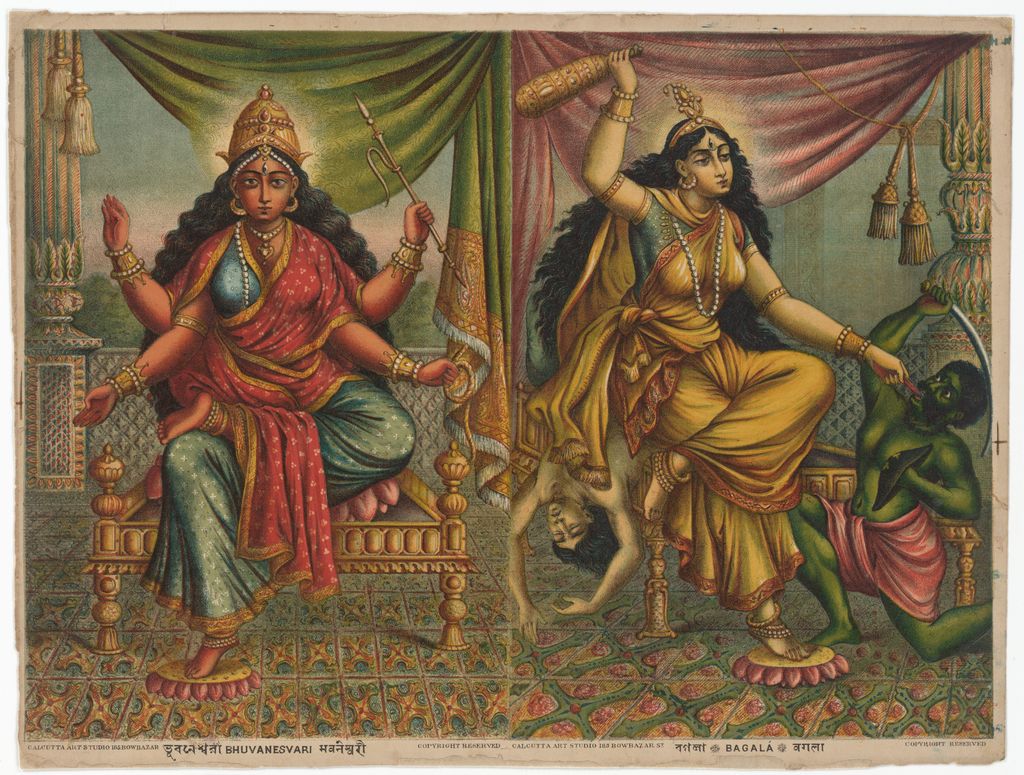
Metropolitan Museum of Art is presenting “Household Gods: Hindu Devotional Prints, 1860–1930,” an exhibition on view in four rotations from January 24, 2026, through June 27, 2027.
According to the museum, the exhibition features more than 100 works from The Met’s collection, with a particular focus on acquisitions made over the past decade. These works are presented alongside select examples from earlier painting traditions to contextualize the evolution of Hindu devotional imagery. The exhibition is supported by the Florence and Herbert Irving Fund for Asian Art Exhibitions.
The museum notes that the visual celebration of deities is central to many religious traditions, and especially significant in Hinduism, where the concept of darshan, or “seeing God,” establishes a deeply personal connection between devotee and deity. Traditionally, this relationship was expressed through clay or metal icons displayed in household shrines.
The advent of photography in the mid-19th century, and its rapid spread in India, significantly altered established artistic practices. The museum explains that photography disrupted traditional painting workshops and the production of religious images previously commissioned by elite patrons.
By the 1880s, however, the introduction of lithographic printing technology from Europe ushered in a new phase in devotional art. Chromolithographic prints, also known as oleographs, enabled the mass production of affordable, vividly colored images of Hindu gods. For the first time, households across social and economic backgrounds could display printed images of their chosen deities in domestic shrines.
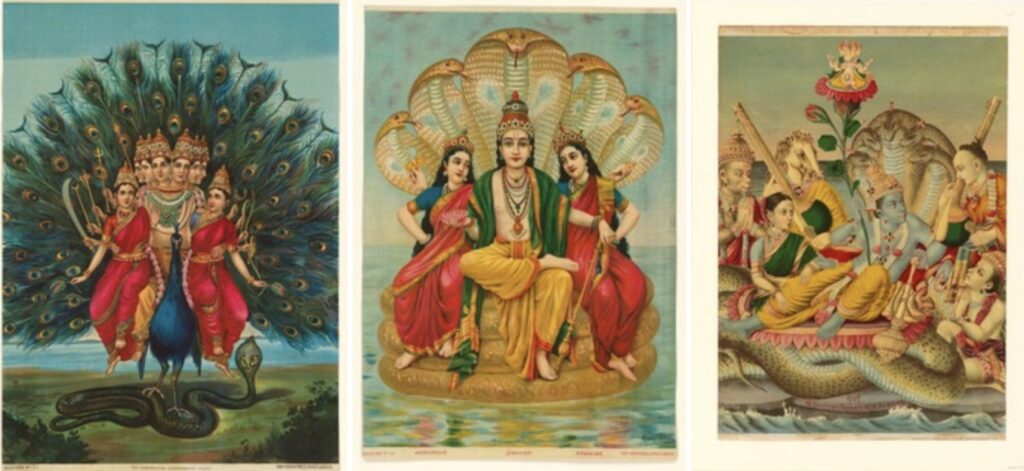
The exhibition traces what the museum describes as “the little-known last chapter of traditional Indian painting” and its role in popular Hindu worship. It spans early hand-colored woodblock prints produced in the Battala district of Calcutta in the first half of the 19th century, including The Met’s relief print celebrating the goddess Durga (2020.14), to striking representations of Kali worshipped at the Kalighat temple in south Calcutta, such as Sri Sri Kali (2021.325.6a,b).
Among the notable works on view is a set of ten Mahavidyas, tantric manifestations of the goddess, produced by the Calcutta Art Studio Press around 1885 to 1895. Printed two per sheet and inscribed in both Bengali and English (2021.214), the series reflects the growing accessibility and reach of devotional imagery.
Another highlight includes the portrait-like depiction of Shiva as Lord of the Universe in Benares, Kashi Vishvanatha (2016.499.2), which underscores the artistic sophistication involved in many of these prints. Later developments are represented by richly colored works from the Ravi Varma Press, including the six-headed deity Shri Shanmukha Subramania (2021.222).
The exhibition is curated by John Guy, the Florence and Herbert Irving Curator of South and Southeast Asian Art at The Met.
“The Met’s exhibition ‘Household Gods: Hindu Devotional Prints, 1860–1930’ marks a pivotal moment in Indian art,” Guy told South Asian Herald. “Following the decline of court patronage with the rise of photography, a radical new technology of its time, the introduction of lithographic presses enabled the mass production of devotional imagery.”
According to Guy, this shift represented a democratization of access to sacred images, making it possible for even modest households to display vibrant depictions of their chosen deity in the puja shrine.
Related posts:
 Indian Artist Natasha Sachdeva’s Watercolor Exhibition Opens at IA&A at Hillyer in Washington DC
 “Queenissima” Shines at Art Basel 2025 With Bold Eco-Fashion and Wearable Art Movement
 Fashion Exhibit of International of Museum of Sarees Concludes
 Launchpad @ICH2025: Fostering Innovation, and Creativity