Join WhatsApp Channel


As Bangladesh moves toward its next general election, expected to take place on February 12, the prospect of a hung parliament is no longer a peripheral concern but a central political and geopolitical question.
The likelihood that no single party will command an outright majority reflects not only domestic political fragmentation but also the broader strategic recalibration underway across South Asia, where Bangladesh has emerged as a consequential swing state amid intensifying India–China–US competition.
At the domestic level, the election is taking place after a profound rupture in Bangladesh’s political order. For more than a decade, governance revolved around executive centralization under the Awami League, producing stability at the cost of competitive politics. The political upheaval of 2024 disrupted that arrangement without replacing it with a new, broadly accepted settlement. The result has been an unstructured transition marked by weakened institutions, mistrust among political actors, and the erosion of the once-dominant two-party framework.
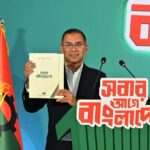
The effective sidelining of the Awami League has fundamentally altered electoral arithmetic. Bangladesh’s political system, long defined by rivalry between the Awami League and the Bangladesh Nationalist Party (BNP), has shifted into a fragmented multiparty contest without established coalition norms. The BNP is now the largest national force, but size alone does not guarantee a governing mandate. Internal divisions, constituency-level challenges, and competition from Islamist and newly formed political groups have diluted its ability to translate popular support into parliamentary dominance.
Under Bangladesh’s first-past-the-post system, this fragmentation is structurally conducive to a hung parliament. Multi-cornered contests across a large number of constituencies are likely to yield narrow victories rather than decisive sweeps. In such a scenario, the absence of a single party majority would not signal voter indecision but rather the cumulative effect of exclusionary politics, weakened party discipline, and the collapse of binary competition.
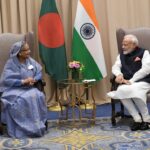
The implications extend far beyond Dhaka. Regionally, Bangladesh’s election is being closely watched in New Delhi, Beijing, and Washington, each of which views the country through a distinct strategic lens. India, historically comfortable with the predictability of Awami League rule, now faces a more uncertain political environment. Its cautious engagement with the BNP reflects a pragmatic recognition that Bangladesh’s political future will no longer be shaped by a single dominant party.
For India, the priority is stability particularly in border management, connectivity, and regional supply chains rather than ideological alignment.
China, for its part, has adopted a posture of strategic patience. Over the past decade, Beijing has expanded its footprint in Bangladesh through infrastructure investment, defense cooperation, and trade. A fragmented parliament would not necessarily threaten Chinese interests, provided no government decisively reorients away from economic engagement with Beijing. Indeed, political fragmentation may even enhance China’s leverage by increasing Dhaka’s dependence on external economic partners amid domestic uncertainty.
The United States approaches the election from yet another angle. Washington’s primary concerns remain electoral credibility, political inclusion, and regional stability in the Bay of Bengal. A hung parliament presents a dilemma: it could constrain authoritarian drift, aligning with US normative preferences, or it could produce paralysis and unrest, complicating broader Indo-Pacific objectives. As such, US policy is likely to focus less on outcomes and more on process, while quietly preparing for a prolonged period of political volatility.
Historically, Bangladesh has struggled to convert fragmented mandates into functional governance. Coalition politics is underdeveloped, parliamentary bargaining is weak, and extra-parliamentary mobilization has often substituted for legislative negotiation. In this context, a hung parliament carries significant risks. Without strong institutional guardrails, it could lead to policy gridlock, intensified street politics, and renewed pressure for executive overreach under the guise of restoring order.
Yet it would be a mistake to dismiss such an outcome entirely as a democratic failure. A fragmented legislature could, in theory, force political actors to abandon zero-sum practices and engage in compromise. It could also signal the re-emergence of political pluralism after years of enforced uniformity. Whether these possibilities are realized will depend less on the seat tally and more on post-election behavior particularly the willingness of political elites to respect institutional processes rather than revert to confrontational tactics.
In the final analysis, the likelihood of a hung parliament in Bangladesh’s 2026 election is symptomatic of a deeper transition. The country is moving away from a model of dominant-party stability without yet arriving at a system capable of managing genuine competition. This interim phase is inherently unstable, but it is also unavoidable.
For Bangladesh’s regional partners, the message is clear. Political predictability can no longer be assumed, and engagement strategies must adjust accordingly. For Bangladesh itself, the election will test not only democratic procedures but political maturity. A hung parliament may complicate governance, but it could also offer a rare opportunity to reset a political culture long trapped between exclusion and domination.
Whether that opportunity is seized or squandered will shape Bangladesh’s domestic trajectory and its strategic role in South Asia for years to come.
Disclaimer: The opinions and views expressed in this article/column are those of the author(s) and do not necessarily reflect the views or positions of South Asian Herald.