Join WhatsApp Channel

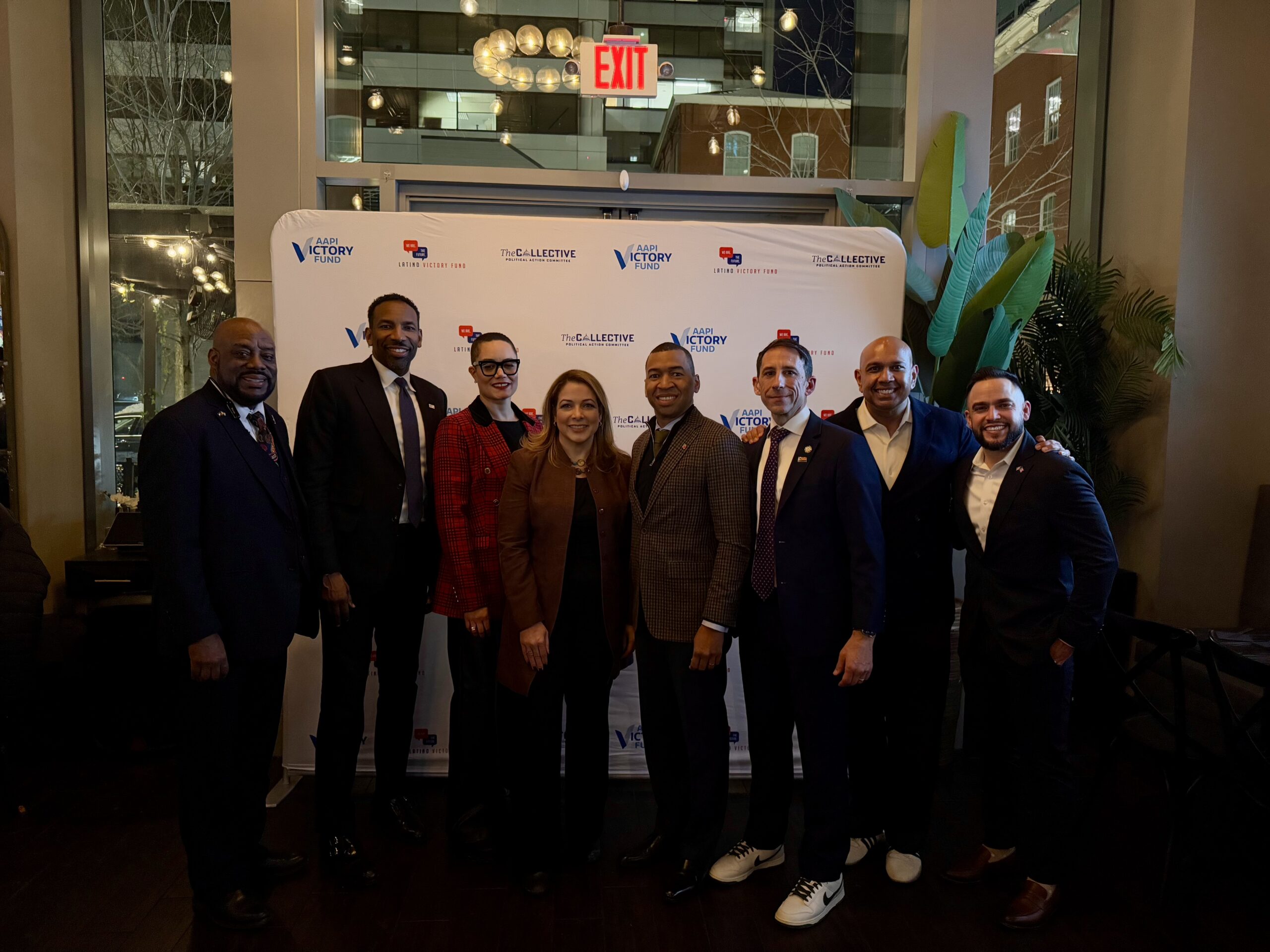
The Latino Victory Fund, AAPI Victory Fund, and The Collective PAC hosted the “Power in Unity” reception on January 29, 2026, in Washington, DC, issuing a call for solidarity among Black, Latino, and AAPI communities and reaffirming their commitment to strengthening political representation across these groups.
As the organizations prepare for what they described as “high-stakes midterm elections,” their joint efforts will focus on mobilizing Black, Latino, and AAPI voters and supporting candidates from these communities, according to Katharine Pichardo of the Latino Victory Fund.
“One of the things that we’re announcing today is how we’re going to work together to mobilize our communities in advance of the midterm elections,” Pichardo said while welcoming attendees. “We are recommitting our belief in the power of unity and certainly resources, so that we can get the vote out, win back the House, win back the White House, and build the bench of representation up and down the ballot.”
Calling the gathering “an important moment for all of us,” Pichardo thanked the partner organizations for co-hosting the event and recalled that in 2021 the Latino Victory Fund formed a partnership with the groups to “build strategy, allocate resources and engage our communities” in new and more coordinated ways.

Attended by mayors, elected officials, organizers, political strategists, and supporters from Black, Latino, and AAPI communities, the reception also served as a “moment of community and reflection during these trying times,” Pichardo added.
The Collective PAC is marking its 10th anniversary this year, said Irene Marion from the group, noting that over the past decade the organization has supported more than 1,000 Black candidates seeking office nationwide.
“We’ve gotten over 500 of those folks into sitting office, and we have about 200 that have already stepped forward this year to run for different positions, up and down the ballot, across the country,” Marion said. “We are supporting them in different types of ways, through The Collective PAC with our endorsements, but also through our sister organizations.”
Marion said she looks forward to continuing collaboration with partner groups to mobilize voters and expand leadership opportunities. “This year, our work is only as strong as the partnerships that we have. We work in solidarity with the groups that are here tonight and with many other groups and partners that are represented here,” she added.
Nick Rathod of the AAPI Victory Fund shared a historical account from his time as campaign manager for Beto O’Rourke in Texas, recalling the story of Dr. Lawrence Nixon. Rathod noted that following Reconstruction, Black Texans were barred from voting. He recounted that after the law was enacted, Dr. Nixon attempted to vote in El Paso and was turned away by an election official.
Dr. Nixon, Rathod said, responded, “I know I can’t, but I’ve got to try.” Rathod added that over the next two decades, Dr. Nixon fought for voting rights and was involved in two landmark cases that ultimately contributed to the Voting Rights Act of 1965, which expanded voting access for Black and Brown people.
“I share that story because in this moment, at this time, it might feel hopeless, and I know for me, when I see what’s going on you’re like, man, what in the hell am I supposed to do?” Rathod said. “It’s just so overwhelming. But when you think about people like Dr. Nixon and people from our past and our history, that whose shoulders we’re standing on, it’s not hopeless. We can build off of that; we’ve just got to try.”
Referring to immigration enforcement actions, Rathod said when ICE is knocking on people’s doors, “we have to intervene and stop that from happening,” adding, “We’re here together to unify and join our communities together to spend the next several years fighting and pushing until we can get back and win again.”
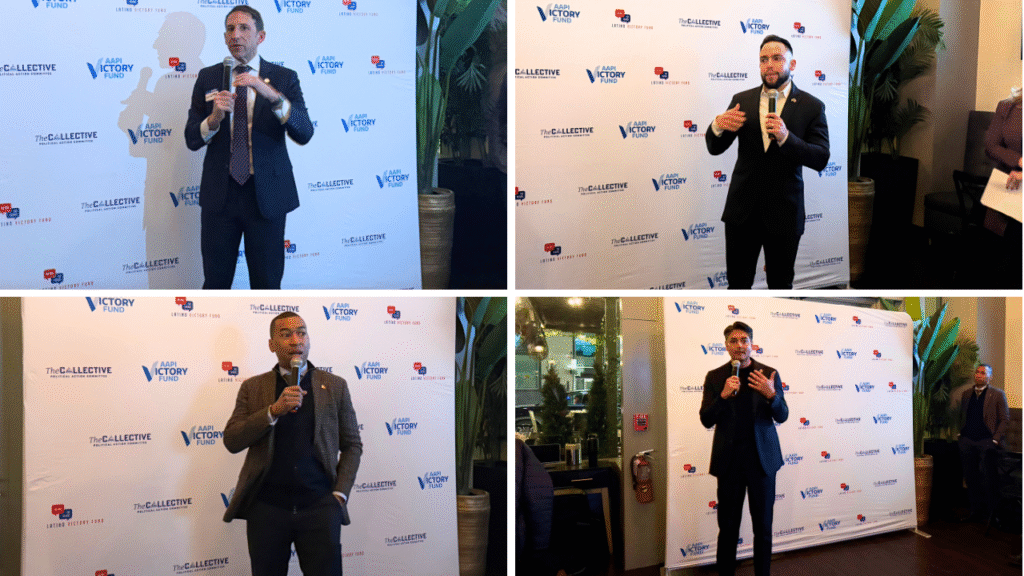
Cincinnati Mayor Aftab Pureval, the city’s first Asian American mayor, said he is proud to lead a predominantly Black city with a growing Hispanic population. He shared his family’s immigrant story, noting that they arrived in the United States in 1980 and that his mother is a Tibetan refugee.
Mayor Pureval said that in Ohio, he was afforded opportunities through public education, mentorship, and community support that eventually enabled him to become mayor. But cautioned that “All of that is at risk.”
“I am proudly a DEI Mayor,” he said, adding that his educational and professional path was shaped by diversity-focused initiatives.
The Mayor said “I climbed a ladder that was created for me by activists and leaders from the black community, from the Hispanic community and from the Asian community,” adding, “I will be damned if I let them burn that ladder down under my watch.”
Contrasting his own journey with what he described as “Trump’s America,” he cited what he called racist attacks on Haitian immigrants in Springfield, Ohio, about 45 minutes north of his city, including claims that they were eating “cats and dogs.” Under such conditions, he said, “my family would have left Ohio and gone back to India and Tibet.”
“There are so many attacks on the things that make us uniquely American in this moment, and that’s why these three communities are so critically important in order to fight that,” he said.
Mayor Jaime Arroyo, Lancaster, Pennsylvania, reflected on his parents’ decision to settle in the city in pursuit of economic opportunity. He said that “opportunity” also brings “responsibility.”
“As I grew up in Lancaster City and had the privilege of running a nonprofit, helping entrepreneurs and serving on city council and being the mayor, I’m thinking about what my responsibility is today,” Arroyo said. As such, he emphasized the importance of civic engagement and urged attendees to consider the long-term consequences of leadership decisions.
Mayor Steven Reed of Montgomery, Alabama, warned that civil rights progress is under threat, saying, “Our rights and our progress are under direct attack.”
Reed criticized public discourse that frames moral issues as merely political and urged participants to confront those challenges directly. He praised Collective PAC, the Latino Victory Fund, and the AAPI Victory Fund for working together to support candidates nationwide.
Quoting civil rights leader John Lewis, Reed reminded attendees, “When you see something that’s right or you see something that’s unfair, you have a moral responsibility to do something about it… Democracy is not a state. It is an act.”
“I want us to make sure that we use our collective voices and resources to do just that,” Reed said, adding that the moment calls for action not for political advancement, but to protect fundamental rights.
Mayor Matt Tuerk of Allentown, Pennsylvania thanked organizers and attendees, emphasizing the importance of voter turnout. “What we really need in places like Pennsylvania is we need your help and support to continue to get that vote out,” he said.
Noting widespread voter discouragement, Mayor Tuerk added, “They feel like their vote doesn’t matter. You have to continue to help us make sure that they know that it does matter.”
Related posts:
 Indian American Leaders Rally for Voter Engagement at “Diwali Day of Action” in Northern Virginia
 Indian American Leaders Applaud “Historic” Inauguration of Virginia Gov. Spanberger and Lt. Gov. Hashmi
 Zohran Mamdani Makes History as New York City’s Next Mayor, Quotes India’s First PM Nehru in His Victory Speech
 AAPI Leaders Celebrate India’s 79th Independence Day at 43rd India Day Parade in New York